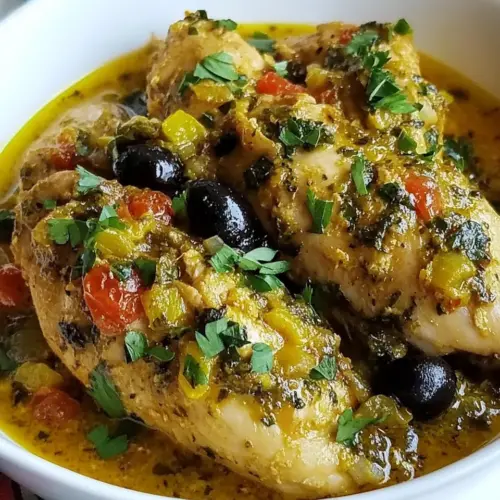
Moroccan Chicken
Moroccan Chicken is a fragrant, savory braise that combines tender chicken with warm spices, preserved lemon, and briny olives. This easy weeknight dinner delivers layered flavor, a glossy sauce, and bright herb finish that feels both comforting and elegant, making it perfect for family meals or casual entertaining. Make it for a simple but memorable reason to gather around the table.
Equipment
- Skillet
- Dutch Oven
- Zip-lock bag
Ingredients
- 2 large boneless skinless chicken breasts cut in half lengthwise to make 4 fillets (you can use 4 chicken breasts if you prefer a larger serving, you can also use bone-in chicken pieces if you prefer) Cut thin to ensure even cooking; provides lean protein and a mildly savory base that absorbs marinade flavors for a tender final dish.
- For the marinade: Designate as the flavor base for combining spices and aromatics; marks the start of the ingredient list and indicates components used to build the marinade.
- 2 tablespoons extra virgin olive oil Add to bind and carry fat-soluble flavors; imparts richness and helps coat the chicken and aromatics for better browning and moisture retention.
- 3 cloves garlic crushed and finely minced Crush finely to release pungent, aromatic oils; contributes sharp, savory heat and depth that mellows with cooking and complements the spices.
- 2 teaspoons fresh minced ginger Mince fresh to introduce bright, warm pungency; balances the garlic with a zesty, slightly sweet ginger note that lifts the overall flavor profile.
- 3/4 teaspoon ground cumin Measure precisely to contribute earthy warmth; supports the Moroccan profile with a subtle smoky-citrus undertone that pairs well with turmeric and cumin.
- 1/2 teaspoon ground turmeric Use sparingly to add golden color and gentle bitter-sweet earthiness; enhances aroma and provides visual warmth to the finished chicken.
- 1/2 teaspoon salt Season moderately to enhance all flavors; helps bring out savory notes and balances the spice blend for a well-rounded taste.
- 1/2 teaspoon freshly ground black pepper Grind fresh to offer sharp, aromatic heat; adds complexity and a background bite that cuts through the richness of the oil and broth.
- 2 tablespoons extra virgin olive oil Include as an additional fat layer to enrich the marinade; helps distribute spices evenly and promotes a glossy finish on the cooked chicken.
- 3/4 cup chicken broth Pour in to deglaze and create a simmering braising liquid; supplies savory depth and moisture that keeps the chicken succulent during cooking.
- 1 medium yellow onion finely chopped Chop finely to add sweet, mellow onion flavor; provides a soft, caramelized base when sautéed, contributing body and aromatic complexity to the sauce.
- 1 preserved lemon pulp discarded, peels thoroughly rinsed and finely chopped Rinse and finely chop peels to deliver bright, tangy citrus notes without the bitterness of the pulp; offers an intensely lemony, preserved flavor unique to North African cuisine.
- 1/2 cup pitted or whole Kalamata olives rinsed Rinse to remove brine and add briny, fruity-salty bursts; complements the lemon and spices while providing texture and savory contrast in each bite.
- 2 tablespoons chopped fresh parsley Chop fresh to introduce a mild, grassy herbaceousness; offers a clean, slightly peppery freshness that lightens and brightens the finished dish.
- 2 tablespoons chopped fresh cilantro Chop fresh to bring vibrant, citrusy-green notes; adds herbaceous depth and helps balance the richness and saltiness in the sauce.
- 2 teaspoons freshly squeezed lemon juice Squeeze fresh to inject bright acidity; sharpens flavors, lifts the palate, and balances oil and salt with fresh citrus brightness.
- Salt and pepper to taste Season at the end to taste and balance flavors; adjusts overall seasoning for saltiness and heat to ensure a harmonious, well-seasoned final dish.
Instructions
- To make the marinade, combine the olive oil, garlic, ginger, cumin, turmeric, salt and pepper. Place the chicken in a zip-lock bag and pour the marinade over. Swish around to ensure the chicken is thoroughly coated. Let marinate for at least 4 hours or overnight for maximum flavor.: Warm spice aromas should bloom as you whisk these components together, with the scent of crushed garlic sharp and the ginger giving a peppery lift. The oil acts as a flavor carrier, and you should notice a cohesive, glossy mixture that clings to the back of a spoon. Why this matters is simple, the spices need a fat to release their essential oils and flavor the chicken deeply during the marinating time. A common mistake is using cold, unmixed spices directly on meat, which can produce uneven seasoning. If you find raw spice pockets on the chicken , take a moment to re-whisk the marinade so everything dissolves and disperses evenly.
- Heat 2 tablespoons olive oil in a skillet or Dutch oven over medium high heat. Cook the onions until soft and translucent, 5-7 minutes. Add the chicken and cook just until it turns white, about 2 minutes on each side. Add the broth and any remaining marinade from the zip-lock bag. Bring it to a boil. Reduce the heat to low, cover and simmer for 20 minutes, turning the chicken over once after 10 minutes.: When the fillets meet the marinade, you should see them glisten and take on a faint yellow tint from the turmeric . Press out the air and seal the bag, then massage the marinade across each piece. This tactile step ensures the chicken is evenly coated and starts the gentle enzymatic tenderizing from the garlic and salt. The reason to use a bag is efficiency and minimal cleanup, and it helps the marinade hug every surface. A frequent error is tossing too much marinade with too many pieces at once, which prevents even contact. Make sure each fillet lies flat and is in contact with the liquid.
- Add the preserved lemon, parsley, cilantro and olives, stir to incorporate into the sauce, cover and simmer for another 15 minutes. Stir in the lemon juice and add salt to taste. Serve immediately with a leafy green salad, couscous or bread.: As you move the bag, listen for the quiet slosh and watch how the marinade forms a thin veil over the chicken . This step is sensory confirmation that each piece is infused. It shortens the time needed for flavor to transfer and reduces spots that would otherwise remain under-seasoned. Avoid the trap of assuming the bag is sealed if you feel moisture at the zipper; reseal to prevent leaks. If the marinade looks patchy, let it rest for a few minutes and massage again.
- Let marinate for at least 4 hours or overnight for maximum flavor: During the rest period, the scent of garlic and spice will mellow into the flesh, and the texture will become noticeably more tender. Overnight marinating yields the deepest flavor concentration, as the salt and aromatics have more time to penetrate. However, do not marinate for absurdly long periods as intense acid or salt can break down proteins too far. A common misstep is marinating in direct sunlight or near a warm appliance; always refrigerate to keep the chicken safe and fresh while it absorbs flavor.
- Heat 2 tablespoons olive oil in a skillet or Dutch oven over medium high heat: When the oil shimmers and moves fluidly across the pan, you should smell a faint fruity note from the olive oil. That visual shimmer is the cue that the pan is ready. Searing in hot oil encourages a Maillard reaction, creating brown bits that are full of savory compounds important to the final sauce. If the oil starts smoking, reduce the heat or swap pans, because burnt oil will add acrid flavors. Do not add chicken to a cold pan, or it will stick and fail to brown properly.
- Cook the onions until soft and translucent, 5 to 7 minutes: As the onion sweats, you will notice a sweet, almost caramel aroma replacing the raw sharpness. The sound shifts from an energetic sizzle to a gentle, steady bubble. Softening the onion extracts natural sugars that round the sauce, so resist the urge to rush this step with higher heat. A typical mistake is over-browning the onion at this stage, which can introduce bitter tones, so aim for soft translucence rather than deep color.
- Add the chicken and cook just until it turns white, about 2 minutes on each side: As you place the marinated fillets into the hot pan, expect a lively sizzle and a quick release of fragrant steam from the spices. The goal here is to seal the outside and start color development, not to cook through. You will see the edges change color first; when the exterior firm to the touch and the surface is lightly browned, flip. Overcooking at this stage will dry the meat, so avoid cooking until fully done. If the pan gets crowded and the chicken steams, work in batches or use a larger pot.
- Add the broth and any remaining marinade from the zip-lock bag: Pouring in the chicken broth deglazes the pan, lifting the caramelized bits into the liquid and creating the base of a rich sauce. You should hear a satisfying hiss as the broth hits the pan and watch the color of the sauce deepen. The remaining marinade brings concentrated spices and aromatics into the pot. This combination is why the dish has both body and brightness. A common error is adding cold broth straight from the fridge which can drop the pan temperature; room temperature or warm broth keeps the simmer steady.
- Bring it to a boil: Let the liquid come to a rolling bubble where steam rises freely and the surface is lively. This aggressive heat jump helps the sauce reduce faster and integrates flavors. Watch closely because vigorous boiling can toughen meat if left unchecked. Once boiling, you will notice the aroma intensify and little pockets of foam or impurities rise; skim if needed to keep a clear sauce.
- Reduce the heat to low, cover and simmer for 20 minutes, turning the chicken over once after 10 minutes: In the gentle simmer, the chicken finishes cooking and absorbs the aromatic broth, becoming tender and flavorful. The covered pot traps steam that helps the meat stay moist. Turning halfway ensures even cooking and that both sides receive braising liquid. The key sensory signs are gentle steam and a softened, yielding texture when tested. Avoid lifting the lid repeatedly, which lets heat escape and lengthens cooking time.
- Add the preserved lemon, parsley, cilantro and olives, stir to incorporate into the sauce, cover and simmer for another 15 minutes: At this stage the aroma should brighten and the sauce takes on briny, herbal notes. The preserved lemon contributes a fermented citrus complexity that cuts through the braise, while the olives bring savory depth. Stir just enough to distribute these ingredients without breaking up the chicken . A typical mistake is adding these delicate components too early, which can mute their brightness; this timing preserves their distinct textures and flavors.
- Stir in the lemon juice and add salt to taste: Fresh lemon juice lifts the whole pan, sharpening flavors and balancing fat and salt. After stirring in the juice, taste carefully because the preserved lemon and olives may already have contributed significant salt. The right final seasoning should feel bright and rounded, not flat or overly salty. If you over-acidify, a tiny pinch of sugar can rebalance, but taste first before adjusting.
- Serve immediately with a leafy green salad, couscous or bread: The finished plate should steam gently and offer a glossy sauce that coats the chicken . I like to serve it right away to preserve the contrast between warm meat and fresh garnishes. If you wait too long, herbs will wilt and the sauce can thicken excessively. A common serving mistake is reheating aggressively, which dries the chicken ; rewarm gently with a splash of broth if needed.
Notes
- Marinating time You can marinate the chicken overnight for the deepest flavor, but if you are short on time four hours still delivers noticeable improvement. Protect the meat by refrigerating while it marinates and avoid using an acidic-only marinade for too long to prevent texture breakdown.
- Searing temperature Heat the pan until the oil shimmers before adding the chicken. This ensures a proper sear that creates flavorful fond, which will enrich the sauce when you deglaze. If your pan smokes, lower the heat and allow it to cool slightly before continuing.
- Broth control Use low sodium chicken broth if you want to better manage the final salt level. Since preserved lemon and olives are salty, adding a low sodium base lets you season precisely at the end. If your broth is very salty, dilute it slightly with water.
- Herb timing Add parsley and cilantro near the end to preserve their fresh aroma and color. If added too early they will lose vibrancy and the sauce may darken. Reserve a little herb for garnish to keep a fresh green pop at serving.
- Preserved lemon handling Rinse the peels thoroughly and discard the pulp to avoid excess salt pockets. Chop the peels finely so their flavor distributes evenly; large pieces will present an overly concentrated burst of salt and acid in single bites.