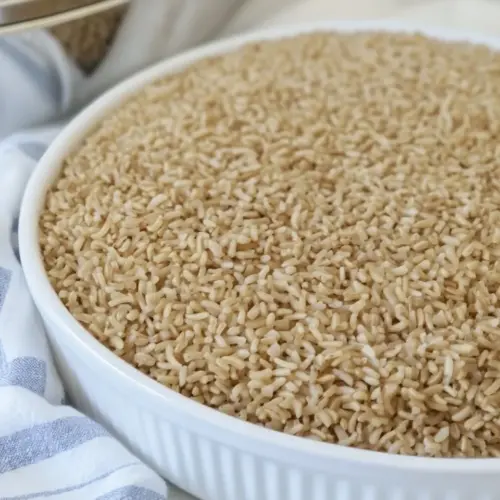
Moms Holiday Brown Rice
Moms Holiday Brown Rice is a cozy, creamy baked rice that combines pantry staples into a savory, crowd pleasing side. The tender rice soaks up rich canned consomme, boosted by a touch of Worcestershire and finished with melting butter that creates golden edges. It makes an easy weeknight dinner accompaniment or a nostalgic holiday favorite you will return to again and again.
Equipment
- Oven
- 9 X 13 baking dish
- Aluminum Foil
- Fork
- Measuring Cups
Ingredients
- 1 1/2 cups white rice Provide a tender, fluffy base by cooking until grains are separate; absorbs flavors from broths and seasonings while adding bulk to the dish.
- 2 10 oz cans of beef consume soup I used Campbell’s Add a savory, concentrated broth component that enriches the rice with meaty umami and moisture; helps create a cohesive, hearty texture.
- 1 Tbs Worcestershire Contribute a tangy, savory depth that enhances the overall flavor profile and balances sweetness and richness in the finished rice.
- 2 teaspoons onion powder Impart a warm, oniony background flavor that distributes evenly through the rice and boosts savory notes without adding moisture.
- 1 teaspoon garlic powder Offer mellow, aromatic garlic presence that rounds out savory flavors and supports the meaty broth and Worcestershire for complexity.
- 1/4 teaspoons salt Provide subtle salinity to heighten and balance flavors; used sparingly to avoid over-salting given the concentrated soup base.
- 1/2 teaspoon pepper Introduce mild heat and aromatic bite that lifts flavors and prevents the dish from tasting flat; adjust to personal preference.
- 1/2 cup 1 stick of sweet cream unsalted butter Deliver rich creaminess and buttery mouthfeel that enriches texture, aids in coating grains, and adds a pleasant, indulgent finish.
Instructions
- Preheat the oven to 350 and prepare a 9 x 13 baking dish with non stick cooking spray.: The first sensory cue is the gentle warmth of the oven when you open it, and a consistent preheat ensures even cooking throughout the dish. Spraying the pan prevents sticking and helps release those crispy corners, which I love. If you skip preheating you risk uneven cooking, where the center may remain underdone while the edges get over crisp. Make sure the oven rack is centered so the top heat is balanced and the rice cooks evenly.
- In the baking dish combine the rice, soup, worcestershire, onion powder, garlic, salt and pepper. Stir with a fork and spread the rice around the pan as much as possible. See tips and tricks for substitutions.: As you stir, notice the glossy sheen as the canned soup coats each grain of rice . The mixture will look wet but not soupy, and the aroma of Worcestershire and spices will become noticeable. Stirring with a fork helps separate the grains and distribute seasonings. The why behind this is uniform flavor penetration; uneven mixing leads to pockets that are bland or overly salty. A common mistake is under stirring, which can yield unevenly seasoned rice.
- Cut the butter into pats and place carefully around the surface of the dish (it will float on top of the consume).: You should see a flat, even layer of the rice mixture with no large clumps. Spreading encourages uniform heat exposure and consistent texture from edge to center. The sound is minimal, but you can feel the distribution under the back of the fork. If you leave it mounded, the center will take longer to cook. Take the extra minute to level the surface, it pays off in consistent doneness.
- Tightly cover the top of the dish with aluminum foil and make sure it is sealed well.: The visual cue here is small pale dots of butter floating on the surface, evenly spaced. As the dish bakes the butter melts and bastes the top of the rice, creating gloss and aiding browning at the edges. The reason this matters is fat enhances mouthfeel and encourages that slight crust. Avoid crowding all the pats in one area, or you will get uneven melting and localized richness.
- Place in the center of the oven and bake for 1 hour. After an hour, remove from the oven and allow to rest for 5 minutes before removing the aluminum foil. Serve hot.: When sealed, steam will be trapped, producing a gentle simmering that cooks the rice through. You should not hear a vigorous bubbling, but when you lift the foil later you will see steam escape. Tightly sealed foil prevents excessive moisture loss; if the foil is loose, the rice can dry and turn chewy. A common error is using foil that tears, which lets steam escape and affects texture.
- Place in the center of the oven and bake for 1 hour: During baking the aroma will deepen, and you may notice a faint sizzling from the edge where the butter meets the pan. The one hour timeframe allows the grains to absorb liquid fully and soften. This step matters because slow, steady heat produces tender rice. A mistake to avoid is opening the oven repeatedly, which releases heat and prolongs cooking time, potentially resulting in uneven texture.
- After an hour remove from the oven and allow to rest for 5 minutes before removing the aluminum foil: Resting lets residual steam finish the cooking gently and stabilize the texture, preventing a wet, separated finish. You will feel warmth radiating from the dish and see a settled surface. If you remove the foil immediately, steam will escape too quickly and the top may dry out. Resist the urge to dig in immediately, because cutting into it too soon can make the rice seem gluey rather than cohesive.
- Serve hot: The final cue is the inviting steam and the glossy surface dotted with golden spots. Serving while hot ensures the rice has the best texture and flavor, with the edges still slightly crisp and the interior tender. If you refrigerate then reheat, the texture changes so I recommend warming gently to preserve creaminess. A common mistake is leaving it uncovered on the counter too long, which can lead to a dry surface.
Notes
- Adjust the butter amount Use between 1/2 cup and 1 stick to change richness find your preferred balance between creamy and indulgent.
- Swap soup brands carefully Different canned consommes vary in salt and thickness so taste and adjust added salt accordingly.
- Evenly space butter pats Placing them across the surface ensures consistent browning and prevents overly greasy pockets.
- Scale up for gatherings Double the ingredients and use a larger pan to serve more people while keeping bake time similar with careful monitoring.
- Watch the corners If you want extra crispiness, leave the dish uncovered for the last few minutes of baking but monitor to avoid burning.