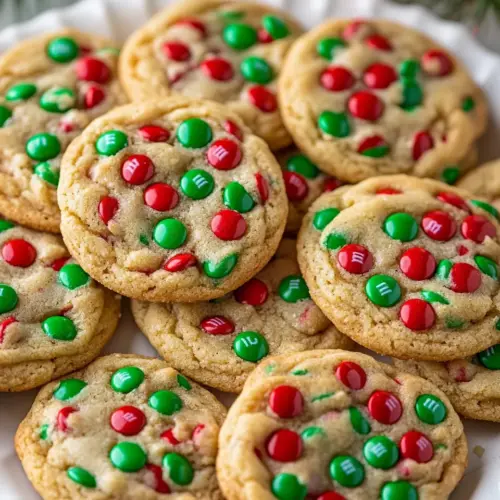
M&M Christmas Cookies Recipe
M&M Christmas Cookies Recipe delivers soft, chewy cookies studded with colorful chocolate candies, offering a sweet, buttery aroma and festive crunch in every bite. This easy to follow cookie recipe is ideal for holiday parties and cookie exchanges, creating visually joyful treats that are quick enough for a weekend baking session. Make a batch to share and watch them disappear fast.
Equipment
- Electric Stand Mixer
- Paddle attachment
- Cookie Scoop
- Baking Sheets
- Parchment Paper
- Wire Rack
Ingredients
- 2 1/3 cup s (330 g) all-purpose flour *(scoop and level flour to measure) Provide structure and bulk to the cookie dough, creating the framework that holds other ingredients together; measure by scooping and leveling to avoid dense cookies and achieve the intended texture.
- 3/4 tsp baking soda Leaven the dough by producing carbon dioxide during baking, helping cookies spread slightly and develop a tender crumb; distribute evenly in the dry mix to ensure uniform rise.
- 3/4 tsp salt Enhance overall flavor and balance sweetness while strengthening gluten formation lightly; dissolve into wet ingredients to ensure even seasoning throughout the dough.
- 1 cup (226 g) unsalted butter, at room temperature Cream with sugars to incorporate air and create a light, tender crumb, while contributing richness and mouthfeel due to its fat content; keep at room temperature for easier mixing and proper emulsion with sugars.
- 1 cup (200 g) packed light brown sugar Add deep, caramel-like sweetness and moistness, helping produce a chewy texture and darker color in the cookies; pack lightly into the measuring cup for an accurate amount.
- 1/2 cup (100 g) granulated sugar Provide straightforward sweetness and help with cookie spread and crisp edges when creamed with butter; measure by spooning or leveling to ensure correct sweetness balance.
- 1 large egg Bind ingredients together and contribute moisture and structure through coagulation of proteins during baking, aiding in overall tenderness; beat in until combined for even distribution.
- 1 egg yolk Increase richness and tender crumb by adding extra fat and emulsifying properties, which help produce softer cookies and a slightly richer flavor; incorporate with the egg for uniform texture.
- 2 tsp vanilla extract Impart aromatic flavor and enhance overall sweetness perception while complementing chocolate; measure precisely and add to the wet mixture to evenly distribute its flavor.
- 1 1/2 cup s (10 to 11.5 oz bag) M&M's regular or mini size, milk chocolate or dark chocolate Introduce chocolatey chunks and colorful festive appearance while adding chew and occasional melty pockets; fold in toward the end of mixing to avoid excessive color bleed or breakage.
Instructions
- In a mixing bowl whisk together flour, baking soda, and salt. Set aside.: The first scent you notice is flour and slightly saline air, a neutral base that will soon transform. Whisking combines the dry components so the leavening and salt distribute evenly, which prevents pockets of over risen or salty bites. Visually, the flour should look uniform and pale, with no streaks of baking soda. A common mistake is to skip sifting or whisking, which can yield uneven texture, so take the minute to blend these now.
- In the bowl of an electric stand mixer fitted with the paddle attachment cream together butter, brown sugar and granulated sugar on low speed until well blended. Scrape down bowl.: You will hear a soft, rhythmic whir as the butter and sugars combine, and soon the mixture becomes glossy and a touch aerated. The aroma will shift to a warm, caramel like note as the molasses in the brown sugar melds with butter. Scraping the bowl ensures no unincorporated butter hides on the sides, which would yield uneven texture. Avoid over creaming, since that can introduce too much air and create a cakier cookie rather than a chewy one.
- Mix in egg, then mix in egg yolk and vanilla extract. Scrape down bowl.: As you add the egg and yolk, the batter will look smoother and slightly glossy, with a richer color. The liquid binds fats and sugars, making the dough cohesive. The vanilla scent will lift the mixture, adding warmth. If the mixture appears curdled, chill briefly and mix gently, because over mixing at warm temperatures can separate the fats. One pitfall is adding cold eggs to warm butter, which can cause lumps, so use room temperature eggs when possible.
- Add flour mixture to butter mixture and mix just until combined. Then add half of the M&M's (3/4 cup) and mix in.: When the dry mix joins the wet, the dough will thicken and pull away slightly from the bowl, with a tender, slightly sticky texture. Mixing just until combined prevents over development of gluten which would make the cookies tough. Once the dough forms, fold in half the M&M's so candy pockets live throughout the interior. Watch for streaks of flour, as under mixing leaves raw flour pockets, and over mixing leads to dense cookies.
- Scoop dough out 3 Tbsp at a time and shape into balls (I recommend a #20 cookie scoop). Press remaining M&M's (3/4 cup) randomly around each dough ball.: The dough will feel cool and slightly tacky, and using a scoop guarantees uniform cookies that bake evenly. Rolling into neat balls gives consistent browning and height. Pressing extra M&M's on top improves the final look, giving colorful spots on the surface. A common error is to make inconsistent sizes that bake at different rates, so steady scooping helps avoid burnt or underdone cookies.
- Transfer to a small baking sheet lined with parchment paper (or a large flat plate), cover and refrigerate 2 hours.: Chilling firms the butter, reducing spread in the oven and concentrating flavors. The dough will grow a bit more cohesive and firm to the touch. Refrigeration also lets the flour hydrate slightly, improving chew after baking. If you skip chilling, cookies often flatten, so plan ahead and give the dough the time it needs for best texture.
- During the last 15 minutes of chilling preheat oven to 350 degrees. Line two 18 by 13-inch baking sheets with parchment paper.: Preheating ensures consistent oven temperature when the chilled dough goes in. The dry, slightly sweet scent of the preheating oven hints at the transformation to come. Lining sheets with parchment prevents sticking and promotes even browning. A misstep is crowding the pans, which causes cookies to bake into each other, so give each cookie space.
- Transfer 10 dough balls to lined baking sheet, spacing 2 inches apart. Bake in preheated oven until done to desired liking, about 13 to 16 minutes (they should appear slightly puffed and under-baked).: As they bake you will see the edges set and the centers remain slightly soft, with M&M's softening but retaining shape. The aroma becomes richer, with browned butter and caramel notes. Baking to slightly underdone ensures a soft interior after cooling. Over baking will yield dry cookies, so watch for slight puffing and gentle browning at the edges.
- Let cool on baking sheet 5 minutes then transfer to a wire rack to cool. Repeat with remaining cookie dough balls.: The cookies will continue to set as they cool, and the short rest on the sheet lets them firm without breaking. Moving them to a wire rack prevents sogginess, encouraging air to circulate and cool evenly. If you try to move them immediately you can deform their shape, so wait the five minutes for best results.
Notes
- Chill for texture Use the full two hour chill to minimize spread and keep centers chewy.
- Cookie scoop for uniformity A #20 scoop helps cookies bake at the same rate for consistent batches.
- Extra candies on top Pressing additional M&M's after scooping improves appearance and ensures colorful tops.
- Weigh flour when possible Weighing avoids inconsistent texture from packed cups, especially in humid climates.
- Bake time for preference For softer cookies aim for 13 minutes, for more set edges push toward 16 minutes, but watch closely.