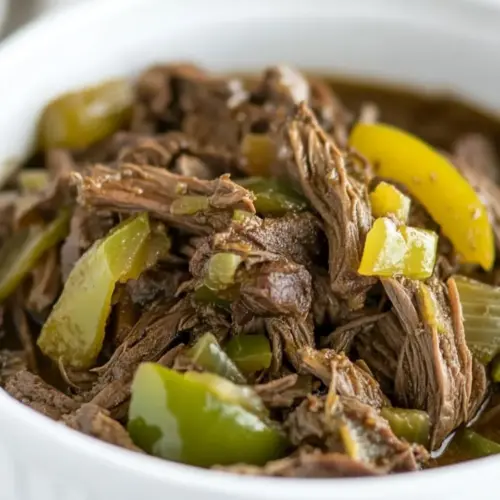
Mississippi Pot Roast
Mississippi Pot Roast is a tangy, slow cooked marvel that turns a simple chuck roast into fork tender, flavorful meat. With bright pepperoncini peppers, savory au jus gravy mix, and herby ranch mix, this easy weeknight dinner delivers juicy comfort and crowd pleasing results, perfect for sandwiches, mashed potatoes, or rice.
Equipment
- Slow Cooker
- Forks
Ingredients
- 3 lbs chuck roast Slow-cook to tenderize and provide the rich, beefy foundation for the pot roast; its marbling melts during long braising, enriching the cooking liquid and creating succulent shredded meat that soaks up the surrounding flavors.
- 12 oz sliced pepperoncini peppers Add sliced, tangy peppers to introduce bright acidity and mild heat; their briny juice helps balance the richness of the beef while infusing the braise with a subtle, piquant flavor that complements the gravy and seasoning mixes.
- 1 oz au jus gravy mix Dissolve into the cooking liquid to supply concentrated beef-flavored seasoning and savory depth; the powdered gravy mix thickens slightly as it simmers, helping form a glossy sauce that clings to the roast and juices.
- 1 ranch mix Sprinkle in to contribute a creamy, herb-forward seasoning profile with savory onion and parsley notes; the ranch mix brings salt, tang, and a familiar umami lift that enhances the overall savory-sour balance of the dish.
- 4 garlic cloves, pressed Crush and press to release pungent, aromatic garlic oils that permeate the braising liquid; the pressed cloves add sharp, garlicky warmth and depth that rounds out the savory components and brightens the roast's flavor.
Instructions
- Add chuck roast to cork pot.: Close your eyes and imagine placing a cold, slightly marbled chuck roast into the slow cooker, feeling the firm weight settle. The surface should be cool, not room temperature, which helps the exterior hold its juices as it warms slowly. You want the roast to sit centered so heat distributes evenly. A typical mistake is overcrowding the pot with additional items, which can block heat and result in uneven cooking; leave space for air circulation and juices to pool around the meat.
- Cover roast with ranch mix, au jus mix, and pressed garlic.: As you sprinkle the ranch mix and au jus gravy mix over the top, inhale the herb and savory notes that begin to mingle with the sharp aroma of fresh garlic . These dry seasonings will dissolve into the meat juices, creating a bold foundation for the sauce. Rub them lightly onto the surface so flavors penetrate as heat extracts juices. Don’t overwork the meat here, because handling it excessively can compact the fibers and slightly affect texture.
- Add all of the pepperoncini peppers on top and around the roast, Pour 1/2 cup of the juices from the jar over the top and discard the rest.: The bright pop of the pepperoncini peppers immediately lifts the aroma into a tangy, vinegary space, cutting through the rich beef. Arrange the slices so they sit both on top and around the roast, ensuring the acid touches multiple surfaces. Measure out exactly one half cup of the jar juices to pour over the meat; this adds both liquid and acidity to coax connective tissue into gelatin. Avoid pouring the entire jar, which can overwhelm the balance and make the sauce overly tart.
- Cook on low for 6-8 hours or until the roast is tender and easily pulls apart.: As the cooker hums, the kitchen will slowly fill with a deep, meaty perfume mingled with peppery tang. The long, low heat gradually breaks down collagen in the chuck roast , transforming it into tender ribbons. Wiggle a fork into the center around the six hour mark to test tenderness; when the meat yields easily, it’s done. A common pitfall is lifting the lid too often to check, which releases heat and can extend cooking time, so try to resist frequent peeks.
- Pull roast apart. Mix pulled roast back into the juices. Serve warm over mashed potatoes, on sub rolls, or over rice.: This is the satisfying moment when the meat gives under gentle tugs and separates into strings that glisten with juice. Use two forks or meat claws and feel the silky texture as you shred, noting how the strands pick up the seasoned sauce. If you encounter resistant pieces, return the roast to the cooker for additional time rather than forcing it, which can make the meat stringy.
- Mix pulled roast back into the juices: After shredding, fold the tender ribbons back into the accumulated juices so every strand soaks up that seasoned liquid, yielding glossy, flavorful pieces. Stir gently so the juices coat evenly, tasting one warm strand to adjust seasoning mentally for next time. A misstep is draining the juices completely; those liquids are where the concentrated flavor lives, so reserve and mix them back in.
- Serve warm over mashed potatoes, on sub rolls, or over rice: The final act is plating, where steam rises and the aroma intensifies, creating an inviting scene. Spoon the juicy beef over a mound of creamy mashed potatoes for homey comfort, tuck it into a soft sub roll for a messy, delicious sandwich, or pair it with steamed rice for a simple bowl. Garnish is optional, but serving immediately while hot ensures the best texture. One common mistake is letting leftovers sit at room temperature too long before refrigerating, which affects both safety and flavor.
Notes
- Chuck roast alternative Use a round roast for a leaner option or beef brisket if you prefer slices over shredded meat; each substitute will change tenderness and cook time slightly.
- Pepperoncini form Sliced pepperoncini are convenient and disperse flavor quickly, but whole peppers work fine if you prefer less surface contact and milder distribution.
- Ranch seasoning choice Store bought ranch mix is straightforward, but homemade ranch powder can be used if you want to control salt and herbs; adjust quantities accordingly.
- Make ahead strategy Prepare the roast the day before then reheat gently in the oven covered with foil, or thaw frozen portions overnight in the fridge before reheating to preserve texture.
- Reheating tips Warm leftovers in short microwave bursts, stirring between intervals, or cover with foil and reheat in a 300 degree oven until just warmed through to avoid drying out.
- Freezing guidance Freeze in meal sized portions with plenty of sauce to keep meat moist; thaw in the refrigerator overnight before reheating for best texture.