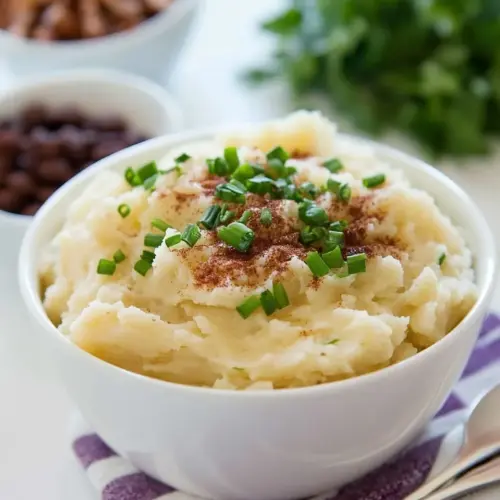
Miso Mashed Potatoes
Miso Mashed Potatoes are creamy, savory, and easy to make, delivering deep umami in every spoonful. This winter ready side combines tender red potatoes with butter, milk, and miso for a silky texture and bright finish from fresh chives. Perfect for an easy weeknight dinner or festive table, this mash elevates simple ingredients into something irresistibly comforting.
Equipment
- Large Pot
- Potato Masher
- Colander
Ingredients
- 2 pounds red potatoes, scrubbed Provide body and starch to the dish, offering a creamy base when boiled and mashed; scrubbed red potatoes hold their shape well and yield a smooth texture when prepared correctly. Enhance flavor by cooking until tender, then draining and returning to heat briefly to evaporate excess moisture before mashing for optimal consistency.
- 2 tablespoons butter Add richness and a silky mouthfeel, melting into the warm potatoes to bind and carry flavors throughout the mash. Soften butter gently into the potatoes to create a luxurious texture without overpowering the subtle miso notes.
- 2 tablespoons Miso & Easy (or 1 tablespoon regular miso paste) Impart savory umami and depth, with Miso & Easy or regular miso paste contributing a salty, fermented complexity that elevates simple potatoes into a more interesting side dish. Dissolve the miso in a bit of warm milk or stir into softened butter to distribute its flavor evenly through the mash.
- 2 tablespoons milk Loosen and cream the potato mixture while adding a touch of dairy flavor; warm milk helps achieve the desired mash consistency without making it gluey. Adjust the amount to reach preferred texture, adding more for creamier results or less for a firmer mash.
- 2 teaspoons minced fresh chives, parsley or green onion Provide a fresh, mild oniony-herb finish when minced and sprinkled over the potatoes, adding color and a bright contrast to the rich, savory mash. Use chives, parsley, or green onion to introduce a delicate aromatic lift and subtle textural bite.
Instructions
- In a large pot, add the potatoes and cover with water by 2 inches. Bring to a boil, then turn heat to medium and let cook for 20 minutes, or until the potatoes are easily pierced with a fork.: The kitchen will fill with a faint earthy aroma as the potatoes heat and steam, and you should hear a steady, gentle simmer rather than a violent boil. Visual cues include bubbles breaking the surface and the skins wrinkling slightly on the largest pieces. Why this matters, the even simmer ensures the potatoes cook through uniformly so your final mash has consistent texture. If you rush and leave the heat too high, the exterior can break down before the centers are tender, resulting in mealy texture. One common mistake is boiling too hard, which can cause the potatoes to absorb excess water and become waterlogged, diluting flavor.
- Drain the water, leaving the potatoes in the pot. Mash the potatoes with a potato masher. Add in the remaining ingredients and mix well. Taste and season with additional miso (needs more flavor) or milk (too thick) if needed.: When you drain, steam will rise, smelling faintly of cooked potatoes , and leaving them in the pot lets residual heat evaporate off some moisture so the mash is not watery. Use a potato masher to press through lumps until you reach a slightly rustic consistency, with tiny bits of potato remaining for texture. This technique matters because overworking cooked potatoes can create a gluey paste rather than a creamy mash. Watch for a starchy sheen that signals too much stirring, and stop mashing once you get that tender but not paste like feel. A common error is using a blender or food processor, which overworks the potatoes and makes them gummy.
- Add in the remaining ingredients and mix well.: As you add warm butter , miso , and milk , you will notice the mash turning glossy and silkier, and the aroma will gain a savory, slightly tangy layer from the miso . Mixing while the potatoes are still warm allows the butter to melt evenly and the miso to dissolve into the mass, ensuring cohesive flavor. The reason this order matters is temperature and dispersion, warm fat and liquid incorporate more smoothly than cold. One troubleshooting tip, if the mash seems too stiff, add more warm milk a teaspoon at a time, tasting as you go. Avoid adding too much liquid at once which can make the mash soupy.
- Taste and season with additional miso (needs more flavor) or milk (too thick) if needed.: This final tasting is where the dish comes alive, with the full interplay of creamy butter , savory miso , and the gentle sweetness of the potatoes . Use small increments when adjusting, since both miso and milk can quickly swing the balance. If you add more miso , expect a deeper, slightly fermented aroma and a saltier profile, so proceed carefully. Conversely, if you loosen with additional warm milk , the texture becomes silkier and milder. A frequent mistake is over seasoning at this stage; mix and rest for a minute, then taste again before adding more.
Notes
- Warm your dairy Before adding the milk or butter, warm them slightly so they blend into the mash without cooling it down, preserving the glossy texture.
- Measure miso by taste Start with a conservative amount of miso because its saltiness can vary, then adjust after stirring and resting for a minute.
- Keep some potato texture Resist the urge to puree, since a lightly textured mash provides a more satisfying mouthfeel than a totally smooth purée.
- Use the potato cooking water sparingly If you need to thin the mash, a spoonful of reserved cooking water can help, but use warm milk first for a richer result.
- Fresh herbs last Add minced chives, parsley, or green onion at the end so the brightness remains vivid and not cooked away.