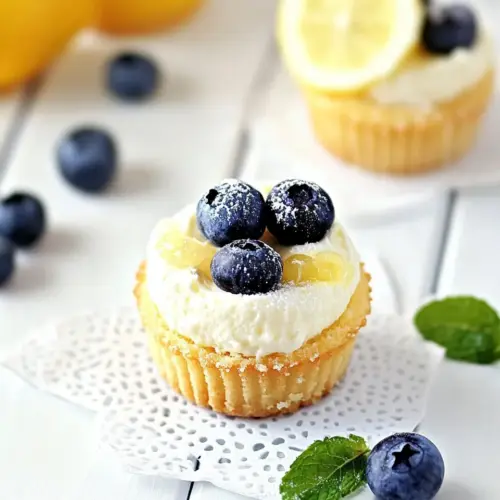
Miniature Lemon Blueberry Cheesecakes
Miniature Lemon Blueberry Cheesecakes are creamy, bright, and perfectly portioned for gatherings. The buttery graham crust contrasts beautifully with the silky cream cheese filling and zesty lemon, while glossy blueberry jam and fresh blueberries add color and pop. These easy mini cheesecakes bake quickly, chill to a luscious texture, and make a delightful treat to share.
Equipment
- Muffin Tin
- Muffin liners
- Food Processor
- Mixing Bowl
- Measuring Spoon
- Small Bowl
- Pastry Brush
Ingredients
- 4 sheets graham crackers Crush into fine crumbs to form the base of the cheesecake cups; combine with melted butter and a touch of sugar to bind and provide a sweet, crunchy crust that contrasts the creamy filling.
- 1 tablespoon granulated sugar Sweeten and balance the crust and filling; dissolve into the graham crumbs for structure or blend with cream cheese to enhance overall sweetness and texture.
- 2 tablespoons butter, melted Melt and incorporate to bind crust crumbs together and add richness; distribute evenly for a firm, buttery base that supports the cheesecake filling.
- 1 (8-ounce) package cream cheese, softened Soften and whip until smooth to create the creamy, tangy cheesecake filling; beat thoroughly to remove lumps and achieve a silky texture for miniature cheesecakes.
- 1/2 cup granulated sugar Sweeten the cream cheese filling to taste and help create a smooth, palatable profile; adjust sweetness for balance with tart lemon and blueberry elements.
- 1/2 teaspoon vanilla extract Enhance aroma and depth by adding a warm, floral vanilla note to the filling; stir in to round out flavors without overpowering citrus or berry notes.
- 1 large egg Incorporate and lightly beat to add structure and richness to the filling; cook briefly during baking to set the custard-like center for miniature portions.
- 1/2 teaspoon lemon zest Zest and fold in to deliver bright, citrusy lift that cuts through richness; distribute finely to infuse the filling with fresh lemon essence.
- 6 tablespoons blueberry jam, separated Spoon and reserve to add concentrated fruity sweetness and shine; swirl or dollop into the filling for pockets of blueberry flavor and visual appeal.
- 1/2 pint blueberries Scatter fresh for bursts of juicy texture and natural acidity; use as a topping or fold lightly into the filling to provide fresh fruit contrast and color.
- powdered sugar for dusting, optional Dust lightly over finished cheesecakes to add a delicate sweetness and visual polish; apply sparingly for an elegant presentation without overpowering flavors.
Instructions
- Preheat the oven to 350 degrees Fahrenheit. Line a muffin tin with 9 liners and fill up half of the other empty cups with water. This ensures even baking.: When the oven warms up you will notice a dry, steady heat that helps the crust set quickly and the filling bake evenly. The even temperature ensures the edges become a very light brown while the centers remain slightly jiggly, which is what you want. A common mistake is skipping the water bath or wetting only one side of the pan, which can cause uneven baking; filling half the other empty cups with water creates a moisture rich environment that promotes gentle, even cooking. Use an oven thermometer to confirm the 350 degrees Fahrenheit reading if your oven runs hot or cold.
- In a food processor, pulse the 4 sheets graham crackers to crumbs. Stir in 1 tablespoon granulated sugar and 2 tablespoons butter. Press an even amount of graham cracker crust into the bottom of each muffin liner, about 1 tablespoon.: The sound of the crackers turning to fine crumbs tells you they are ready, and the aroma becomes warm and biscuity. Adding 1 tablespoon granulated sugar and 2 tablespoons butter melts into the crumbs, clinging together so they press neatly into the liners. If the crumbs are too coarse the crust may not hold; pulse to a sandy texture for the best binding. Avoid over processing into powder, which can make the crust too dense.
- Press down the crust with the backside of a measuring spoon and set aside.: Pressing with the backside of a measuring spoon compacts the crust so it forms a solid base and yields a satisfying crunch against the creamy filling. You'll feel the resistance change as the crust firms up, and a light pat ensures even thickness. A common pitfall is pressing unevenly, creating thin spots that collapse when eating; take a few extra seconds to level each cup uniformly.
- In a medium-sized bowl, combine the softened 1 (8-ounce) package cream cheese and 1/2 cup granulated sugar. Beat until smooth and creamy. Add 1/2 teaspoon vanilla extract, 1 large egg, and 1/2 teaspoon lemon zest. Beat until combined.: Once pressed the crust should look cohesive and slightly glossy from the butter . Setting them aside gives you space to focus on the filling, and it helps maintain the compacted shape before baking. If you notice loose crumbs after pressing, press a touch more firmly to ensure the crust will stay intact after baking. Try not to overwork the crust, as too much pressure can make it overly dense.
- Spoon the cheesecake filling evenly between the 9 cups and bake for 20-22 minutes. The centers will still jiggle a little bit, but the edges should be a very light brown.: The first sensory cue is the shift from lumpy to silk as you beat the cream cheese and sugar , releasing a creamy, slightly tangy aroma. Add 1/2 teaspoon vanilla extract , 1 large egg , and 1/2 teaspoon lemon zest , then beat until combined. This mixture should be smooth and glossy, indicating the sugar has dissolved and the texture is right. If the cream cheese is still cold, you may get lumps, so ensure it is softened; scraping the bowl frequently helps achieve homogeneity.
- Remove from the oven and let cool at room temperature for 30 minutes and then transfer to the fridge and let cool for at least 2 hours. The cheesecakes may have risen in the oven and will deflate quite a bit while cooling.: As they bake the kitchen will smell faintly of butter and sugar, and you'll see the edges set while centers wobble slightly. That gentle jiggle signals a creamy interior once chilled. A typical error is overbaking; watch closely around the 20 minute mark because even small ovens can add extra heat. The edges should be a very light brown while the centers remain slightly soft.
- Once the cheesecakes have been cooled, place 4 tablespoons of blueberry jam in a small bowl and microwave for 20-25 seconds. Spoon 1/2 tablespoon of jam on top of each cheesecake and spread to cover the top.: Cooling first on the counter lets them settle so they do not crack, and the transfer to the fridge helps the texture firm to a sliceable creaminess. While cooling, you may notice slight deflation which is normal as trapped air escapes; this yields a denser, silky profile. Avoid jarring or moving the pan when warm, since sudden movement can cause sinking or cracks.
- Immediately top with 1/2 pint blueberries.: Warming the blueberry jam loosens it so it spreads smoothly and creates a glossy sheen. The aroma becomes fruity and sweet, signaling readiness. If the jam is too hot it can melt fresh blueberries , so warm briefly and stir; the aim is a spreadable glaze, not a syrup. A common oversight is overheating which can make the jam too thin to glaze properly.
- Add the remaining 2 tablespoons in the same small bowl and microwave for 10-15 seconds. Using a pastry brush, brush the tops of all of the fresh blueberries with the jam. Sprinkle powdered sugar on top if desired.: The sight of deep purple spreading across the pale filling is instantly appealing, and the contrast heightens the presentation. Use a small spoon for control, and a gentle motion to avoid disturbing the set filling. If you drop too much at once the jam can run down the sides, so apply in measured amounts for a neat finish.
- Immediately top with 1/2 pint blueberries: Placing fresh blueberries while the jam is still tacky lets them adhere and adds a fresh burst in each bite. The cool pop of fruit contrasts with the creamy filling and the jam enhances color and shine. Arrange them evenly for a polished look, and avoid stacking too many which can make the top heavy and cause berries to fall off when serving.
- Add the remaining 2 tablespoons in the same small bowl and microwave for 10 to 15 seconds: Warming the leftover blueberry jam briefly gives you a thin glaze to brush over the berries, creating a professional glossy finish. Use a pastry brush to coat each berry lightly, which seals in moisture and adds visual appeal. If you brush too hard you may displace berries, so use gentle strokes and check for any pooling jam around the edges.
- Sprinkle powdered sugar on top if desired: A light dusting of powdered sugar brightens the presentation and adds a delicate sweetness. Sifting from a small distance creates an even snowfall effect. Be mindful not to overdo it; heavy dusting can hide the natural gleam of the jam and berries.
Notes
- Soften the cream cheese: Leave the cream cheese at room temperature for about 30 minutes so it mixes into an ultra smooth filling, cold cheese will create lumps and require more beating which can whip in air.
- Even crust portions: Use a tablespoon measure to portion the crust so each mini cheesecake bakes uniformly and slices are consistent, uneven crusts can cause imbalance in texture and baking time.
- Water bath trick: Fill half of the other muffin cups with water when baking to create gentle steam which prevents cracking and ensures a silkier set in the centers.
- Jam glazing: Warm only part of the blueberry jam at first to spoon over, then warm the rest to brush the berries for a glossy finish, overheating will make it too thin to adhere properly.
- Make ahead: Bake and chill the cheesecakes up to two days in advance, add the jam glaze and fresh blueberries just before serving to keep them looking bright and fresh.
- Presentation tip: Dust lightly with powdered sugar right before serving for a delicate, bakery style appearance that complements the glossy jam and fresh fruit.