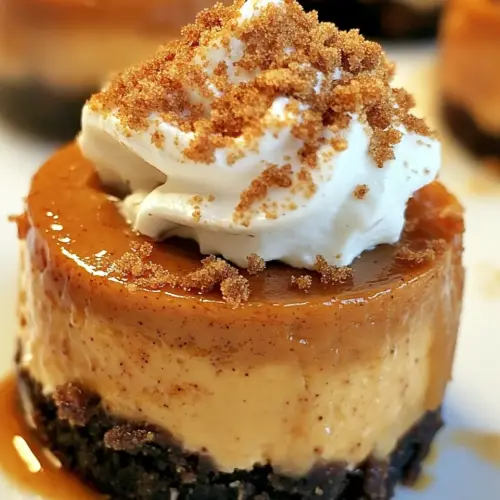
Mini Pumpkin Cheesecakes With Gingersnap Crust
Mini Pumpkin Cheesecakes With Gingersnap Crust are creamy, spiced, and perfectly portioned for gatherings. The crispy gingersnap crust complements the smooth, pumpkin laced filling for an easy, festive dessert that feels luxurious yet simple to make. Ideal for Thanksgiving or cozy fall evenings, these minis are a convincing reason to bake now.
Equipment
- Food Processor
- Mini cheesecake pan
- Electric Mixer
Ingredients
- 24 g ingersnap Cookies Crush finely to form a crunchy base that provides sweet, spiced texture for the gingersnap crust.
- 3 tablespoons melted butter Melt thoroughly to bind crumbs together and create a crisp, buttery crust that holds its shape.
- 1 package 8 ounces PHILADELPHIA Cream Cheese, softened Soften fully to ensure a silky, lump-free filling that contributes rich, creamy body and tang.
- 1/2 cup canned pumpkin Puree smoothly to add moist pumpkin flavor and tenderize the filling while lending autumnal color.
- 1/2 cup sugar Dissolve completely to sweeten the cheesecake, balance spices, and help control overall sweetness.
- 1/2 tsp vanilla Add gently to enhance flavor depth and floral notes while contributing aromatic sweetness to the filling.
- 1/2 teaspoon cinnamon Sprinkle evenly to contribute warm, woody spice and complement the pumpkin and ginger flavors.
- 1/2 teaspoon pumpkin pie spice Incorporate carefully to introduce a blend of warming spices that intensifies classic pumpkin pie character.
- 1/4 tsp salt optional Use sparingly to balance flavors and heighten sweetness while preserving the filling's flavor profile.
- 1 egg Beat lightly to provide structure and richness, helping the filling set while adding a smooth texture.
- COOL WHIP Whipped Topping if desired Spoon lightly on finished cheesecakes if desired to add airy, chilled sweetness and creamy contrast.
- Caramel sauce if desired Drizzle optionally over servings to introduce sticky, sweet caramel notes and enhance presentation.
Instructions
- Preheat oven to 350 degrees F.: You will notice a faint warmth in the kitchen as the oven reaches 350 degrees F , which is ideal for a gentle set that keeps the centers creamy rather than dry. This temperature encourages the edges to firm slightly while the middle finishes with a custardy texture. A common error is placing the pan in before the oven is fully heated, which can produce uneven set and longer bake times. If your oven runs hot, consider checking with an oven thermometer so you do not overbake.
- In a food processor, grind gingersnap cookies to crumbs. Add melted butter and pulse until mixed.: As you pulse, the room will fill with sharp ginger and molasses aromas from the gingersnap crumbs, and the crumbs will begin to clump as the butter coats them. This signals that the mixture will press into a cohesive crust that holds together when baked. If the crumbs look dry or powdery after the first pulses, add the butter a little at a time until the texture resembles damp sand. Over processing can make the mixture too fine and pasty, which reduces the crunchy contrast, so pulse in short bursts.
- Lightly spray mini cheesecake pan with non stick cooking spray.: The faint hiss of spray prevents sticking and helps the crust and filling release cleanly, keeping the mini shapes intact. Even with a good crust bind, a non stick barrier makes unmolding effortless and preserves presentation. Avoid heavy spraying, which can pool and create oily spots; a light, even coat is all you need.
- Place approximately 1 tablespoon of gingersnap crust mixture into each of the 12 cheesecake cavities in pan. Press down with spoon or small glass.: When you press the crust, you will feel it compact and hold shape beneath your tool, and the surface should be even and firm enough to support the filling. This tactile feedback is important to ensure an even bake and a stable base for each mini. Press too lightly and the crust may crumble when served, press too hard and it will become dense instead of crisp. Aim for firm but not packed solid.
- Beat cream cheese, pumpkin, sugar, vanilla, salt and spices with electric mixer on medium speed until well blended. Add eggs and beat until just blended.: As you blend, the batter transforms from curdled lumps into a glossy, smooth mixture, and the room will smell warmly spiced. The cream cheese must be fully softened so the mixer produces a velvety texture without streaks. Scrape the bowl to incorporate any pockets of unblended cheese. A frequent mistake is over mixing at high speed, which introduces too much air and can cause a top that cracks when baking, so keep the speed moderate.
- Spoon cream cheese mixture into mini cheesecake pan on top of gingersnap crusts. Bake for 20-25 minutes until set. Remove from oven and let cool in pan for at least 30 minutes. Chill for at least two hours, or preferably overnight.: When you add the egg , beat only until the streaks disappear and the batter reads homogeneous; this restraint keeps the texture dense and creamy rather than souffle like. You'll notice the batter become slightly looser and silkier, a visual cue that it is ready to be portioned. Overbeating at this stage traps air and can lead to puffed centers that collapse as they cool.
- Spoon cream cheese mixture into mini cheesecake pan on top of gingersnap crusts.: As you spoon, watch the contrast between the pale, glossy filling and the deeper crust tone. The filling should settle smoothly without large air pockets, and a gentle tap on the counter can coax out tiny bubbles. If you see large pockets of air, use a toothpick to release them before baking. Filling the cups unevenly will cause inconsistent bake times, so aim for uniform portions.
- Bake for 20 to 25 minutes until set.: During baking, the aroma of warm spices will intensify and the edges will gain a faint hint of golden color while the centers remain slightly jiggly but not liquid. This visual cue is crucial: a slight wobble in the middle indicates a creamy finish, while a fully firm center can mean overbaking. Opening the oven frequently causes temperature swings, so avoid it; instead, rely on the gentle jiggle test near the lower end of the time window.
- Remove from oven and let cool in pan for at least 30 minutes.: After baking, the softened centers will continue to set as they cool, and you may notice the surface settling and the aroma mellowing. Letting them rest in the pan prevents sudden cooling that could cause cracking, and it also firms the crust so the minis hold shape during removal. A mistake is attempting to unmold while too warm, which often leads to collapsed or messy edges; patience here pays off.
- Chill for at least two hours, or preferably overnight.: Chilling transforms the texture, making the filling dense and slice able while the spices meld and the crust firms further. Overnight chilling deepens flavor and produces a clean bite when served. Resist the temptation to skip this stage, as serving slightly warm will yield a looser, less cohesive texture.
Notes
- Soften the cream cheese Properly softened cream cheese blends smoothly. Take it out of the fridge at least 30 minutes before you plan to mix, or microwave in short 5 second bursts if you are short on time, checking often to avoid melting. Cold lumps cause a grainy texture that no amount of mixing can fully erase.
- Measure spices carefully Spices like cinnamon and pumpkin pie spice are potent. Add them precisely and taste the batter if you want to adjust, but remember that chilling intensifies spice perception slightly. Over spicing will mask the pumpkin and cream cheese balance.
- Bind the crust right The crumb and butter ratio creates the ideal crust. If the mixture does not clump when pressed between fingers, add a touch more melted butter sparingly. Too much butter makes the crust greasy, too little makes it crumbly.
- Use consistent portions Scoop the filling with a small cookie scoop or tablespoon to keep the bake uniform. Uniform portions mean uniform doneness across all minis. Different sized portions will bake at different rates and lead to uneven texture.
- Avoid overmixing Once the egg is added, mix only until combined. Overbeating incorporates air which raises the batter and then collapses, creating a cracked top. Gentle mixing preserves the dense, creamy texture you want.