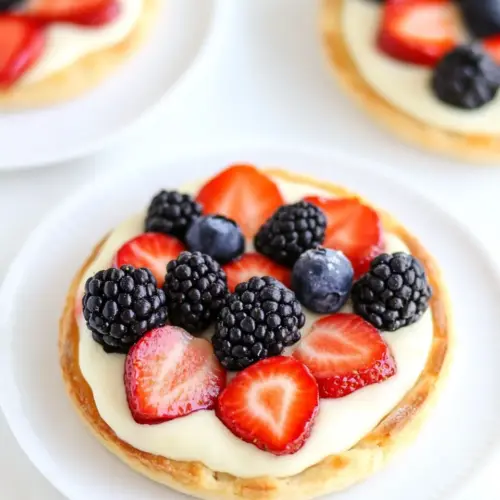
Mini Fruit Pizzas
Mini Fruit Pizzas bring together a buttery cookie base, creamy tangy cream cheese frosting, and bright fresh fruit for a light, colorful treat. These easy to assemble bite sized desserts are perfect for summer gatherings and simple enough for kids to help make. The result is a crisp yet tender base with creamy, citrus kissed topping and juicy fruit that makes everyone reach for seconds.
Equipment
- Mixer
- Muffin top pan
- wire cooling rack
- Offset Spatula
Ingredients
- 1/2 cup unsalted butter room temperature Creamy and softened to room temperature to ensure even creaming with sugar, contributing to a tender, rich cookie base. Helps incorporate air for a light texture and provides flavor and moisture to the dough.
- 2/3 cup granulated sugar Granulated sugar for sweetness and structure, creamed with butter to help leaven and create a delicate crumb. Balances flavors in the cookie base and promotes light browning during baking.
- 1 large egg Beaten and added to bind the dough while enriching flavor and color; eggs provide structure through protein coagulation. Helps create a tender crumb and aids in emulsifying fats and liquids for a uniform dough.
- 1 teaspoon lemon zest Finely grated to release bright citrus oils that lift the dough's flavor and complement the cream cheese frosting. Adds a fresh, zesty note without extra liquid to preserve dough texture.
- 1 teaspoon vanilla extract Added for aromatic warmth and depth, enhancing the overall sweetness with familiar vanilla notes. Helps round out flavors in both the cookie base and frosting when combined with citrus notes.
- 1 1/4 cups all-purpose flour Measured and sifted or whisked to form the bulk of the dough, providing gluten for structure when mixed. Ensures the cookies hold shape as mini pizza bases while remaining tender when not overworked.
- 1/2 teaspoon baking soda Included in a small amount to tenderize and mildly leaven the dough, helping cookies spread and rise slightly. Works with cream of tartar to create a balanced, soft texture in the finished bases.
- 1/2 teaspoon cream of tartar Used as an acid to stabilize whipped textures and provide mild lift when combined with baking soda; also contributes a subtle tang. Helps create a softer, slightly airy cookie while complementing the lemon zest.
- 1/4 teaspoons salt Added sparingly to enhance and balance sweetness while strengthening dough proteins; keeps flavors bright and prevents flatness. Ensures overall seasoning without altering the dough's moisture.
- For the Cream Cheese Frosting: Heading indicating the next section of the recipe, signaling a shift from the cookie bases to the creamy topping. Helps organize the recipe and clarifies that following ingredients belong to the frosting.
- 18 ounce package of cream cheese Softened and blended into frosting for a rich, tangy base that adds creaminess and stability. Provides the primary body and tart flavor that pairs well with sweet fruits and cookie bases.
- 2 tablespoons granulated sugar Added in a small amount to slightly sweeten and control the frosting's taste without making it overly sugary. Helps adjust sweetness precisely for balance with cream cheese and lemon.
- 1/2 cup powdered sugar Sifted into the frosting for smooth, stable sweetness and to help achieve pipeable consistency. Provides bulk and a clean sweetness that masks tang without graininess.
- 1 tablespoon fresh lemon juice Freshly squeezed to add bright acidity that cuts through the richness of cream cheese, enhancing overall flavor. Helps thin the frosting slightly for spreading and adds a clean citrus note.
- 1 teaspoon lemon zest Zested to intensify lemon flavor and add aromatic brightness to the frosting without extra acidity. Complements the cream cheese tang and ties the topping to the lemon notes in the dough.
- 1/2 teaspoon vanilla extract Added in a small quantity to round out the frosting's aromatic profile and enhance sweetness perception. Provides balance to the lemon and cream cheese while contributing a familiar bakery scent.
- Fruit for Decorating: Section header indicating the final component of the recipe, introducing fresh fruit used for decorating the mini pizzas. Guides assembly by separating decorative ingredients from baking and frosting steps.
- Strawberries sliced Sliced and arranged attractively on top to provide color, sweetness, and a fresh, slightly tart bite. Adds textural contrast and visual appeal while complementing the creamy frosting and buttery base.
- Blueberries Used whole to add small bursts of sweet-tart flavor and a pop of color, ideal for filling gaps between larger fruit slices. Offers antioxidant-rich juiciness and pairs well with the creamy frosting.
- Blackberries Placed as scattered jewels for deep flavor contrast and visual interest, contributing earthy-sweet notes and a jewel-like look. Adds size variety and a small tang that balances the overall sweetness.
Instructions
- Preheat the oven to 350 degrees F. Spray a muffin top pan with cooking spray and set aside.: The smell of warm air filling the kitchen is the first hint that the baking process is starting, and the oven at 350 degrees F gives the cookie bases a gentle, even heat so they bake through without burning at the edges. When you preheat fully, the cookie bottoms set as they hit the hot pan, creating a slight crisp exterior while the center stays tender. A common mistake is putting the pan into an oven that is not at temperature, which leads to uneven rise and greasier texture, so always wait for the oven to reach 350 before inserting your pan.
- With a mixer, cream the butter and sugar together. Add the egg, lemon zest, and vanilla. Mix until well combined.: As you cream softened unsalted butter and granulated sugar , listen for the change to a lighter, almost fluffy sound and watch the mixture become paler, which indicates air incorporation that will give the cookies lift. When you add the egg , lemon zest , and vanilla , fold them in until homogenous, taking care not to overmix which can toughen the dough. If the mixture looks curdled after the egg, keep mixing briefly until smooth; if you overbeat, the texture may become dense, so stop once combined.
- In a medium bowl, whisk together flour, baking soda, cream of tartar, and salt.: Whisking the dry ingredients ensures even distribution of all-purpose flour , baking soda , cream of tartar , and salt , which prevents pockets of leavening that could cause uneven rise. You should see a uniform pale mixture with no streaks of leavening. A miss here can create spots that puff more than others; if you skip whisking, the cookies may bake irregularly.
- Add flour mixture to the butter mixture and mix until just combined.: At this point the dough should come together without streaks of flour, and you will notice a slightly tacky but workable texture. Mixing until just combined preserves tenderness by avoiding gluten development. For troubleshooting, if the dough feels too dry, gently press a bit to see if it holds; if it crumbles, it may need a touch more moisture, but resist adding liquid as it will change the bake.
- Press about 1/4 cup of cookie dough into muffin top pan. Bake for 8-10 minutes, or until pizzas are slightly golden brown. Let the pizzas cool for 2-3 minutes in the pan. Remove to a wire cooling rack and cool completely.: When you press roughly 1/4 cup of dough into the prepared pan, you will form an even disk that spreads slightly as it bakes; this size helps create a thin, tender base. In the oven, watch the edges for a faint golden tint and a firm top, which happens around 8 to 10 minutes at 350, and releases a warm, buttery aroma. After removing, allow them to cool briefly in the pan so the bottoms firm up, then transfer to a wire cooling rack to cool fully; if you cut hot, the frosting will melt and the fruit will sink. A common error is underbaking, leaving the centers too soft, so wait until the surfaces are set.
- While the cookies are cooling, make the frosting. Using a mixer, beat the cream cheese, sugars, lemon juice, and lemon zest together until smooth. Spread frosting over mini fruit pizzas.: The cream cheese frosting should be glossy and silky, with the aroma of citrus lifting the tang. Beat the cream cheese first to remove lumps, then add granulated sugar , powdered sugar , lemon juice , and lemon zest , and finish with vanilla . The sound shifts to a smooth whipping and the texture becomes spreadable. If you overbeat, air bubbles can make the frosting looser; if it seems too thin, chill briefly to firm up before spreading.
- Arrange fruit on each mini fruit pizza. Chill until ready to serve.: Use an offset spatula or a butter knife to apply a thin, even layer while paying attention to the way the frosting holds shape; it should be thick enough to support fruit without sliding. The cool, creamy mouthfeel of the frosting contrasts with the cookie, and spreading while the cookie is fully cooled prevents melting. A typical problem is applying frosting to warm cookies which causes it to weep, so ensure complete cooling first.
- Note - if you don't have a muffin top pan, you can make a large pizza by using a pizza pan. Feel free to use your favorite fruits - kiwi, mango, raspberries, mandarin oranges, peaches, and bananas are also great toppings!: When you place strawberries , blueberries , and blackberries , aim for visual balance and bite sized pieces so every forkful has variety. The fruit should be dry to the touch to avoid soggy frosting. Chilling firms the frosting and helps flavors meld, producing a refreshing contrast between chilled topping and room temperature cookie. Avoid assembling too far ahead if fruit juice might wet the surface, which can soften the crust.
- Note - if you don't have a muffin top pan, you can make a large pizza by using a pizza pan. Feel free to use your favorite fruits - kiwi, mango, raspberries, mandarin oranges, peaches, and bananas are also great toppings!: This note invites adaptation and expands possibilities, encouraging you to scale to a single larger dessert if needed. Choosing a pizza pan will change bake time, so look for similar visual cues of doneness and adjust carefully. A common misstep is assuming the same bake time applies to a larger format, which often underbakes the center, so watch closely.
Notes
- Make a large fruit pizza: If you do not own a muffin top pan, press the dough into a greased pizza pan to form one larger base, and watch for a slightly longer bake time until the surface is lightly golden.
- Use different fruits for contrast: Swap or add fruits like strawberries, blueberries, or blackberries according to season, keeping textures varied so each bite has both tender and juicy components.
- Prepare ahead: Bake the cookie bases and make the frosting earlier in the day, store separately, and assemble just before serving to maintain a crisp base and fresh fruit appearance.
- Adjust sweetness: Tweak the amount of powdered sugar in the frosting to suit your taste or to balance sweeter fruit, adding less if your fruit is particularly ripe and sugary.
- Decorate creatively: Arrange fruit in concentric circles, stripes, or playful shapes to match themes for parties or holidays, making each mini pizza feel custom and celebratory.