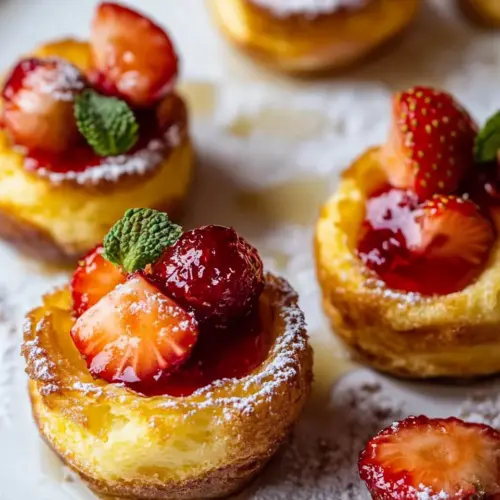
Mini Brown Butter Popovers with Jammy Strawberries
Mini Brown Butter Popovers with Jammy Strawberries are airy, crisp popovers brushed with nutty brown butter and topped with syrupy strawberries. These light, slightly sweet pastries offer a contrast of textures, and they make an easy spring brunch or special occasion treat. Try them warm for the best experience, and enjoy one bite that is both delicate and deeply flavorful.
Equipment
- 12 cup standard muffin pan
- Skillet
- Mixing Bowl
- Whisk
Ingredients
- 14 teaspoons plus 4 tablespoons salted butter Melted and browned to develop a nutty, complex flavor that enriches the batter and adds depth to the popovers; use specified amount to balance richness without making the batter greasy. Incorporate gradually so the warm butter helps temper the eggs and combine smoothly with the milk for a glossy, cohesive batter.
- 1 1/2 cups whole milk at room temperature Warmed to room temperature so it blends smoothly with eggs and browned butter, contributing to the batter’s hydration and steam generation for lift. Provide a tender crumb and help create the steam that puffs the mini popovers while keeping the interior moist.
- 3 large eggs at room temperature Beaten at room temperature to add structure, leavening, and richness; eggs create steam and protein network that trap air for puffing. Whisk thoroughly with milk and browned butter to ensure an even, smooth batter and stable rise during baking.
- 1 tablespoon salted butter melted Melted and added for additional fat that helps create a tender exterior and glossy finish on the popovers; use the measured amount to ensure proper texture. Stir into the batter to help loosen it and improve mouthfeel without overwhelming the brown butter flavor.
- 1 teaspoon vanilla extract Added to provide a sweet, aromatic lift that complements the browned butter and strawberries; use a small amount to enhance overall aroma and flavor balance. Mix into the batter so the subtle vanilla notes permeate the popovers without dominating other flavors.
- 1 1/2 cups all purpose flour Sifted or whisked to ensure a lump-free batter, providing structure, bulk, and the necessary gluten formation for proper rise and chew. Combine evenly with salt and sugar to maintain consistent texture and ensure the popovers set correctly while remaining tender inside.
- 1 teaspoon kosher salt Measured and mixed in to season the batter and balance sweetness while strengthening gluten development slightly; salt enhances the flavors of butter and strawberries. Dissolve it evenly to avoid pockets of salt and to promote even flavor distribution throughout each popover.
- 1/3 cup granulated sugar Added to sweeten and help tenderize the batter, promoting browning and a pleasant crust; use the specified amount to maintain balance with the tart strawberries. Whisk well so the sugar fully dissolves, preventing gritty texture and ensuring uniform caramelization during baking.
- 2 -3 teaspoons lemon zest Zested to provide bright citrus oils that cut richness and add fresh aromatics, enhancing the strawberry topping and batter complexity. Grate finely and fold into the strawberry mixture or batter to evenly distribute lively lemon brightness without bitterness.
- 1/4 teaspoon vanilla bean powder (optional) Sprinkled in optionally to add concentrated vanilla aroma and tiny specks for visual appeal, boosting the overall flavor depth when used. Stir gently into batter or jam mixture so the delicate flavor infuses without overpowering the other ingredients.
- 2 cups sliced strawberries Sliced and macerated to supply fresh, fragrant fruit that pairs with brown butter, adding natural acidity, texture, and bursts of flavor as a topping. Toss with a bit of sugar and lemon zest to release juices and create a jammy, spoonable strawberry component for the mini popovers.
- 1 tablespoon granulated sugar Sprinkled with the sliced strawberries to draw out juices and add sweetness, helping form a glossy, syrupy coating that complements jam and buttered popovers. Use the measured amount to achieve the desired sweetness without making the topping overly runny.
- 2 tablespoons strawberry jam Spread into the macerated strawberries to intensify fruit flavor and lend jam-like body, helping bind the topping and add concentrated strawberry sweetness. Gently fold in so the jam melds with released juices for a spoonable, slightly sticky finish perfect for dolloping.
- 1 tablespoon St. Germain (elderflower liquor) (optional) Added optionally to the strawberry mixture to introduce floral, slightly sweet elderflower notes that elevate the fruit topping’s complexity. Stir in sparingly so the delicate liqueur enhances aroma and flavor without adding overpowering boozy character.
Instructions
- Position a rack in the lower third of the oven. Preheat the oven to 450°. Place 1 teaspoon of butter in each cup of a 12 cup standard muffin pan. Transfer the pan to the oven 3-5 minutes before baking to melt the butter and heat the pan. In a medium bowl, vigorously whisk together the milk and eggs until frothy, about 1 minute. Add 1 tablespoon melted butter, vanilla, flour, and salt. Whisk to combine. It's OK if there are small lumps. Carefully remove the pan from the oven and swirl the butter around the cups to grease the pan. Evenly divide the batter between the popover cups, filling them 3/4 of the way full. Transfer to the oven and bake 15-18 minutes, until puffed, golden, and crisp. To make the brown butter, add 4 tablespoons butter to a skillet set over medium heat. Allow the butter to brown until it smells toasted and is a deep golden color, about 3-4 minutes. Remove from the heat. Combine the sugar, lemon zest, and vanilla powder in a shallow bowl. To make the strawberries, toss all ingredients together. Let sit 5-10 minutes. Brush each warm popover with browned butter, then roll through the lemon sugar. Smear each popover with butter and top with strawberries. Eat warm!: Warmth distribution is crucial for an even rise, you should feel the oven heat is stronger near the bottom which helps the bases set quickly while the tops puff. Look for a steady, intense heat rather than any uneven hot spots. A common mistake is placing the rack too high, which can lead to popovers that brown on top before they fully puff and set. If your oven runs hot, consider rotating the pan halfway through baking to maintain uniform color.
- Preheat the oven to 450°: High initial temperature creates rapid steam generation inside each popover , producing that dramatic lift and hollow center. When you open the oven you should sense a blast of very hot air and see the heating elements glow, this intensity is part of the magic. Make sure the oven reaches the full temperature before putting the pan in, otherwise the rise will be diminished. Avoid opening the oven during the first 12 minutes, as the sudden chill can make the popovers collapse.
- Place 1 teaspoon of butter in each cup of a 12 cup standard muffin pan: These small pads of butter melt and coat each cup, creating a crisp, golden exterior and promoting separation from the pan. Once melted, the bubbling butter will hiss slightly and smell nutty, which is a good sign. Don’t skimp on the butter, or the popovers may stick and fail to develop an even crust. If you notice uneven melting, gently tilt the pan to redistribute the fat so each cup is well coated.
- Transfer the pan to the oven 3 to 5 minutes before baking to melt the butter and heat the pan: Heating the pan ensures the interior of each cup is hot enough to start the batter steaming immediately, this jumpstarts rise. You should hear a sizzling sound as the butter melts and see the pan shimmer with heat. Failing to preheat the pan can produce under risen popovers with dense centers, so be patient and wait the full few minutes.
- In a medium bowl, vigorously whisk together the milk and eggs until frothy, about 1 minute: Aerating the liquid creates tiny bubbles that help the batter expand, and the froth will look lively and slightly foamy on the surface. Use quick, energetic strokes so the mixture has uniform color and texture. A common oversight is using cold eggs or milk which reduces froth; set them out ahead of time so they blend effortlessly.
- Add 1 tablespoon melted butter, vanilla, flour, and salt: Combining these ingredients builds the batter’s structure and flavor, the melted butter adds richness while the flour provides the framework that sets around steam pockets. After adding the flour you will notice the mixture thicken slightly, and small lumps are fine, they will hydrate during resting and baking. Overmixing here can develop gluten and make the popovers chewy, so stir only until incorporated.
- Whisk to combine: The batter should be smooth with a few small lumps, a glossy sheen, and pourable consistency. When you lift the whisk you should see the batter flow slowly back into the bowl, not run like water nor cling thickly like dough. If it seems too thick add a splash of milk , but typically the balance of flour and liquid will be correct. Avoid using a blender for this step, which can over aerate and affect the final texture.
- Carefully remove the pan from the oven and swirl the butter around the cups to grease the pan: The hot melted butter should coat each cavity, beading along the sides and giving off a toasted aroma. Work quickly to prevent the butter from burning, and tilt the pan so every cup gets an even sheen. If some cups have less butter, the popovers from those cups may stick or brown unevenly, so redistribute as needed.
- Evenly divide the batter between the popover cups, filling them 3/4 of the way full: Filling to this level leaves room for dramatic rise while preventing overflow, and you should see the batter settle into a smooth surface in each cup. Use a measuring cup or a small ladle for consistent portions so they bake uniformly. Overfilling leads to messy tops that brown and collapse, while underfilling can produce undersized popovers that lack that hollow interior.
- Transfer to the oven and bake 15 to 18 minutes, until puffed, golden, and crisp: The popovers will surge upward with a caramelized top and crisp edges, and you should hear a gentle crackling as moisture escapes. Visual cues are important, watch for an even golden color and tall domes; the centers should feel set when tapped. Avoid opening the oven early, as draft can make them deflate. If you see uneven browning, rotate the pan carefully once during the latter half of baking.
- To make the brown butter, add 4 tablespoons butter to a skillet set over medium heat: Browning transforms the butter into a complex, toasty flavor, you will notice it foam then clear, and finally develop nutty brown flecks and an intoxicating aroma. Remove the skillet from the heat as soon as the butter reaches a deep golden color to prevent burning. A frequent mistake is letting it stay on the heat too long, which turns it bitter; transfer to a cool pan immediately to halt the cooking.
- Allow the butter to brown until it smells toasted and is a deep golden color, about 3 to 4 minutes: Watch for color and scent rather than time alone, the browned butter should smell fragrant and slightly nutty, with tiny brown particles suspended. Stir gently to ensure even browning and to prevent hot spots. If you notice any burnt smell, discard and start over, as burnt butter will impart an unpleasant flavor.
- Remove from the heat: Cooling the brown butter slightly prevents it from being so hot that it melts the popovers or cooks the fruit topping, you want it warm enough to glide, not searing. The aroma will continue to develop briefly off heat, and you can watch the liquid clarify. Pouring scalding butter onto warm fruit can make it too soupy, so let it sit for a moment if needed.
- Combine the sugar, lemon zest, and vanilla powder in a shallow bowl: This fragrant mixture becomes a sparkly coating for the popovers, with the lemon zest brightening the sweet sugar and amplifying the browned butter . Rubbing the zest into the sugar releases oils and fragrance. Using dry sugar helps it cling to the warm surface, while too much zest can make the coating bitter, so measure carefully.
- To make the strawberries, toss all ingredients together: The strawberries , jam, and sugar mingle to become slightly saucy, releasing juices that will glaze the fruit. You should hear the soft thud of berries against the bowl and see them shine as the jam dissolves. Overworking can crush the berries, so toss gently to preserve texture.
- Let sit 5 to 10 minutes: Resting allows the juices to macerate the strawberries , creating a syrupy consistency that spreads easily over the popovers. The fruit should look glossy and slightly softened, not mushy. If left too long the berries may become overly soft, so aim for that sweet spot where they hold shape yet release liquid.
- Brush each warm popover with browned butter, then roll through the lemon sugar: The warm popover will absorb some of the brown butter , and the sugar will cling to the surface creating a delicate crust. You should see the sugar sparkle and the popover take on an aromatic sheen. If the popovers have cooled entirely they will not absorb the butter as well, so work while they are still warm.
- Smear each popover with butter and top with strawberries: Finish by spreading a little additional butter if desired, then spooning the jammy strawberries on top so some juices sink into the hollow. The contrast of warm pastry and slightly cooled fruit is wonderful, and the first bite should offer crispness, steam, and a burst of berry flavor. A common pitfall is adding too much fruit which can weigh down the popover, aim for a generous but balanced topping.
- Eat warm: Enjoy these while they are still warm for the best texture and flavor, the popover should be crisp on the outside and tender inside, with sticky, bright strawberry topping. If you let them sit, the exterior will soften and the experience changes, so plan to serve promptly. Leftovers can be reheated briefly in a hot oven to revive crispness.
Notes
- Preheat the pan thoroughly Make sure the muffin pan is in the oven for at least 3 to 5 minutes so each cup is hot; this initial heat jumpstarts steam production and helps the batter lift rapidly.
- Keep ingredients at room temperature Let the milk and eggs sit out for 20 minutes before mixing; warm liquids incorporate into the batter more easily, creating a smoother texture and better rise.
- Whisk vigorously but do not overmix Aerate the milk and eggs to add lift, but once you add the flour combine until just integrated to avoid developing excess gluten which can make popovers chewy.
- Brown the butter with attention Watch the color and smell, and remove from heat at the first sign of deep golden flecks; carryover heat will finish the flavor and prevent bitterness.
- Use a consistent portioning tool A small ladle or a 1/4 cup measure helps fill each cup evenly to 3/4 full so all popovers bake uniformly without overflowing.
- Brush while warm Apply the browned butter to the popovers right out of the oven so it soaks in and the sugar adheres, creating a glossy, flavorful crust.