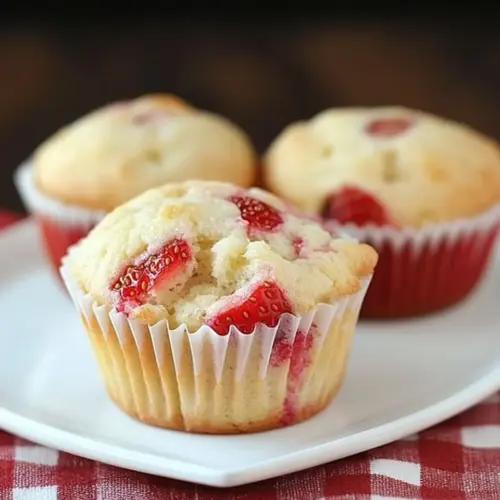
Meyer Lemon Strawberry Muffins
Meyer Lemon Strawberry Muffins are bright and tender muffins with floral citrus notes and bursts of fresh strawberry. These easy springtime muffins deliver a soft, moist crumb and golden tops that make them ideal for brunch or casual gatherings. Quick to make and forgiving, they are a perfect bake when you want something cheerful and simple to share.
Equipment
- Mixing Bowls
- Rubber spatula
- Measuring Cups
- Muffin Tin
- Wire Rack
- Whisk
- Ice Cream Scoop
Ingredients
- 2 1/2 cups all-purpose flour Provides structure and bulk to the muffins by forming the gluten network when mixed with liquids; sifts smoothly to ensure even texture and aeration. Balances moisture absorption and helps create a tender crumb when combined with fat and leaveners.
- 3/4 cup granulated sugar Adds sweetness and helps tenderize the batter by interfering with gluten formation; dissolves into the wet ingredients to provide even sweetness. Encourages browning of the muffin tops through caramelization during baking.
- 2 teaspoons baking powder Leavens the batter by releasing carbon dioxide when activated, creating lift and airy texture; evenly distributed to ensure consistent rise. Works with acidic components to produce a fine, tender crumb.
- 1/4 teaspoon baking soda Enhances leavening when paired with acidic ingredients by producing additional carbon dioxide; used in small amount to fine-tune rise and texture. Also helps neutralize residual acidity for balanced flavor.
- 1/4 teaspoon fine sea salt Balances and enhances overall flavor by subtly lifting sweetness and accentuating other ingredients; controls fermentation and chemical reactions in the batter. Ensures proper seasoning so flavors taste bright rather than flat.
- Zest and juice of 1 Meyer lemon Provides bright citrus aroma and flavor from the zest while the juice adds tangy acidity to balance sweetness; both elements brighten and deepen the overall flavor profile. Lemon components also react with leaveners to aid rise and add freshness.
- 1 large egg lightly beaten Binds the wet and dry components together while contributing richness and slight structure to the crumb; beaten egg helps trap air for added lift. Adds a silky texture and supports emulsification of fats and liquids.
- 3/4 cup buttermilk Contributes tangy moisture and acidity that tenderizes the muffin crumb and reacts with baking soda for lift; adds a soft, moist texture. Helps balance sweetness and enhances overall flavor complexity.
- 2/3 cup canola oil Adds fat to create a moist, tender crumb and helps carry flavor; oil keeps muffins softer for longer than solid fats. Promotes even texture and richness without affecting leavening negatively.
- 1 teaspoon pure vanilla extract Imparts a warm, floral vanilla aroma and enhances the perceived sweetness and overall flavor complexity; used in a measured amount to avoid overpowering. Helps round out the citrus and strawberry notes for balanced taste.
- 2 cups chopped fresh strawberries Introduces fresh fruity bursts and natural sweetness while adding texture and color to the muffins; chopped to distribute berries evenly throughout the batter. Provides seasonal brightness and a contrast to the tender crumb.
Instructions
- Preheat oven to 375°F (190°C). Position rack in center of oven. Butter or spray with a non-stick cooking spray 12 muffin cups. Set aside.: When you open the oven later, you should smell warm metal and faint residual heat if it is properly preheated. Preheating ensures the muffins get an immediate temperature shock that encourages rise, creating those tender domes we love. A common mistake is not preheating, which leads to flat, dense muffins; always allow the oven to reach temperature. Also, placing the rack in the center promotes even browning and avoids overly dark bottoms or undercooked centers. If using a convection oven, consider a slightly lower setting or shorter time, because circulating air browns faster.
- In a large measuring cup or bowl whisk together the egg, buttermilk, oil, Meyer lemon juice and vanilla extract.: Right away you should notice the glossy sheen as the oil and egg combine, and the mixture will smell faintly of citrus and vanilla. Whisking ensures even distribution of the acid from the Meyer lemon with the buttermilk , which activates the baking soda later. Avoid over-whisking until foamy, because that can introduce too much air and produce an uneven crumb. If your wet mix separates, a quick final whisk before folding will bring it back together.
- In another large bowl combine the flour, sugar, baking powder, baking soda, salt, and lemon zest. Gently fold in the berries. With a rubber spatula fold the wet ingredients into the dry ingredients and stir only until the ingredients are combined. Do not over mix the batter or tough muffins will result.: As you stir, the lemon zest releases fragrant oils, perfuming the dry mix and making it smell bright. Folding the chopped strawberries into the dry ingredients before adding the wet mix helps keep them suspended rather than sinking to the bottom. A common error is stirring the berries too vigorously, which can bruise them and cause bleeding into the batter; fold gently to maintain texture and color. If your berries are wet, pat them dry to reduce added moisture that could make the batter runny.
- Fill each muffin cup almost full of batter, using two spoons or an ice cream scoop. Place in the oven and bake until a toothpick inserted in the center of a muffin comes out clean, about 20 minutes. Transfer to a wire rack and let cool for about 5 minutes before removing from pan.: You should see streaks of pale batter disappear into a slightly lumpy, cohesive mix, with chunks of fruit dotted throughout. The batter will be thicker than pancake batter but still scoopable. Overmixing activates gluten, producing a chewy, tough texture, so stop when you can no longer see dry streaks. If you notice large pockets of flour, gently press with the spatula to incorporate, rather than beating, which preserves tenderness. The sound should be quiet, with no splattering or sloshing.
- Fill each muffin cup almost full of batter, using two spoons or an ice cream scoop. Place in the oven and bake until a toothpick inserted in the center of a muffin comes out clean, about 20 minutes.: As you portion the batter, the bowls will feel warm and the batter should be thick enough to mound slightly in each cup. Using an ice cream scoop helps create uniformly sized tops and consistent baking. During baking, you will smell citrus lifting and notice the tops turning a light golden brown and doming. Insert a toothpick in the center near the end of the time window, if it comes out with a few moist crumbs it is done; raw batter indicates more time is needed. A common misstep is assuming color alone denotes doneness, when underbaked muffins can be brown but still raw inside.
- Transfer to a wire rack and let cool for about 5 minutes before removing from pan.: The muffins will still be gently steaming, and the aroma will be at its most intense. Cooling on a wire rack prevents soggy bottoms by allowing air circulation, and the short rest helps the crumb set so they remove cleanly from the tin. Avoid removing them immediately, which can cause them to break apart, and do not leave them in the hot pan for too long, which traps steam and softens the crust. If a muffin sticks, run a thin knife around the edge to help release it without tearing.
Notes
- Room temperature ingredients: Let the egg and buttermilk sit at room temperature for 15 minutes before mixing, which helps them incorporate more smoothly and produces a more uniform crumb.
- Measure flour properly: Spoon the all-purpose flour into your measuring cup and level it off rather than scooping directly from the bag, which prevents overpacking and dense muffins.
- Gentle folding: Use a rubber spatula and fold just until combined to avoid developing gluten, which keeps the muffins tender and soft.
- Even berry distribution: Toss chopped strawberries in a small amount of flour from the recipe before folding them in to help suspend them and prevent sinking.
- Check oven accuracy: If your oven runs hot or cool, use an oven thermometer and adjust temperature slightly to ensure even baking and proper doming.