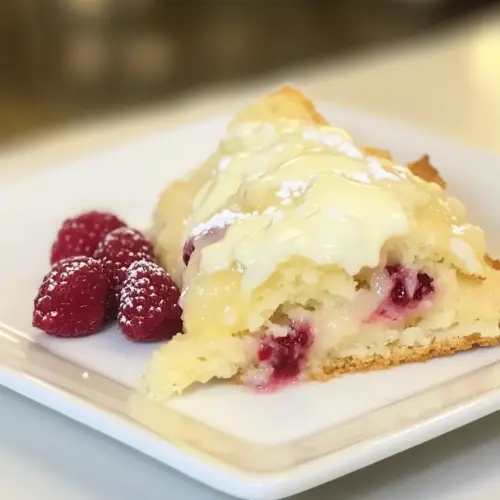
Meyer Lemon Raspberry Scones
Meyer Lemon Raspberry Scones bring bright citrus and juicy berry bursts to a tender, flaky pastry. These easy to love scones are creamy and buttery with a glossy lemon glaze, perfect for spring brunches or an indulgent breakfast. The technique is simple, rewarding gentle hands and cold butter for flaky layers, making them a must bake when you want impressive flavor with minimal fuss.
Equipment
- Oven
- Baking Sheet
- Parchment Paper
- Large Bowl
- Pastry blender
- Spatula
- Whisk
Ingredients
- 3 tablespoons granulated sugar Provide sweetness and help tenderize the scone crumb; granulated sugar balances the lemon's tartness and aids in browning during baking, contributing to a lightly caramelized exterior.
- Zest from 1 Meyer lemon Add bright citrus aroma and concentrated lemon flavor; fresh Meyer lemon zest infuses fragrant oils into the dough, enhancing overall brightness without adding extra liquid.
- 2 cups (250 g) all-purpose flour Form the structural base of the scones; all-purpose flour provides gluten for texture and stability while allowing a tender, flaky crumb when handled minimally.
- 1 tablespoon baking powder Leaven the dough and produce lift; baking powder creates gas bubbles during baking to give scones a light, tender rise and slightly airy interior.
- 1/2 teaspoon (0.5 teaspoon) salt Enhance flavor and control fermentation balance; salt rounds out sweetness and intensifies other flavors while strengthening gluten structure for better texture.
- 6 tablespoons unsalted butter, cold, cut into cubes Contribute rich fat for flakiness and tender layers; cold, cubed unsalted butter creates pockets of steam as it melts, yielding flaky, buttery scone layers.
- 1 cup (238 ml) heavy cream Provide moisture, richness, and binding; heavy cream adds fat for tenderness and helps hydrate the flour while producing a moist, rich crumb.
- 1 cup (120 g) raspberries Offer bursts of fresh tart-sweet fruit and texture; raspberries add bright flavor, moisture, and visual appeal while reducing the need for additional fruit flavoring.
- 1 cup (120 g) powdered sugar Create a sweet glaze or dusting with smooth sweetness; powdered sugar dissolves easily into a lemon glaze for a glossy finish and balanced sweetness.
- 2 tablespoons Meyer lemon juice Add concentrated citrus juice for flavor and glaze acidity; Meyer lemon juice brightens the dough or glaze with gentle tartness and enhances the overall lemon profile.
Instructions
- Make the Scones: Preheat oven to 400 degrees F. Line a baking sheet with parchment paper; set aside.: The oven roaring to life at 400 degrees F fills the kitchen with heat and the promise of golden edges. As the temperature climbs, the moment you slide the tray in you should hear the quiet settling of dough, then within minutes the edges begin to set and hint at crispness. This high heat encourages a rapid rise, creating flaky layers where the pockets of cold butter steam. A common mistake is starting with an oven that is not fully preheated, which causes the scones to spread instead of rising, so always wait for steady heat. Watch for a deep golden color and a firm top to know they are done. If your scones brown too quickly, rotate the pan halfway through baking for even color.
- Place the sugar in a large bowl and add the lemon zest. Using your fingertips, rub the lemon zest into the sugar until it is evenly distributed. Add the flour, baking powder and salt to the bowl and whisk to combine.: When you rub the zest into the sugar , the mixture becomes fragrant, releasing citrus oil that perfumes the whole dough. The sugar will look slightly damp and speckled with tiny yellow threads, and the aroma will feel instantly brighter. This step matters because infusing the sugar intensifies the lemon flavor evenly, instead of having pockets of zest. A typical pitfall is using coarse zest or leaving pith bits, which can add bitterness. Work the zest thoroughly until evenly distributed so every bite picks up that citrus note.
- Add the cubed butter and, using a pastry blender or two knives, cut the butter into the flour mixture until it is the texture of coarse sand and there are no pieces of butter larger than the size of a pea remaining.: The dry mixture should appear light and uniform, with the baking powder dispersed so each bite can rise evenly. Whisking aerates the flour slightly and breaks up clumps, which promotes a tender crumb. The sound of the whisk is soft, and visually you’ll notice a pale, sandy texture. Avoid heavy-handed agitation of the flour , which can develop gluten and toughen the scones. A common error is skipping the whisk step, leading to uneven bake and possible dense spots.
- Pour the heavy cream and raspberries into the flour mixture and, using a spatula, gently fold until a dough starts to come together. Turn the dough out onto a lightly floured surface and gently knead a few times to bring the dough together. Using floured hands, gently pat the dough into a 7-inch circle and cut into 8 triangles.: When the cold butter is worked into the flour , you should see pea sized specks of butter coated in flour, which is exactly what creates flakiness. The texture should resemble coarse sand with little lumps, and it will feel cool to the touch. This technique matters because those butter bits melt in the oven leaving steam pockets that lift the scones. Overworking the butter will warm it and make the dough greasy, which flattens the rise, so keep your tools quick and efficient. If you notice melted butter, chill the bowl briefly before continuing.
- Transfer the scones to the prepared baking sheet and bake for 15 to 20 minutes, or until golden brown and set. Remove from the oven and allow to cool completely.: As the heavy cream meets the dry mix, you’ll hear a soft folding sound and see the dough clumping into a shaggy mass dotted with bright raspberries . The berries will release little flecks of red, but gentle folding keeps them mostly intact, preserving bursts of fruit within the dough. This is where restraint pays off because overmixing crushes the raspberries and creates too much moisture. A typical mistake is adding excessive stirring which activates gluten and makes tough scones. Stop folding when you have a cohesive, slightly sticky dough that holds together when pinched.
- Make the Glaze: In a small bowl, whisk together the powdered sugar and juice from Meyer lemons and drizzle over scones. Add more powdered sugar or juice if you prefer a thicker or thinner glaze.: The dough should feel cool and slightly tacky, and as you knead you will notice the raspberries nestle in while small strings of dough smooth out. Knead just enough to unite the ingredients, maybe four to six gentle presses and folds, because too much handling warms the butter and activates gluten. The visual cue is a smooth surface that still has some texture, not a perfect ball. A common oversight is over-kneading, which yields a dense final product, so keep your touch light and quick.
- Using floured hands gently pat the dough into a 7 inch circle and cut into 8 triangles: Patting the dough to a 7 inch circle creates uniform scones that bake evenly; the sound is a soft thud as your palm meets the dough, and the surface should be lightly floured to prevent sticking. Cutting into triangles gives classic shapes with pointed edges that brown nicely. Use a sharp knife or bench scraper for clean lines, pressing straight down to avoid sealing the edges. If you press too hard while shaping, you risk compressing the layers and losing flakiness. A helpful sign is when the cut edges look clean and the dough holds its shape on the tray.
- Transfer the scones to the prepared baking sheet and bake for 15 to 20 minutes or until golden brown and set: In the oven, the scones will first expand slightly, then the tops begin to color and the edges firm. The aroma shifts from floury to toasty sweet, and the sound is silent, save for the occasional soft crack as moisture escapes. Baking until golden brown ensures a crisp exterior and a tender interior. Underbaking leaves the center gummy, while overbaking dries them out, so aim for a warm golden hue and a set center. If your oven runs hot, reduce time and check early to avoid over browning.
- Remove from the oven and allow to cool completely: Cooling lets the interior finish setting and prevents the glaze from sliding off when applied. The scones will exhale a gentle steam as they cool, and the crust will firm slightly, becoming pleasantly crisp. Patience here maintains texture balance, because glazing while too warm can melt the icing and make it runny. A frequent error is glazing immediately and losing the pretty finish, so let them reach room temperature for the best result.
- Make the Glaze: When you whisk the powdered sugar with Meyer lemon juice , the mixture turns silky and glossy, emitting a bright citrus scent that complements the warm scones. Start with a small amount of juice to control consistency, adding more to thin the glaze until it drips slowly off a spoon. This step enhances presentation and adds a sweet tang that ties the flavors together. A common misstep is adding too much juice at once, producing a glaze that is too thin and runs off; correct this by whisking in more powdered sugar a little at a time.
- Drizzle over scones add more powdered sugar or juice if you prefer a thicker or thinner glaze: The final drizzle should glint on the surface, pooling slightly in the crevices and accentuating the golden tops. The interplay of sweetness and citrus is immediate on the nose and palate, and visually the glaze gives a bakery finish. If you want a heavier coating, add powdered sugar to thicken; for a lighter sheen, thin with additional Meyer lemon juice . Avoid pouring while the scones are too hot, which will cause the glaze to run and create a mess. Aim for a graceful ribbon of glaze that sets to a soft sheen.
Notes
- Use frozen raspberries carefully if fresh berries are not available, toss them briefly in a little flour before folding to reduce bleeding and extra moisture.
- Adjust the glaze consistency by adding powdered sugar to thicken or Meyer lemon juice to thin, aiming for a ribbon that holds for a moment before settling.
- Make mini scones by reducing the circle size and cutting smaller wedges, this shortens baking time and produces more delicate portions for teatime.
- Chill the dough for 15 to 30 minutes before shaping if your kitchen is warm, this firms the butter and helps the scones keep their height.
- Brush with cream before baking for a shinier, slightly crisp top, the heavy cream promotes attractive browning without changing texture.