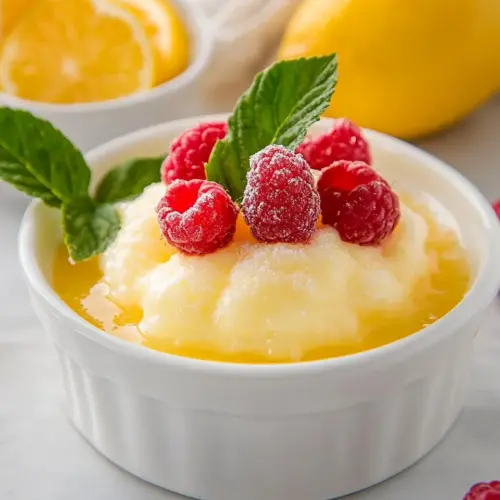
Meyer Lemon Raspberry Clouds
Meyer Lemon Raspberry Clouds is a light, creamy custard infused with bright citrus and topped with fresh raspberries. The custard is silky and slightly jiggly, offering a delicate texture and floral lemon aroma, perfect for an easy spring dessert or an elegant weekend treat. Make it to impress guests or to celebrate a small moment at home.
Equipment
- Ramekins
- Large baking pan
- Whisk
- Measuring Cup
Ingredients
- 4 Eggs, large Whip eggs to provide structure, volume, and lightness to the cloud-like dessert; beat until airy to incorporate air and help set the final texture. Use large eggs for consistent sizing and stable foam development during cooking or folding into other components.
- 1/2 cup Sugar Sweeten the mixture and stabilize whipped elements by dissolving sugar; balance tartness from lemon and raspberries while contributing body and gentle caramelization if heated. Adjust sugar gently to maintain the delicate cloud texture without weighing it down.
- 1 cup Heavy Cream Whip heavy cream to add richness, smoothness, and a luxurious mouthfeel; fold lightly into whipped eggs or other components to create creamy clouds. Use chilled heavy cream for better whipping volume and to help set the dessert when cooled.
- 2 teaspoons Meyer Lemon Zest Grate Meyer lemon zest to introduce bright, aromatic citrus oils that enhance overall flavor complexity; add zest sparingly to avoid bitterness while amplifying lemon character. Use fresh zest for the most vibrant, floral notes specifically suited to Meyer lemons.
- 1/2 cup Meyer Lemon Juice, from about 2 medium lemons Add Meyer lemon juice to provide vibrant acidity and a delicate, sweet-tart lemon flavor that balances sugar and cream; its juice helps set custard-like components and brighten the raspberry notes. Measure carefully to maintain structure while ensuring a refreshing citrus tang.
- 1 pint fresh Raspberries Fold fresh raspberries to deliver juiciness, natural sweetness, and a contrasting bright berry flavor; use whole or lightly crushed raspberries for bursts of color and texture. Choose ripe berries for the best balance of sweetness and acidity to complement the lemon.
- Fresh Mint and Raspberries to garnish, optional Garnish with fresh mint and extra raspberries to enhance aroma, add a pop of color, and provide an optional herbal contrast to the citrus and berry flavors. Use sparingly to avoid overpowering the delicate cloud texture and to present an attractive finishing touch.
Instructions
- Preheat the oven to 325°.: Warmth in the oven should feel consistent and even, creating a gentle environment where the custard can set slowly without toughening. You might notice a soft, oven-warmed scent in the kitchen as the racks and air reach temperature. Using a reliable oven thermometer ensures accuracy, because an oven that runs hot can overcook the edges while leaving the center underdone. A common pitfall is skipping preheating, which can lead to uneven texture, so wait until the oven reaches the correct temperature.
- Whisk the eggs and sugar together, then whisk in the cream. I like using a large Pyrex measuring cup with a spout.: As you whisk, listen for the quiet sound of the whisk cutting through the liquid, and watch the mixture become smooth and slightly glossy. The sugar should dissolve into the eggs so you do not feel grains between your fingers, which ensures a silky result. Adding the heavy cream in a steady stream builds a cohesive mixture without shocking the eggs, helping prevent premature coagulation. Over-whipping at this stage can incorporate too much air, causing bubbles that will mar the custard's surface, so whisk until blended, not frothy.
- Then whisk in the lemon juice and zest.: When the Meyer Lemon juice hits the bowl the aroma will lift immediately, a bright, floral citrus note that changes the mixture's personality. Stirring in the zest disperses fragrant oils for a fragrant top note. Mixing at this point balances acidity and richness, and you should notice a slightly looser consistency that still looks uniform. If the juice is cold, allow it to come closer to room temperature to avoid shocking the eggs. Avoid adding too much juice, which can inhibit proper setting.
- Place 6 ramekins or custard cups into a large baking pan with a high rim.: The sight of neat little dishes waiting in a bath feels almost ceremonial, and arranging them evenly ensures heat distribution. Use cups of the same size so they cook at the same rate. A common error is overcrowding the pan, which makes filling and pouring the water bath awkward; leave space to maneuver safely when adding water to the pan.
- Divide the mixture evenly between the ramekins.: Pour carefully, watching the pale custard settle into each dish and level out with a smooth surface. Even distribution matters because it ensures uniform cooking and consistent serving sizes. I like to use a measuring cup with a spout to keep the edges clean. If you pour too quickly you can create small splashes or bubbles; take a steady hand for the best finish.
- Place the baking pan in the oven.: Gently slide the pan onto the middle rack so heat surrounds the ramekins evenly, helping them set at the same rate. The kitchen will grow warmer and you may smell the faint cream and citrus notes amplifying. Be mindful of opening the oven door frequently, which can cause temperature fluctuations; resist peeking too often during the initial set period.
- Fill the baking pan with warm water, halfway up the sides of the ramekins. I use a teapot with a long spout.: Adding a warm water bath brings a soft, insulating heat that cooks the custard evenly and prevents edges from seizing. The sound of the water as it hits the pan is small and reassuring, and the steam that rises helps maintain gentle humidity. Use water that is warm but not boiling, because scalding water can cause too-rapid temperature shifts. A common mistake is pouring cold water, which can lower oven temperature and extend baking time unpredictably.
- Bake for 30-40 minutes or until set but still jiggly in the centers.: During baking you will notice the edges firming to a delicate matte finish while the centers remain slightly wobbly. The aroma deepens, and the tops may take on a faint halo of color. The jiggle test is essential, because overbaking leads to a grainy texture while underbaking leaves the custard too loose. If a ramekin is blistering or browning on the edges, your oven may be too hot, so rotate the pan if necessary and shorten the time on future attempts.
- Serve hot, warm or chilled. If served chilled, garnish with a couple of fresh raspberries and a sprig of mint.: Each serving temperature reveals new pleasures, hot for immediate comfort, warm for gentle balance, and chilled for a firmer, refreshing contrast. Placing a couple of raspberries and a bit of mint on chilled custards adds color and a fresh lift to each spoonful. Avoid leaving chilled custards uncovered in the fridge where they can form a skin; cover lightly to preserve texture.
Notes
- Increase Citrus Aroma. Gently fold in an extra 1/2 teaspoon of freshly grated Meyer Lemon zest to the custard batter, being careful not to include the white pith which can add bitterness. This small boost brightens the aroma and flavor without changing texture.
- Change Serving Temperature. Serve the custards warm for a softer feel and more pronounced creaminess, or chilled for a cleaner, slightly firmer bite; both deliver different experiences from the same preparation.
- Dress the Presentation. Top chilled custards with a light dusting of fine sugar and briefly torch it if you enjoy a contrasting crackly surface, but do so sparingly so the delicate custard remains the star.
- Boost Raspberry Presence. Arrange three berries on each custard or gently press a few into the surface before baking for a subtler infusion of flavor and a pretty visual cue.
- Herbal Accent. Add a single tiny chopped leaf of mint to the garnish for a mild herbal lift that complements the Meyer Lemon without overwhelming the dessert.