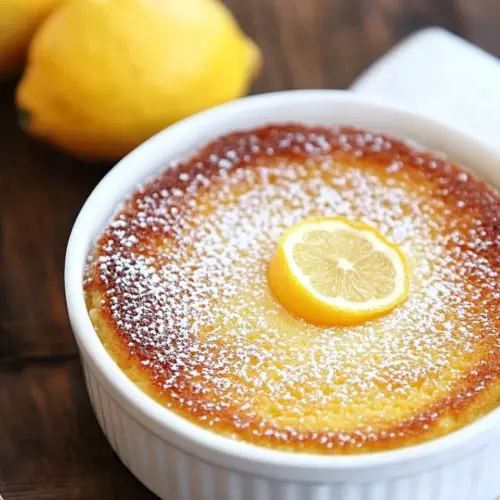
Meyer Lemon Pudding Cake
Meyer Lemon Pudding Cake is a light, custardy dessert with bright floral citrus notes and a tender, puddinglike center. The combination of Meyer lemon juice, zest, whipped egg whites, and sour cream creates a creamy yet delicate texture that feels fancy without fuss, perfect for brunch or a spring gathering and a persuasive reason to try it.
Equipment
- Stand mixer
- Soufflé dish
- Large roasting pan
- Mixing Bowls
- Whisk
Ingredients
- 4 tablespoons unsalted butter at room temperature Soften and cream to provide a rich, tender texture and to help incorporate air for a light pudding cake; ensures even melting and flavor distribution throughout the batter.
- 1 cup granulated sugar Sweeten and balance the tartness while contributing structure when combined with eggs; helps create a glossy, smooth batter and caramelizes slightly during baking for color.
- 1 tablespoon lemon zest Infuse bright citrus aroma and concentrated lemon oils that enhance overall lemon flavor; finely zest to avoid bitter pith and distribute fragrant oils evenly in the batter.
- 3 large eggs at room temperature, separated Separate and manipulate egg whites and yolks for dual functions: yolks enrich and stabilize the custard-like base while whipped whites provide lift and airy crumb when folded in.
- 1/3 cup Meyer lemon juice or 1/4 cup regular lemon juice Add bright, acidic lemon juice to set the custard and heighten citrus flavor; adjust quantity based on lemon variety to maintain proper tartness and balance.
- 1/3 cup all-purpose flour Thicken and provide structure by absorbing moisture and forming gluten when mixed; use measured all-purpose flour to create the cake’s tender crumb without making it dense.
- 1 cup sour cream Contribute creaminess, tang, and moisture that enrich the pudding’s custard-like texture; sour cream adds acidity which tenderizes the crumb and balances sweetness.
- 1/4 teaspoons salt Enhance overall flavor by balancing sweetness and amplifying other flavors; a small pinch of salt also strengthens the cake’s structure and rounds out the profile.
- Powdered sugar for dusting Dust lightly to add a delicate finish and a touch of extra sweetness while enhancing visual appeal; sift on just before serving to prevent melting into the warm cake.
Instructions
- Preheat the oven to 350 degrees F. Butter a 1-quart soufflé dish. (You can use smaller dishes or ramekins, if you want individual servings).: As you heat the oven to 350 degrees F , notice how your kitchen warms and the air begins to smell faintly of warmth rather than baking. This preheating ensures even rise and that the edges set at the right rate, preventing the center from staying too loose. A common error is placing the dish in a cold oven, which causes uneven baking and a gummy center, so always wait for the oven to reach temperature before sliding the cake in. If you are using smaller ramekins, be mindful that they will bake faster, and the oven spring can vary by a few minutes.
- In the bowl of a stand mixer, beat the butter at medium speed until light and fluffy. Add the sugar and lemon zest and beat until combined. Add the egg yolks, one at a time, beating well after each addition. Reduce speed to low and add half the lemon juice, half the flour and half the sour cream and beat until smooth; repeat with remaining lemon juice, flour and sour cream.: Rubbing softened butter around a 1 quart soufflé dish creates a slick surface that helps the cake release and encourages even browning at the edges. You will feel a slight resistance as the butter glides, and a thin sheen should remain. If you skip this, the cake can stick and tear when removed; for individual servings, butter ramekins thoroughly and watch baking time closely because smaller vessels conduct heat faster.
- Beat the egg whites at medium speed until foamy. Increase speed to medium-high, add the salt, and beat to stiff peaks. Add one-quarter of the whites to the lemon mixture and gently fold in. Continue to fold in whites one-quarter at a time. Transfer it to the prepared soufflé dish or dishes. Place the dish or dishes in a larger pan and carefully pour boiling water around it to a depth of 1 inch.: When you beat the softened butter at medium speed, it should become paler and slightly airy, carrying tiny pockets of air that contribute to lift. You can tell it is ready when the texture looks whipped rather than glossy. Avoid overheating the butter in the mixer, which can make it too soft and unable to hold air effectively, resulting in a denser cake.
- Bake for 50-60 minutes or until slightly golden brown and the center is just set. The cake should spring back when gently touched. Do not open the oven door while the cake is baking. Remove from the water bath immediately and cool on a rack for 10-15 minutes.: Adding granulated sugar and freshly grated lemon zest to the butter and beating until combined releases fragrant oils into the fat, releasing a bright citrus aroma that is immediate and intoxicating. The mixture should look evenly textured with specks of zest visible. Do not skip this step, because insufficient creaming can lead to a heavier crumb and less integrated lemon flavor.
- Lightly dust with powdered sugar. Serve warm.: Incorporating the egg yolks slowly ensures they emulsify into the batter, creating a smooth, glossy mixture rather than curdling. You will see the batter become silkier and slightly looser with each addition. If you add yolks too quickly, the mixture can break or separate, so take your time and scrape the bowl between additions for even incorporation.
- Notes - if you can’t find Meyer lemons you can use regular lemons. Just use 1/4 cup of lemon juice. And if you use smaller dishes or ramekins decrease baking time to 40-45 minutes, or until golden brown. Just watch the cakes to be safe.: Lowering the mixer speed prevents over mixing while you add wet and dry components; the batter should blend into a homogenous cream with no streaks. Adding ingredients in halves helps maintain a smooth texture and avoids lumps. A common mistake is dumping everything at once which can create pockets of flour or curdled batter, so alternate and keep the speed low.
- Repeat with remaining lemon juice, flour and sour cream: Finishing with the remaining Meyer lemon juice , all purpose flour , and sour cream gives the batter its final balance of acidity and structure, resulting in a batter that is smooth but not overly loose. You should hear a quieter, denser sound from the mixer as the batter comes together. If the batter seems too thick, check your measuring; too much flour will make the cake dry and heavy.
- Beat the egg whites until foamy and then to stiff peaks with salt: Whipping the separated egg whites first to foamy, then to stiff peaks after adding a pinch of salt , builds a stable foam that traps air, which is essential for the cake's lightness. You will notice glossy peaks that hold shape and do not slip; that is the right cue. Underwhipping leaves the whites too loose, while overwhipping can make them dry and grainy, both of which reduce the cake's lift.
- Fold one quarter of the whites into the lemon mixture: Incorporating one quarter of the whipped egg whites into the lemon batter first lightens it, making it easier to fold in the rest without deflating the foam. At this point you should see a silkier batter with visible ribbons when you lift your spatula. Do not rush the folding action; aggressive stirring collapses the air and flattens the final texture.
- Continue to fold in whites one quarter at a time: Gentle folding in successive additions preserves the foam while creating an even batter. Use a slow, sweeping motion from the bottom up and turn the bowl to keep distribution consistent; you will see the batter become uniformly pale and airy. If lumps of whites remain, continue folding carefully rather than beating, as vigorous mixing will knock out the air pockets you worked so hard to create.
- Transfer to prepared dish and place in larger pan, pour boiling water to depth of 1 inch: When the batter is in the buttered dish and you set it inside a larger pan, pouring boiling water around to a depth of 1 inch creates a gentle, moist cooking environment that prevents the cake from drying and ensures even cooking. The steam and the water bath moderate oven heat, producing that custardy center. Be cautious while pouring hot water to avoid splashing, which can disturb the cakes; also ensure the water reaches the correct depth for uniform results.
- Bake for 50 to 60 minutes until slightly golden and center just set: During baking you should see the top take on a light golden color and a gentle wobble in the center when you nudge the dish. The cake will spring back slightly to the touch; that is your signal that it is done. Resist the urge to open the oven door while baking, because sudden temperature change can cause the cake to collapse. If using smaller dishes, reduce baking time accordingly and watch closely for the golden cues.
- Remove from water bath immediately and cool on a rack for 10 to 15 minutes: Lifting the dish from the water bath and placing it on a rack lets residual steam escape and the cake finish setting without over cooking. After 10 to 15 minutes the texture firms slightly but remains tender and puddinglike. Leaving it too long in the hot water can overcook the edges, while removing it too soon may leave the center too jiggly.
- Lightly dust with powdered sugar and serve warm: A gentle dusting of powdered sugar adds a pretty finish and a hint of sweetness that contrasts with the lemon tang. Serving warm enhances the custard sensation and releases more aroma, making each bite fragrant. Do not overdo the sugar dusting, or it will dominate the delicate flavors; a light veil is enough to elevate the presentation.
- Notes if using regular lemons or smaller dishes: If Meyer lemon juice is unavailable, using regular lemon juice at a slightly reduced volume preserves balance, and baking in smaller dishes will shorten baking time to around 40 to 45 minutes, so watch for the golden color and the set center. A common oversight is assuming different lemons behave identically, but adjusting acid levels matters for taste. Keep an eye on color and texture rather than time alone when altering vessel size or lemon type.
Notes
- Room temperature ingredients matter Gather your eggs, butter, and sour cream ahead of time so they come to room temperature, which helps ingredients combine smoothly and improves texture.
- Measure flour accurately Spoon and level your all purpose flour rather than scooping the cup directly, because too much flour leads to a dense, heavy cake.
- Protect the water bath Place the soufflé dish in a larger pan with a stable base and pour boiling water carefully to a depth of about 1 inch to ensure even, gentle cooking.
- Use fresh Meyer lemons when possible The floral sweetness of Meyer lemon juice and zest is distinct, but if you must use regular lemons, reduce the juice slightly to avoid excessive tartness.
- Watch visual cues not just time Look for a slightly golden top and a center that springs back when touched, rather than relying solely on the clock, especially if you changed vessel size.
- Serve warm for best texture The puddinglike center is most noticeable when warm, so plan to serve shortly after the brief cooling period for maximum pleasure.