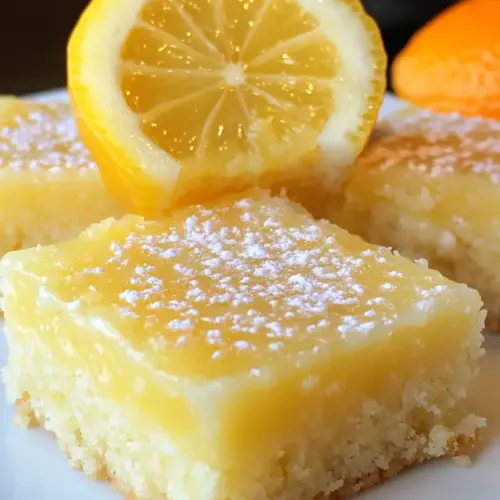
Meyer Lemon Cake Bars
Meyer Lemon Cake Bars offer a tender, buttery crumb brightened by floral Meyer lemon zest and tangy juice. These easy to slice bars are creamy in mouthfeel with a crisp golden edge and a glossy citrus glaze. Perfect for spring gatherings or simple tea time, they are a quick impressive dessert to make for guests or weeknight treats.
Equipment
- 9 x 9 baking pan
- Stand mixer or mixing bowl
- Spatula
- Whisk
- Sifter
Ingredients
- 1 cup 2 sticks unsalted butter (room temperature) Cream until light and fluffy to create the cake's tender, moist base and help incorporate air for lift.
- 1 1/2 cups sugar Sweeten and tenderize the batter while aiding in browning and providing structure when creamed with butter.
- 4 eggs Bind ingredients, add moisture, and help create structure and richness through protein coagulation during baking.
- 1 tablespoon Meyer lemon juice Brighten flavor with a concentrated citrus tang and enhance the lemon character throughout the cake layers.
- 2 teaspoons Meyer lemon zest (about one medium lemon) Provide intense citrus aroma and flavor oil to intensify lemon notes and balance sweetness in the bars.
- 1 1/2 cup all-purpose flour Structure the batter by supplying gluten and starch, yielding the crumb and bulk of the finished bars.
- 1/2 teaspoon baking powder Leaven slightly to add a gentle rise and lightness, working with beaten eggs for crumb texture.
- 1/8 teaspoon baking soda React with acidic components to provide additional lift and a finer crumb without an overt chemical taste.
- 1/2 teaspoons salt Enhance overall flavor by balancing sweetness and intensifying other tastes while stabilizing dough chemistry.
- 1 cup powdered sugar Dust over finished bars to add a delicate sweetness, a light decorative finish, and slight textural contrast.
- 2 tablespoons fresh Meyer lemon juice Introduce a bright, fresh citrus punch to the glaze or topping, cutting sweetness and elevating flavor.
- 2 teaspoons Meyer lemon zest (another medium lemon) Add a concentrated citrus aroma and bold lemon oil to the finishing glaze, boosting fragrance and taste.
Instructions
- Preheat oven to 350 degrees Fahrenheit. Butter a 9" x 9" baking pan and set aside.: When the oven reaches 350 degrees Fahrenheit , the heat gives immediate lift to the batter, creating gentle oven spring and a fine crumb. As you preheat, you can hear the oven click and the rack warm, and that steady hum indicates readiness. Buttering the pan ensures the bars will release cleanly, leaving those golden edges intact. A key reason for preheating is to set the structure early, which prevents dense or uneven baking. Common mistake, not preheating long enough, results in under risen or gummy centers.
- In a large mixing bowl or in the bowl of a stand mixer affixed with the paddle attachment, beat together the butter and sugar on medium speed until fluffy, about two minutes.: You will notice the butter lighten in color and sugar crystals begin to dissolve, creating a pillowy texture. The creaming traps small air bubbles that help the bars rise and become tender. The sound is a steady mechanical whir, and visually the mixture changes from firm to soft and spreadable. This stage matters because it determines the crumb structure, and skipping it yields denser bars. Troubleshooting tip, if your butter is too cold, it will not cream properly; if too warm, it will be greasy and collapse while baking.
- Add the eggs, one at a time, beating well after each addition.: As each egg is incorporated, the batter becomes smoother and more cohesive, and you may hear a lighter mixing sound as it emulsifies. The eggs contribute protein which sets during baking to provide stability, while their yolks enrich the flavor. Adding them one at a time prevents curdling and ensures even distribution. Why it matters, proper incorporation avoids a separated batter that can produce uneven texture. Common pitfall, adding all the eggs at once especially if cold, can create a curdled mixture which is harder to fix.
- Add the lemon juice and lemon zest and beat on low just until combined.: When the Meyer lemon juice and Meyer lemon zest join the batter, the aroma changes immediately, releasing floral and bright citrus oils. I lower the mixer to avoid over aerating and to preserve the delicate lemon oils in the zest. This step builds that signature flavor, integrating acidity which balances the richness from the butter . A common mistake is overmixing at this point, which can knock out the air created earlier and make the crumb tight.
- In a medium bowl, sift together the flour, baking powder, baking soda and salt.: Sifting introduces air and eliminates lumps from the all-purpose flour and leaveners. You will see a light, powdery cloud as you sift, and the mixture should feel fine and even. This preparation is important so the dry ingredients blend evenly into the wet, ensuring uniform rise. If you skip sifting and the flour has compacted, you risk pockets of dry flour and inconsistent texture.
- Pour the flour mixture into the butter/sugar/lemon mixture and mix together until blended.: As you fold in the dry mix, the batter will thicken and become smoother, and you may hear a slower, heavier sound from the mixer. The all-purpose flour provides the frame that holds moisture and rise, while the leaveners activate in the warm oven. Mixing until just blended preserves the lightness created earlier; over mixing develops gluten, which causes toughness. One mistake to avoid is vigorous mixing which leads to a dense, chewy bar rather than tender.
- Spread mixture in the baking pan.: Use a spatula to press the batter evenly into the prepared 9 inch by 9 inch pan, smoothing the top so it bakes uniformly. You should see a glossy, even surface with no high peaks, and the batter should reach the pan corners. An even layer bakes consistently, guarding against edges overcooking while the center remains raw. A common misstep is leaving the batter piled in the center, which causes uneven browning and doneness.
- Bake for 30 minutes, until the cake bars begin to get golden brown around the edges, and are set in the middle.: During baking you will notice the kitchen filling with a sweet, citrus tinged aroma and the top turning a warm golden hue at the edges. The center should feel set to a gentle fingertip press and a toothpick inserted in the center should come out mostly clean with a few moist crumbs. This timing yields the ideal tender but fully cooked texture. If you underbake, the center will be gummy; if you overbake, the bars dry out and lose their tenderness.
- Cool for about 20 - 30 minutes.: Cooling allows the bars to firm up and makes slicing neater, and you will notice the smell concentrating as steam decreases. During this period the crumb settles and the glaze will adhere better when added. Patience here ensures clean slices and a pleasant mouthfeel, whereas cutting too soon leads to a sticky mess. A typical error is rushing this step and attempting to glaze while the cake is too warm, which causes the glaze to run off.
- Make the glaze. Whisk together the powdered sugar, lemon juice and lemon zest.: When you whisk powdered sugar with extra Meyer lemon juice and zest , the mixture becomes glossy and fragrant. The sugar dissolves into a smooth, pourable glaze that carries bright citrus notes. This glaze balances the sweetness and adds a shiny finish that signals freshness. Troubleshooting, if the glaze is too thin add more powdered sugar , if too thick add a drop more lemon juice .
- Drizzle glaze over the top of the cake bars.: As the glaze hits the warm but cooled surface, it sets into a satin sheen and releases a burst of fragrance. Use a spoon or a small whisk to create thin ribbons of glaze that form delicate lines across the top. This final flourish enhances both taste and appearance, contributing a tangy counterpoint to the buttery base. Avoid soaking the bars with too much glaze, which makes them overly sweet and soggy.
- Cut into squares and serve.: After the glaze has set slightly, use a sharp knife to cut into even squares, wiping the blade between cuts for clean edges. The bars should present a tender, pale crumb with a glossy top and a subtle golden rim. Serving them at room temperature ensures the flavors are balanced and the texture is soft but stable. A common mistake is cutting while the bars are too warm, producing ragged slices and a sticky presentation.
Notes
- Room temperature ingredients: Bring butter and eggs to room temperature so they incorporate smoothly and the batter emulsifies properly.
- Fresh Meyer lemons: Use freshly zested and juiced Meyer lemons for the most aromatic, floral citrus impact in both batter and glaze.
- Pan preparation: Butter the 9 inch by 9 inch pan thoroughly and consider lining with parchment for the easiest removal and cleanest edges.
- Watch the edges: Check the bars at the 25 minute mark for golden edges and set center, oven temperatures vary and visual cues prevent overbaking.
- Glaze consistency: Aim for a glaze that is pourable but not watery; adjust with more powdered sugar or a touch more Meyer lemon juice as needed.