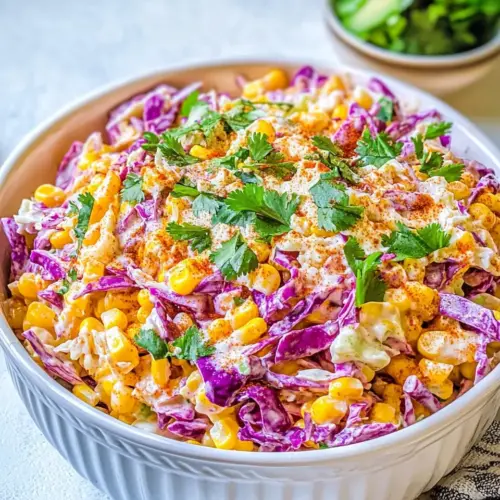
Mexican Street Corn Coleslaw
Mexican Street Corn Coleslaw is a creamy, smoky, and crunchy side with grilled corn, crisp cabbages, and a tangy lime dressing. Perfect for summer gatherings and easy weeknight dinners, this slaw offers bright citrus notes, a touch of heat, and a crumbly salty finish from cotija cheese, making it an irresistible crowd pleaser you will want to make again and again.
Equipment
- Grill or Grill Pan
- Sharp Knife
- Large Bowl
- Medium Bowl
- Whisk
Ingredients
- 4 ears of fresh corn, cleaned and grilled* (see Notes for corn options) Shucked and grilled to develop smoky char, adds sweet pop and crunchy kernels that are the star component providing texture and fresh corn flavor; can be roasted or pan-seared if grill unavailable, and cut from the cob before mixing.
- 2 cups red cabbage, shredded Shredded into thin ribbons to contribute crisp bite, vibrant purple color, and mild peppery notes that balance creaminess; helps maintain structure and visual contrast in the slaw.
- 2 cups green cabbage, shredded (use a bag of cole slaw mix to save time) Shredded into fine strands to provide bulk, crunchy texture, and a neutral cabbage base that soaks up the dressing; can be substituted with a pre-shredded cole slaw mix for convenience.
- 1/2 cup cotija cheese, queso fresco may be subsituted Crumpled to add salty, tangy, and slightly creamy savory notes; sprinkles over the finished slaw to introduce a bright, crumbly texture and authentic Mexican flavor.
- 1/3 cup chopped red onion Finely chopped to contribute a sharp, slightly sweet and pungent onion bite that brightens flavors and adds small bursts of texture throughout the slaw.
- 1/3 cup cilantro, finely minced Finely minced to bring fresh herbal brightness and a citrusy, slightly peppery element; scattered through the salad to lift and unify other flavors.
- 1 or 2 jalapenos, seeded and diced very small, or to taste Seeded and diced very small to provide a controlled spicy heat and vegetal crunch; can be adjusted in quantity to match desired spiciness and retain texture in each bite.
- 1/2 cup mayonnaise Used as a rich, creamy binder to add silky texture and mellow tang that helps coat the cabbage and corn; combines with crema or sour cream to create the dressing base.
- 1/2 cup Mexicana crema or sour cream Added for tangy creaminess and a slight tang to lighten the mayonnaise, improving spreadability and adding a subtle lactic note to the dressing.
- 2 tablespoons freshly squeezed lime juice Freshly squeezed to provide bright acidity and citrus aroma that balances richness, cuts through creaminess, and enhances overall freshness of the slaw.
- 1 teaspoon cumin, or to taste Ground and added to introduce warm, earthy, and slightly nutty undertones that complement the corn and Mexican spices; adjust to taste to avoid overpowering.
- 1 teaspoon smoked paprika, or to taste Smoked and sprinkled to contribute deep smoky flavor and warm color that echoes grilled corn char while enhancing overall depth of the dish.
- 1 teaspoon chili powder, or to taste Sprinkled to add mild chili heat and vibrant red color, layering Mexican-inspired spice that complements cumin and smoked paprika in the dressing.
- 1 teaspoon salt, plus more to taste if desired Measured and mixed to season the slaw, enhancing and harmonizing flavors; add cautiously and adjust after tasting to achieve the right balance.
Instructions
- Grill corn as desired, following the grilling instructions given in my Grilled Corn post, linked in the Notes below.: You will notice a fragrant, toasty aroma as the kernels take on color, and the sound of the corn sizzling when it first hits a hot grill indicates Maillard reaction at work, which brings out a deep sweet note. Use medium high heat so the kernels char without burning, turning the ears to get even caramelization on all sides. The visual cue is even brown flecks and slightly shriveled silk ends, and the smell should be nutty and inviting. This step matters because the grilled flavor is the backbone of the salad; without it the slaw lacks that distinctive street corn profile. A common mistake is using too low a heat time which yields pale, bland kernels, or too high which blackens them quickly, so monitor the grill closely.
- After it's been grilled and is cool enough to handle, using a sharp knife, shear the corn from the ears and add it to a large bowl.: You will feel the firm but juicy pop of each kernel as you cut them free, and the knife should glide down the cob leaving a clean row of kernels in the bowl. A stable cutting surface and a very sharp knife help maintain neatness and prevent crushing kernels, which preserves texture and prevents excess juice from making the slaw watery. The visual cue is neat, intact kernels sitting in the bowl. The why here is clear: intact kernels retain bursts of sweetness and texture, elevating each bite. One common error is cutting too close to the cob which grinds in the starchy core, yielding a pasty texture, so keep a steady angle and pace.
- Add the remaining vegetables including the cabbages, cotija, red onions, cilantro, jalapenos, and stir to combine. Tips– If you're sensitive to spicy food or are unsure about the overall heat level, use 1/2 to 1 jalapeno with the seeds and white membranes removed; or simply omit. Jalapenos aren't spicy for me, but everyone is different so start slowly and add to taste. If you can't find cotija or queso fresco, you can either use crumbled feta or simply omit the cheese.: As you add the shredded red cabbage and shredded green cabbage , you'll hear a crisp rustle and see contrasting colors layering into the bowl; the crumbled cotija cheese will sit like tiny white islands among the veggies. When stirring, aim for even distribution so every bite gets a bit of each component. This technique matters because uniformly mixed ingredients ensure consistent flavor and texture across servings. Watch for oversized pieces of jalapeno or onion that can dominate single bites, and if you spot them, break them up finely. The typical mistake is under mixing which leaves pockets of unmixed ingredients.
- To a medium bowl, add all the ingredients, and whisk to combine until smooth. Taste, and make any necessary seasoning adjustments.: When you whisk the mayonnaise , crema , lime juice, and spices, you should see a glossy, slightly thickened dressing form, and the aroma of cumin and smoked paprika will bloom. The texture should be pourable but substantial, coating the back of a spoon. Whisking emulsifies the fats and acids, creating a stable dressing that clings to the cabbage and kernels. If the dressing splits or looks watery, whisk vigorously or add a touch more mayonnaise to bring it back. A mistake at this stage is under seasoning the dressing, so always taste and adjust.
- Pour the dressing over the vegetables in the large bowl, and stir to coat evenly. Taste again for seasoning balance, and if necessary, add more salt, cumin, chili powder, etc. and stir to combine. Tip – If it tastes at all flat or boring, it likely needs more salt. You're seasoning a large quantity of vegetables which can be bland on their own, so don't be afraid to add additional salt (or other spices), to taste.: As you pour, you will see the dressing glisten over the shredded cabbages and corn , and the sound is a soft coating motion as you fold everything together. Use a folding motion to preserve texture, lifting from the bottom and turning gently to avoid crushing the vegetables. Proper coating ensures each forkful has balance rather than pockets of dryness, and it helps the seasonings marry with the veggies. If the slaw feels dry, add a touch more dressing inching toward the texture you like, but avoid drowning the vegetables. The common pitfall is over stirring which can bruise the cabbage and make it limp.
- Cover, refrigerate, and serve chilled. Before serving, optionally garnish with additional cilantro, cheese, fresh parsley, or as desired. Make-Ahead – You can make this up to 24 hours in advance, noting that it will become more 'soupy' as it sits, as the natural juices from the vegetables seep out in the presence of salt. Storage – Leftovers will keep for up to 3-5 days airtight in the fridge, noting that the everything will become softer and soupier as it sits which is simply the nature of coleslaw.: Your palate will guide you here; if the salad tastes muted, a pinch more salt often brings everything forward, while extra lime brightens. Smell the bowl for a rounded aroma; if a single note dominates, correct it by adding its counterpoint, such as more crema for heat or extra spices for depth. This step matters because raw vegetables can soak up flavors unevenly, and seasoning at the end ensures the final bowl is balanced. The typical error is under tasting, which leaves the salad flat, so sample and adjust thoughtfully.
- Cover, refrigerate, and serve chilled.: Once chilled, the salad will calm and the flavors will knit, producing a cohesive profile where the spices and lime have mellowed into the dressing. The chilled temperature gives a refreshing contrast to grilled meats and warm mains, and you will notice the cabbage soften slightly as the salt draws moisture out. This melding is why I often make it ahead, though storing too long makes it soupier. The common storage mistake is leaving it at room temperature for too long, which can accelerate breakdown; keep it chilled until serving.
Notes
- Swap grill methods Use a grill pan if you do not have an outdoor grill; it still creates char and gives the same toasted aroma while keeping kernels juicy.
- Adjust the heat Start with one seeded jalapeno and add more finely minced if guests want heat, tasting as you go to avoid overshooting the spice level.
- Cheese variation If you cannot find cotija cheese, use crumbled queso fresco or a light feta as a substitute, keeping the salty, crumbly element intact.
- Make it ahead carefully Prepare up to 24 hours in advance but drain any excess liquid before serving to keep the texture lively rather than soggy.
- Serve chilled for contrast Refrigerate the salad until close to serving to preserve crispness and provide a refreshing counterpoint to warm entrees.