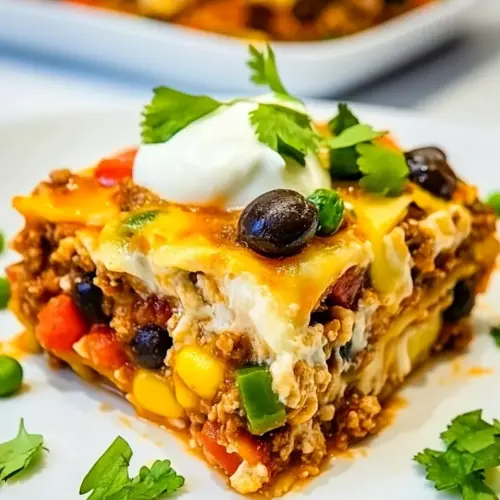
Mexican Lasagna
Mexican Lasagna is a creamy, cheesy, and easy weeknight dinner that layers seasoned ground beef, refried beans, and salsa between flour tortillas for a crowd pleasing casserole. With melty Mexican cheese and tangy sour cream, it delivers comfort with a festive twist, perfect for feeding a group or saving as satisfying leftovers. Make it for an effortless, flavor packed meal.
Equipment
- 9x13-inch Baking Dish
- Large Nonstick Skillet
Ingredients
- 1 pound lean ground beef Brown and crumble to provide a hearty, savory base and main protein for the casserole; season while cooking to enhance overall flavor and create a meaty texture that contrasts with creamy layers.
- 1/2 cup diced onion Sauté until translucent to contribute sweetness and aromatic depth; distribute evenly through the layers to build complexity and balance the richness of other components.
- 1 packet taco seasoning Season and flavor the meat mixture to introduce classic Mexican spices; dissolve into the beef with water to create a cohesive, well-seasoned filling.
- 1/2 cup water Simmer with the taco seasoning and beef to bind spices and create a saucy consistency; adjust slightly to control moisture level for assembling the lasagna.
- 1 (4-ounce) can chopped green chiles Drain and stir into the filling to add mild heat and tangy green chile flavor; provide small pockets of bright, piquant contrast throughout the dish.
- 1 (16-ounce) can refried beans Spread as a creamy, thick layer to add body, earthy flavor, and a smooth texture that helps bind the tortillas and fillings together for slicing.
- 1 (8.75-ounce) can corn, drained Drain and fold in to offer sweet, tender kernels and subtle texture contrast; distribute evenly to add color and a mild, sweet note to each bite.
- 2 cups sour cream Layer or mix in to contribute cool creaminess and a tangy richness that lightens spicier elements; helps create a luscious, cohesive mouthfeel between layers.
- 1 teaspoon chili powder Sprinkle or incorporate into the meat or sour cream layer to introduce warm, smoky flavor and a mild heat that deepens the overall spice profile.
- 12 Medium-sized flour tortillas Stack and separate layers to serve as the starchy structure of the casserole; provide soft, pliable sheets that absorb flavors and hold the lasagna together when baked.
- 1 (16-ounce) jar salsa Spoon between layers to infuse acidity, tomato flavor, and moisture; acts as a saucy element that keeps the tortillas from drying out during baking.
- 3 cups shredded Mexican cheese Top or layer in to deliver gooey, melty richness and a salty, tangy finish; melts over the casserole to create a cohesive, gratin-like topping.
- sliced black olives, cilantro, pickled jalapenos for serving Garnish right before serving to add briny, herbal, and spicy accents; chop or slice as desired to introduce brightness, contrast, and visual appeal.
Instructions
- Preheat oven to 375 degrees and grease a 9×13-inch pan.: You will notice the oven warming and a faint hot oven smell as it reaches 375 degrees , which primes the pan so the bottom layer starts cooking the moment it goes in. Greasing the 9x13-inch baking dish prevents sticking and encourages the edges to crisp slightly. If you skip greasing, the bottom tortillas may adhere and tear when you serve. A typical mistake here is opening the oven frequently, which drops the temperature and affects baking time.
- Brown ground beef in a large nonstick skillet over medium-high heat, breaking it apart as it cooks. Add the onion when the beef is about half cooked.: Expect a sizzling sound as the ground beef hits the hot skillet, and soon you will see brown bits form, releasing a rich meaty aroma. Adding the onion midway lets it soften into the meat without burning, creating a sweet foundation. Why this matters, the browned fond adds concentrated savory flavor, elevating the whole dish. A common error is not using enough heat so the beef steams instead of browns, resulting in weaker flavor and a pale color.
- Add taco seasoning and water and simmer for 2 to 3 minutes.: As the packet hits the pan, you will smell the spice blend bloom, and the small amount of water helps to dissolve the seasoning into a cohesive sauce that clings to the meat. This short simmer concentrates flavors and ensures even distribution. If you skip simmering, the seasoning can taste powdery and uneven. Watch closely so the mixture does not reduce too far and become dry.
- Stir in green chiles, refried beans and corn and remove from heat. Set aside.: When you fold in the green chiles , refried beans , and corn , the mixture becomes thick and spreadable, with contrasts of creaminess and pop. Removing from heat keeps the beans from drying out and preserves the chiles texture. The why is that a warm, cohesive filling spreads smoothly over the tortillas without tearing them. Overcooking here can cause the beans to seize and become gummy, so combine gently and pull off the heat.
- Stir together the sour cream and chili powder in a bowl.: Whisking the sour cream with the chili powder creates a tangy, spiced cream that lightens the richness of the refried beans and cheese . The aroma will be pleasantly spicy and creamy, and spreading this mixture helps keep each layer moist and balanced. A common mistake is under-seasoning the sour cream, which results in a bland layer; make sure the chili powder is distributed fully.
- Arrange 4 tortillas in the bottom of the baking dish. I lay 3 of them whole and then break the 4 th one into pieces to fill in the gaps.: As you place the tortillas , you will feel their soft texture and hear faint tearing as you fit pieces to cover the pan. This creates a sturdy base that soaks up just enough sauce without falling apart. The technique of using whole plus broken pieces ensures even coverage, which leads to neater slices. Mistakes include leaving gaps which create unstable layers, so take a moment to fit them snugly.
- Spread 1/3 of the ground beef mixture over the tortillas. Spread 1/3 of the sour cream mixture on top, followed by 1/3 of the salsa. Sprinkle with 1 cup of cheese.: The initial layering creates the flavor template for the whole dish, with savory meat, creamy tang, bright salsa, and melty cheese . You will notice steam rising slightly as the warm meat meets the tortillas, and the colors will contrast nicely. This sequencing matters because it distributes moisture and flavor evenly across layers. One pitfall is uneven spreading which leads to dry spots, so use the back of a spoon to smooth layers consistently.
- Repeat layer 2 times but do not put on the last layer of cheese.: Repeating the layers builds height and ensures that each slice contains every component, producing a balanced bite. Leaving off the final cheese layer prepares the dish for a controlled cheese finish later. The repeated layering gives structure so the lasagna holds its shape when cut. The common mistake is piling too much filling in a single layer which prevents proper heat penetration, so keep each layer even.
- Bake uncovered for 30 minutes.: During this baking interval you will hear faint bubbling and see the edges begin to brown, with the salsa and fillings melding. The oven s dry heat helps slightly crisp the top tortilla edges while the interior cooks through. This stage sets the internal texture. Avoid opening the oven frequently, which causes temperature fluctuations and can increase total bake time.
- Remove from oven, sprinkle with remaining 1 cup of cheese and bake for 10 more minutes.: Adding the reserved cup of cheese at this point produces a beautifully melted and golden top, with slight browning that adds nutty notes. The final ten minutes allow the cheese to bubble and form a cohesive crust without drying out the center. If you add the cheese too early it can overbrown or separate, so timing is key. A mistake to avoid is leaving it in too long, which will make the cheese tough rather than tender and melty.
- Let cool 5 to 10 minutes before slicing and then serve with toppings.: The resting period lets steam redistribute, ensuring cleaner slices and a less runny center. You will notice the filling firm slightly and the aromas will settle into a well rounded scent. Serve with sliced black olives , cilantro , and pickled jalapenos for contrast. Cutting too soon causes the lasagna to fall apart, so be patient and let it rest for a few minutes to achieve neat servings.
Notes
- Lean ground beef tip: If you prefer a lighter option you can use lean beef exactly as written but make sure to drain excess fat after browning to prevent a greasy filling.
- Onion timing tip: Add the onion when the meat is half cooked so it softens without burning and integrates its sweetness into the meat mixture.
- Taco seasoning tip: If your packet is very salty, reduce added salt in other components and taste the mixture before adjusting to avoid over seasoning.
- Refried beans tip: Warm the refried beans before spreading to make them more pliable, which results in smoother layers and easier assembly.
- Tortilla placement tip: Lay three whole tortillas and use a fourth broken to fill gaps, this gives even coverage and helps slices hold their shape.