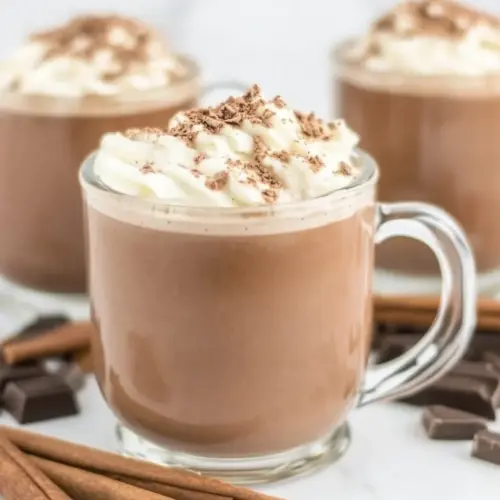
Mexican Hot Chocolate
Mexican Hot Chocolate is a creamy, warmly spiced beverage that combines melted semi sweet chocolate and whole milk with a hint of cinnamon and cayenne for depth. This easy, comforting drink is perfect for chilly nights or elegant gatherings when paired with a swirl of whipped cream. Make it for a quick indulgent treat that feels special and satisfying every time.
Equipment
- Saucepan
- Whisk
- Piping Bag
Ingredients
- 4 cups whole milk Heat and enrich the drink by providing a creamy, full-bodied base that carries flavors; warm gently to avoid scalding and to allow chocolate to melt smoothly. Use whole milk for a rich mouthfeel and balanced sweetness that complements the chocolate and spices. Stir frequently while heating to prevent a skin from forming and to ensure even temperature throughout.
- 1 cups semi-sweet chocolate chips Melt and sweeten the beverage while delivering deep cocoa flavor and a smooth texture when fully incorporated into warm milk. Choose semi-sweet chocolate chips for balanced sweetness and reliable melting properties, chopping if necessary for faster, more even melting. Stir until fully dissolved to create a velvety chocolate foundation for the drink.
- 1/2 teaspoon pure vanilla extract Enhance the aroma and round out sweetness with a subtle floral-vanilla note that lifts chocolate flavors and deepens complexity. Add near the end of heating to preserve delicate volatile oils and avoid evaporating delicate aroma. Measure carefully to balance without overpowering the beverage.
- 1/2 teaspoon ground cinnamon Warm and complement the chocolate by adding cozy, aromatic notes that accentuate sweetness and create a comforting profile. Use ground cinnamon sparingly and whisk into the hot milk-chocolate mixture so it disperses evenly and does not clump. Consider tasting and adjusting to maintain a harmonious spice level.
- 1/8 teaspoon cayenne powder Add a subtle spicy heat and bright peppery undertone that provides complexity and a traditional Mexican hot chocolate kick. Sprinkle a small amount and taste as you go, since cayenne powder is potent and can easily dominate. Blend thoroughly to ensure heat is evenly distributed rather than forming hot spots.
- Pinch of salt Enhance and balance overall flavors by tightening sweetness and accentuating other spices with a small touch of salt. Use a pinch to brighten chocolate and reduce any flat or overly sweet notes without making the drink taste salty. Dissolve completely into the warm liquid for uniform flavor enhancement.
- 2 cups whipped cream Top and lighten the finished drink with a fluffy, creamy layer that adds texture contrast and extra indulgence. Pipe or spoon whipped cream onto each cup just before serving to maintain its airy structure and prevent melting into the hot chocolate too quickly. Optionally dust with a little cinnamon for appearance and flavor continuity.
- Cinnamon sticks Garnish and stir the beverage while adding a subtle, aromatic cinnamon note and a decorative touch for presentation. Insert one stick per serving to serve as an edible stirrer that releases mild spice as guests swirl their cups. Use whole cinnamon sticks for a rustic look and gentle infusion rather than overpowering powdered spice.
Instructions
- In a medium-sized saucepan, begin to heat the milk over medium-low heat. Add the chocolate chips, vanilla, cinnamon, cayenne pepper and salt. Stir and allow the chocolate chips to melt. Then whisk until the melted chocolate and cinnamon are well combined with the milk and no lumps remain.: The first warm breath of the stovetop should be gentle, so the milk warms evenly without forming a skin. You will notice thin wisps rising from the surface and a faint steam, that’s the cue to keep stirring. The gentle warming helps proteins in the milk loosen and accept the melted chocolate without curdling. A common slip is using too high heat, which creates scalding and ruins the silky texture, so keep it at medium low and stay present at the stove.
- Reduce heat to low and allow the hot chocolate to heat gradually, stirring often. Do not allow the hot chocolate to simmer or boil.: Once the milk is warm, introduce the semi sweet chocolate chips and the seasonings so they begin to melt and harmonize. You should hear a quiet soft hiss as chips meet the warm liquid and see small glossy islands of chocolate soften. Adding everything at this stage allows the flavors to bloom together, building a complex profile. Avoid dumping all the chips at once from a height, which can cause splatter and uneven melting, instead add them steadily and be ready to stir.
- Once the desired temperature is reached (I prefer it to be between 130-140℉, it’s warm but not scorching hot), pour the hot chocolate into mugs. Place the whipped cream in a piping bag with an open start and pipe whipped cream on top of each hot chocolate. Sprinkle with cinnamon and add cinnamon sticks. Serve immediately.: As the chips soften, the saucepan will fill with a slowly darkening swirl that becomes silkier with each stir. Use a whisk to coax the mixture toward homogeneity, paying attention to any stubborn chunks. The sound is subtle, a soft sloshing, and the aroma becomes cocoa forward with spicy notes. If you find lumps after a few minutes, lower the heat and whisk vigorously until smooth, because overheating can break the emulsion and make the drink grainy.
- Then whisk until the melted chocolate and cinnamon are well combined with the milk and no lumps remain: This is the make or break moment for smoothness, where the glossy sheen should cover the surface and the texture feel unified. You will notice a uniform, velvety ribbon when you lift the whisk, that indicates proper incorporation. If you rush or stop whisking early, pockets of chocolate or cinnamon will remain, giving an uneven mouthfeel, so keep whisking until everything is seamless.
- Reduce heat to low and allow the hot chocolate to heat gradually, stirring often: Lowering the flame lets flavors marry gently and prevents boiling which would evaporate delicate aromas. The mixture should be warm enough to steam, but it must never simmer with frantic bubbles. Stirring often keeps the texture even and prevents a film from forming on top. A frequent error is stepping away and letting it boil, which causes the fat to separate and ruins the drink, so stay close and attentive.
- Do not allow the hot chocolate to simmer or boil: Maintaining control over temperature preserves the creamy mouthfeel and prevents bitterness. You want a gentle warmth that carries scent without aggressive bubbling, the surface should be still with small, occasional wisps of steam. Simmering will push moisture off and concentrate flavors in an unpleasant way, so if you see bubbles, immediately lower the heat and whisk to cool slightly.
- Once the desired temperature is reached (I prefer it to be between 130-140℉, it’s warm but not scorching hot), pour the hot chocolate into mugs: Pouring slowly, you will see the chocolate coat the sides of the mug in a glossy swim, releasing an inviting steam that carries cinnamon. The suggested 130 to 140 degrees Fahrenheit keeps the drink cozy and drinkable right away without burning the tongue. If you lack a thermometer, test by touching the mug exterior briefly, it should be hot but comfortable to hold for a second, otherwise let it cool a shade.
- Place the whipped cream in a piping bag with an open start and pipe whipped cream on top of each hot chocolate: The cool, billowy whipped cream creates a luxurious contrast to the hot liquid beneath. You should feel the soft peaks settle when piped, and the visual of white cream against dark chocolate is always satisfying. Overwhipping the cream will make it stiff and less creamy, so aim for soft peaks that gently mound when piped.
- Sprinkle with cinnamon and add cinnamon sticks: A light dusting of ground cinnamon on top of the cream adds aroma and a hint of spice, while a cinnamon stick serves as a pretty stirrer. The scent will intensify as it warms and release fragrant oils that elevate the experience. Avoid dumping too much cinnamon which can overwhelm the palate and feel gritty on the tongue.
- Serve immediately: This is when the contrast between hot chocolate and cool whipped cream is most delightful, and guests will appreciate the glossy finish and inviting steam. Serve while the drink is still warm, because as it sits the texture can flatten and the whipped cream may begin to melt into a thinner layer. If you must wait, keep the hot chocolate warm on the lowest heat and rewhisk briefly before serving to revive the velvety texture.
Notes
- Make a richer version by folding a small amount of reserved warm heavy cream into the finished drink to amplify silkiness without thinning the chocolate intensity.
- Adjust spice level by starting with half the cayenne powder and increasing in tiny increments, tasting as you go to find your comfortable warmth.
- Create a dairy free alternative by swapping whole milk for a creamy plant milk, making sure to warm it gently since some plant milks separate at high heat.
- Garnish like a pro by grating a small curl of semi sweet chocolate over the whipped cream right before serving for visual contrast and an extra chocolate hit.
- Serve family style by keeping the hot chocolate in a thermos or insulated pot for guests to ladle into mugs, topping individually with whipped cream and a cinnamon stick.
- Infuse subtle flavor by steeping a whole cinnamon stick in the warm milk for a few minutes before adding chocolate, giving a softer, more aromatic background note.