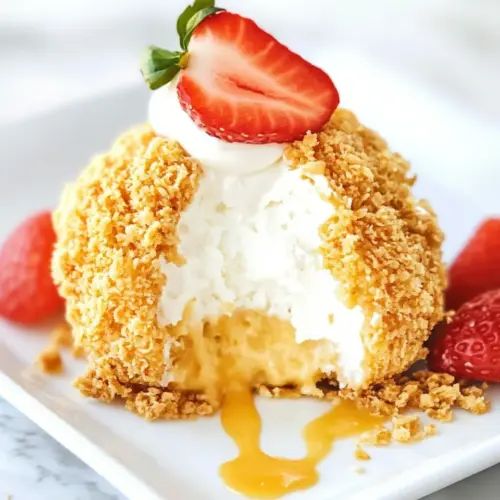
Mexican Fried Ice Cream
Mexican Fried Ice Cream is a playful, crispy coated treat that combines warm, cinnamon toasted crumbs with cold, creamy vanilla. The contrast between the crunchy exterior and silky interior makes it a standout dessert for summer gatherings and easy weeknight celebrations. It is quick to assemble, make ahead friendly, and guaranteed to impress anyone who loves texture driven sweets.
Equipment
- Heavy-bottomed pot
- Candy thermometer
- Slotted Spoon
- Shallow Dishes
- Freezer
Ingredients
- 1 quart vanilla ice cream Churned into a smooth, creamy base that provides the cold, sweet foundation for the dessert and balances the warm fried exterior when scooped and frozen solid before frying.
- 3 cups crushed cornflakes cereal, about 5 cups uncrushed Coated and crushed to create a crunchy shell that adheres to the ice cream for texture contrast; measure roughly 3 cups once pulverized and used to encrust each ball evenly.
- 1 teaspoon cinnamon Sprinkled into the coating mixture to add warm, aromatic spice that complements the sweetness and enhances the flavor profile of the fried crust without overpowering.
- 4 egg whites Beaten until frothy to act as an egg wash that helps the cornflake coating stick to the ice cream, providing a glue-like layer for a secure, crisp exterior when fried.
- vegetable oil or canola oil, for frying Heated to a shimmering temperature in a deep pan to quickly crisp the coated ice cream balls, creating a golden shell while leaving the interior cold and intact.
- fresh berries Garnishing with seasonal fresh berries introduces bright acidity and a juicy contrast that cuts through sweetness and adds a colorful, fresh element to each serving.
- whipped cream Dolloped on top to add airy richness and creamy texture that complements both the cold ice cream and crunchy coating for a classic dessert finish.
- honey Drizzled over the finished dish to contribute a sticky, floral sweetness that ties flavors together and adds gloss and extra sweetness to each bite.
Instructions
- Scoop the ice cream into 1/2 cup balls and freeze for one hour, until firm.: The sensory cue here is the firmness when you press the scoop gently, it should yield slightly but not slush, indicating it is holding shape. Freezing for an hour sets the outer layer, which helps the coating stick in later steps. The why is that a slightly set surface prevents the ice cream from melting when you handle it. A common mistake is making the balls too large, which increases the risk the inside softens during frying.
- In a shallow dish, whisk together the crushed cornflakes and cinnamon. In another shallow dish, beat the egg whites until frothy.: You should notice the cinnamon scent blooming as you mix it into the cornflakes , and the egg whites will look glossy and bubbly, not stiff. This separation of dry and wet components ensures even coating and prevents soggy spots. The purpose is to set up a two step dredge that creates a sealed, crunchy shell. Avoid overbeating the egg whites , since overly stiff whites can make the coating clump unevenly.
- Dip each of the ice cream balls in the egg whites, then roll in the cornflakes, coating the ice cream completely. Repeat once more, dipping first in the egg whites and then again in the cornflakes, coating completely.: You will feel the textured crumbs adhere to the chilled surface and hear a faint scraping as you roll. Repeating the dip and roll ensures a thicker, more robust crust that tolerates the hot oil for those quick seconds. The reason this double coating matters is that it forms a stronger barrier to slow melting and gives you theatrical crunch. Resist the urge to press hard when coating, as compacting the crumbs can create dense pockets that do not crisp properly.
- Return the ice cream balls to the freezer and freeze until solid, 2-3 hours.: The balls should be rock solid to the touch and will sound slightly muted when tapped, this indicates the core is frozen through. Deep freezing is essential so that the interior stays cold during the brief fry, preserving texture. If they are not frozen enough, the center will soften too quickly and may leak when fried.
- When ready to serve, heat the oil in a heavy-bottomed pot to 375°F. Using a slotted spoon, add the ice cream balls to the hot oil. Cook 10-15 seconds, until golden, turning to ensure both sides get browned.: Listen for the quiet shimmer of hot oil before you add anything, and look for the slight wavy movement on the surface rather than smoking. A thermometer is critical here because the narrow frying window seals the crust in seconds. If the oil is too cool the coating will absorb oil and become greasy, and if it is too hot the exterior can overbrown in an instant while the interior remains icy cold but the shell is brittle.
- Let the ice cream balls drain on paper towels for 1-2 minutes, then serve immediately with whipped cream and berries, drizzled with honey.: You will hear a delicate crackle as the crust browns and see a brief steam plume rise, that is the coating crispening without the interior melting. The short cook time is what makes this dessert magical, giving you a warm shell and cold center. A common trap is overcooking; even a few extra seconds flood the interior with heat and ruins the contrast.
- Let the ice cream balls drain on paper towels for 1 to 2 minutes, then serve immediately with whipped cream and berries, drizzled with honey: As they rest, the coating will stay crisp while residual steam dissipates, and the aroma of toasted cinnamon and warm crumbs will mingle with the cold perfume of vanilla ice cream . Serve promptly so the contrast remains vivid, and use a slotted spoon to lift them carefully so the coating does not crack. Waiting too long before serving causes the interior to warm and the shell to soften, so timing is everything here.
Notes
- Make ahead Prepare and freeze the coated balls in a single layer before transferring to a container, they will keep well for up to one month if wrapped tightly, making party day effortless.
- Oil choice Use neutral oil with a high smoke point like vegetable oil or canola oil, this prevents off flavors and allows rapid browning without smoking.
- Texture control Keep the cornflakes crushed coarsely rather than powdering them, that coarse texture is what gives the satisfying crack when you bite in.
- Binding technique Beat the egg whites only until frothy and glossy, this creates a light tack that helps crumbs cling without creating thick, gummy layers.
- Serving timing Fry right before plating and serve immediately with whipped cream and fresh berries, the contrast between hot and cold is the point, so minimize delays.
- Presentation Drizzle with honey just before serving for shine and a touch of floral sweetness that ties the flavors together.