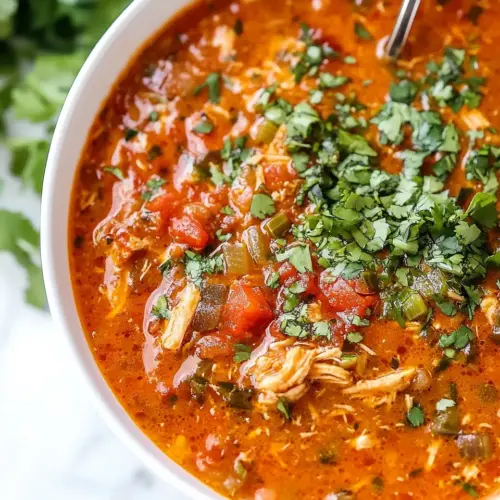
Mexican Chicken Soup
Mexican Chicken Soup is a cozy, savory bowl with tender shredded chicken, smoky paprika, and bright cilantro. This easy weeknight dinner uses simple vegetables and a can of fire roasted tomatoes to create a flavorful, slightly smoky broth. Its comforting yet bright, perfect for chilly nights or make ahead lunches and worth trying for its deep, layered taste.
Equipment
- Large Pot
- Tongs
- Immersion Blender
- Meat Thermometer
Ingredients
- 1 tablespoon olive oil Heat and sauté to create the cooking fat that prevents sticking and carries flavors; olive oil provides a subtle fruity base and helps brown aromatics and chicken for depth in the soup.
- 1 yellow onion, chopped Chop and sweat to build the aromatic foundation; yellow onion adds natural sweetness and savory complexity that dissolves into the broth during simmering.
- 2 celery ribs, chopped Chop and soften to contribute texture and mild savory notes; celery ribs lend a crisp flavor that balances the sweetness of carrots and enhances the overall mouthfeel.
- 3 carrots, chopped Chop and simmer to add natural sweetness, body, and color; carrots break down slightly and release sugars that round out the soup's flavor profile.
- 4 cloves garlic, minced Mince and release strong savory aroma and pungency; garlic infuses the broth with umami and layers of savory depth when sautéed early in the recipe.
- 1 jalapeño, chopped (seeds removed) Chop and add bright heat and vegetal flavor after deseeding; jalapeño introduces a gentle spiciness and fresh green notes that elevate the soup without overpowering it.
- 2 teaspoons cumin Measure and toast briefly to contribute warm, earthy flavor; cumin lends a signature smoky, nutty spice that anchors the soup in Mexican-inspired seasonings.
- 1/2 teaspoon dried oregano Sprinkle and steep to provide herby, slightly bitter undertones; dried oregano adds Mediterranean-Mexican herbal complexity and supports other dried spices in the broth.
- 1/2 teaspoons smoked paprika Sprinkle and impart subtle smokiness and color; smoked paprika gives a gentle smoky warmth and enhances visual appeal and depth in the tomato-based soup.
- 3 cups water Pour and simmer as the primary liquid base to cook ingredients; water dilutes and carries flavors while allowing the chicken and vegetables to release their essences.
- 1.25 lbs boneless chicken thighs Add and simmer until tender to provide rich protein and texture; boneless chicken thighs stay moist, contribute collagen and savory richness to the broth.
- 1 (28 oz.) can fire-roasted diced tomatoes Pour and dissolve to supply concentrated tomato flavor and acidity; fire-roasted diced tomatoes add charred complexity and bright tomato notes that balance the savory elements.
- 2 teaspoons sea salt, plus more to taste Measure and season to enhance overall flavor perception; sea salt brings out natural flavors of vegetables, chicken, and tomatoes and helps balance the seasoning profile.
- 1/4 teaspoon ground black pepper Grind and season sparingly to provide mild heat and contrast; ground black pepper adds a sharp, aromatic bite that complements salt and warm spices.
- 1/2 cup freshly chopped cilantro leaves Chop and finish to add fresh herbal brightness and color; freshly chopped cilantro leaves lend zesty, citrusy notes and a lingering freshness when stirred in at the end.
Instructions
- Heat the olive oil in a large pot over medium high heat, and saute the onion, celery, and carrots until they start to soften, about 8 minutes. Add in the garlic, jalapeno, cumin, oregano, and smoked paprika, and stir for one more minute.: The pan should give a gentle sizzle when the olive oil is hot, and the vegetables will smell sweet and savory as they release moisture. Watch for the edges of the onion to go translucent and for the carrots to become tender at their tips, which signals the right moment to move on. This step draws out natural sugars, building a deep, flavorful foundation for the soup. If the heat is too high, the vegetables will brown too quickly and develop bitter notes, so lower the heat if you see darkening before softening. Stir frequently to prevent sticking, and scrape any fond from the pot to keep flavor balanced.
- Add in the water, chicken, diced tomatoes, salt, and black pepper. Bring the liquid to a boil, then lower the heat and cover the pot. It will take roughly 15 to 20 minutes for the chicken to cook through; be sure to check the internal temperature of the chicken with a meat thermometer, to ensure that it reaches 165ºF.: As you add the spices and garlic , the kitchen will fill with a warm, aromatic lift, and you may notice cumin turning slightly more fragrant as its oils activate. Keep the motion brisk to evenly coat the softened vegetables, and aim for a short toast to wake the spices without burning the garlic . This brief step layers complexity into the base, which is essential for a well rounded broth. Avoid leaving the spices unattended, because burnt garlic or overtoasted cumin can introduce acrid flavors that are hard to fix later.
- Use tongs to remove the chicken, and transfer it to a plate. Let the chicken rest for a few minutes, then shred with 2 forks. (Alternatively, you can just chop it into small pieces, too.) Before you add the chicken back in, stir in the fresh cilantro and use an immersion blender to gently puree the soup to your desired texture.: When the liquid hits the pot, the sizzling will relax into gentle bubbling as the pot comes to a boil, releasing a comforting stewlike aroma. Submerging the chicken in the seasoned liquid allows it to absorb those flavors as it cooks. The tomatoes will loosen into the broth, adding acidity and body. Bring the mixture up to a boil so the temperature is even, then lower to a simmer to finish cooking. Maintaining a simmer prevents the chicken from toughening. A common mistake is boiling aggressively, which can make the meat stringy, so reduce the heat until you see small, steady bubbles.
- Return the shredded chicken to the soup, and adjust the seasoning as needed. I usually end up adding an extra teaspoon of salt, but start with just a 1/2 teaspoon at a time, so you don't end up over-seasoning it. Serve warm right away, with any toppings you love. Leftovers can be stored in an airtight container in the fridge for up to 4 days.: The transition from boil to covered simmer is where patience pays off, because a gentle simmer cooks the chicken evenly without drying it out. Covering the pot traps steam, which speeds cooking while keeping the broth flavorful. Listen for soft, steady bubbling and avoid vigorous rolling boils. Use a meat thermometer to check the internal temperature so you can stop at the right moment, preventing overcooked, dry meat.
- It will take roughly 15 to 20 minutes for the chicken to cook through; be sure to check the internal temperature of the chicken with a meat thermometer, to ensure that it reaches 165 F: The chicken will firm up and its juices will run clear when it is done, and the thermometer reading is the most reliable signal. Tent the pot aside when you need to test so you do not lose too much heat. Resting briefly after removing the meat lets juices redistribute, resulting in moister shreds. Relying on time alone can mislead you, because pot size and heat level change cooking speed, so always verify with a thermometer.
- Use tongs to remove the chicken, and transfer it to a plate: The act of lifting the chicken out will release a last puff of aromatic steam, and placing it on a plate lets it cool just enough to handle. Resting prevents the meat from drying as the fibers relax. Don t skip resting, because cutting into hot meat immediately can squeeze out flavorful juices. If the chicken feels very hot to the touch, give it a few extra minutes before shredding to preserve moisture.
- Let the chicken rest for a few minutes, then shred with 2 forks: Shredding by fork yields tender ribbons that soak up broth beautifully, creating a pleasing, pullapart texture. You might hear a soft tearing sound as the meat separates, and the surface will look fibrous and moist when it s done. If the meat resists shredding, it likely needs a minute more of rest; forcing it too soon can create uneven pieces. Alternatively, chopping into small pieces gives a different mouthfeel, but shredding is what makes each spoonful feel homely and substantial.
- Before you add the chicken back in, stir in the fresh cilantro and use an immersion blender to gently puree the soup to your desired texture: Right after stirring in the cilantro , the aroma will pop, giving the broth a citrusy lift that contrasts the savory base. Using an immersion blender softens vegetables and slightly thickens the liquid, giving a silky mouthfeel that helps the shredded chicken cling to the broth. Pulse carefully and watch the color change towards a deeper, unified hue. Overblending can remove the pleasing bite of the vegetables, so stop when you reach the texture you prefer. If you lack an immersion blender, transfer a portion to a regular blender in batches, but be cautious with hot liquids to avoid splatters.
- Return the shredded chicken to the soup, and adjust the seasoning as needed: As the chicken rejoins the pot, the soup will smell rounder and fuller. Taste and add salt a half teaspoon at a time, because the flavors concentrate and oversalting is hard to fix. Stir gently so the meat warms through and absorbs the broth. If the soup tastes flat, a touch more acid or salt can brighten it, but adding too much at once risks imbalance. Take gradual steps and taste between adjustments.
- I usually end up adding an extra teaspoon of salt, but start with just a 1/2 teaspoon at a time, so you don't end up over-seasoning it: The process of seasoning at the end lets you calibrate the soup after all components have melded. Salt enhances sweetness and suppresses bitterness, making the profile more defined. Resist the urge to dump in large amounts, and remember that chilling or reducing the soup will concentrate salt, so err on the cautious side. If you do oversalt, a small extra potato or more liquid can help rebalance the pot.
- Serve warm right away, with any toppings you love: Serving immediately showcases textures at their peak, with hot broth and moist shredded chicken . Each spoonful should offer warmth, aromatic herbs, and the gentle heat from the jalape 1 . If you wait, the soup will thicken and flavors will intensify, which some people prefer, but plan accordingly. Reheat gently to avoid separating the broth or drying the meat.
- Leftovers can be stored in an airtight container in the fridge for up to 4 days: You will notice that the flavors marry and deepen after a day, making leftovers delightful. Cool the soup to room temperature before refrigerating to maintain quality, and reheat over low heat to preserve texture. A common mistake is reheating too fast on high flame, which can toughen the chicken and scorch the bottom, so stir frequently as it warms.
Notes
- Use boneless chicken breasts: Swap in breasts if you prefer leaner meat, but watch cooking times closely because they can dry out faster than thighs. Remove from the pot a few degrees below target to allow carryover cooking.
- Make it thicker: Puree a portion of the soup to create a creamier body without adding dairy. This approach keeps the flavors intact while giving a velvety mouthfeel.
- Turn up or down the spice: Adjust the jalape 1 seeds or add an extra pinch of smoked paprika to change the heat profile. Add gradually and taste often to avoid overshooting.
- Prep ahead: Chop the vegetables the night before and store them refrigerated to speed up weeknight assembly. Store airtight so they stay crisp and ready to saute.
- Make it a one pot meal: Brown the vegetables and simmer the chicken in the same pot to minimize cleanup while maximizing flavor from the fond.