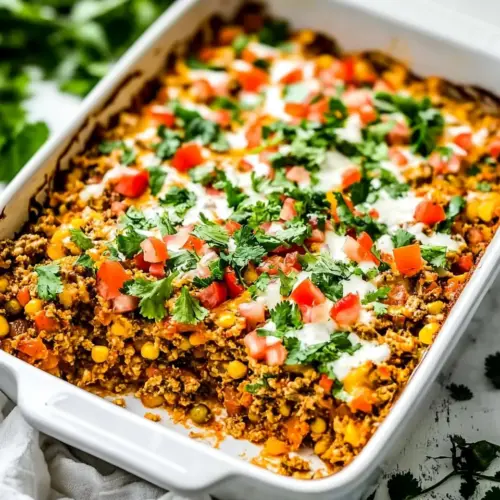
Mexican Casserole
Mexican Casserole is a creamy layered bake with spiced ground meat, beans, and melty cheese. This easy weeknight dinner offers comforting texture contrasts, from tender rice to bubbling cheese, and bright finishes like chopped cilantro. It reheats beautifully and scales for gatherings, making it a reliable choice when you want a filling, flavorful meal with minimal fuss.
Equipment
- Dutch oven or large deep skillet
- Casserole dish 9x13 inch
- Oven
Ingredients
- 2 cups cooked brown rice or quinoa or other grain of choice—about 2/3 cup uncooked Provide a hearty base and bind the casserole together while adding whole-grain texture and nutty flavor; can be brown rice, quinoa, or another cooked grain and yields about 2 cups when cooked from roughly 2/3 cup uncooked.
- 1 tablespoon extra-virgin olive oil Add a fruity, rich fat for sautéing vegetables and browning meat while imparting subtle peppery notes; measure as 1 tablespoon to control richness and prevent sticking.
- 1 yellow onion chopped Offer a sweet, aromatic backbone when chopped and sautéed, softening to meld with spices and balance the dish’s savory elements.
- 1 green bell pepper chopped Contribute a mild, slightly bitter crispness when chopped and sautéed, brightening the casserole with vegetal depth and color contrast.
- 1 red bell pepper chopped Provide a sweeter, juicy bell pepper element when chopped and sautéed, enhancing color, aroma, and a layered pepper flavor profile.
- 1 pound lean ground beef or swap ground chicken or ground turkey Serve as the primary savory protein, browned and crumbled to create a meaty texture and umami depth; lean ground beef is suggested but can be swapped for ground chicken or turkey.
- 2 tablespoons chili powder Impart warm, smoky, and mildly spicy flavor when added during cooking; 2 tablespoons season the meat and vegetable mixture for classic Mexican-inspired taste.
- 1 1/2 teaspoons ground cumin Contribute earthy, warm notes of cumin that deepen the overall savory profile; 1 1/2 teaspoons provides aromatic support to the chili powder.
- 1/2 teaspoon kosher salt Enhance and balance flavors by heightening savory notes and controlling seasoning; 1/2 teaspoon kosher salt ensures proper seasoning without overpowering.
- 1/2 teaspoon ground black pepper Add subtle heat and complexity while lifting other spices; 1/2 teaspoon ground black pepper brightens the savory components.
- 1/4 teaspoon cayenne pepper Introduce concentrated heat to the dish in small amounts, providing a lingering spicy kick; 1/4 teaspoon cayenne adjusts the spiciness without overwhelming.
- 2 cloves minced garlic about 2 teaspoons Deliver pungent, aromatic depth when minced and cooked briefly, blending with onions and peppers to build the flavor foundation; about 2 teaspoons for two cloves.
- 1 cup plain nonfat Greek yogurt Provide a creamy, tangy element that lightens richness and adds moisture; 1 cup plain nonfat Greek yogurt creates slight tang and creaminess in layering or topping.
- 1 can reduced fat refried black beans 15 ounces Offer a smooth, hearty bean layer with black bean flavor and fiber; one 15-ounce can of reduced-fat refried black beans adds body and a creamy consistency.
- 3/4 cup freshly grated sharp cheddar cheese divided Add sharp, salty, and tangy meltiness when freshly grated and sprinkled; 3/4 cup of sharp cheddar divided yields savory pockets of flavor and golden browning.
- 3/4 cup freshly grated mozzarella cheese divided Supply a mild, creamy, stretchy melted cheese component when freshly grated and distributed; 3/4 cup mozzarella divided promotes gooey texture and melts evenly.
- 10 -ounce tomatoes with green chiles (such as Rotel) well drained; use mild or medium depending upon how spicy you’d like the casserole to be Bring bright acidity, tomato flavor, and a mild green-chile kick when well drained; a 10-ounce can of tomatoes with green chiles (mild or medium) adds juiciness and spice.
- Fresh cilantro for serving Provide a fresh, herbal finish when chopped and sprinkled over the casserole; fresh cilantro adds brightness and a citrusy, slightly peppery note for serving.
- Chopped green onions for serving Deliver a crisp, oniony garnish when chopped and scattered over the finished dish; green onions add sharpness, color, and a mild allium crunch for serving.
Instructions
- Be sure to cook your rice if you haven’t already (if you are just reading this and just now realized you don’t have any cooked rice and don’t want to wait, consider switching to quinoa, which cooks much more quickly than brown rice. Instant brown rice also works in a pinch).: The aroma of warm grain settling into the pan is comforting and it soaks up flavors later, so if you are short on time I recommend using quicker cooking quinoa or instant brown rice to avoid a stodgy final texture; you should hear a gentle simmer when the water is absorbed, the grains should be separate and tender, not gummy, and a common mistake is adding too much water which yields mushy results, so measure carefully.
- Preheat the oven to 350 degrees F. Coat a large casserole dish (9×13 inch or similar) with nonstick spray and set aside.: Preheating ensures even cooking and predictable baking times, you will feel the warmth in the oven and the steady heat melts the cheese uniformly; set a reliable oven thermometer if your oven runs hot or cold, and avoid placing the dish in too early which can lengthen bake time and dry the top.
- In a Dutch oven or large, deep skillet, heat the olive oil over medium high. Add the onion, green bell pepper, and red bell pepper. Sauté until slightly softened, about 5 minutes.: Preparing the dish ahead prevents sticking and helps with a clean release, you should notice a light sheen across the interior, and if you skip this you risk tearing the bottom when serving, which makes presentation messy.
- Add the beef, chili powder, cumin, salt, black pepper, and cayenne pepper. Continue to sauté until the beef is cooked through and no longer pink, about 4 to 5 minutes. Add the garlic and cook just until fragrant, about 1 additional minute.: The oil should shimmer but not smoke, indicating ideal temperature for sautéing; add vegetables when it looks glossy, and if the pan smokes lower the heat because burnt oil will impart bitterness.
- Remove from the heat. Stir in the rice and Greek yogurt until evenly combined. Taste and adjust seasoning as desired.: You will hear a soft sizzle as the vegetables hit the pan and see the edges start to gloss and soften in about 5 minutes, their sweet aroma will develop and lift the whole kitchen, take care not to over brown them at this stage so they retain some texture and brightness.
- Assemble the casserole: Spread the beans into an even layer in the prepared baking dish.: The vegetables should yield to a fork yet still hold shape and color, their softened sugars deepen the dish, and overcooking will leave them limp and less vibrant, so keep an eye on color.
- Sprinkle 1/4 cup cheddar cheese and 1/4 cup mozzarella cheese over the beans.: As the spices toast against the hot fat you will smell a warm, earthy perfume that signals flavor development, the meat should break apart into small bits to mingle with vegetables, and a common error is overcrowding the pan which steams the meat rather than browns it, reducing flavor complexity.
- Scatter the tomatoes with green chilis over the top.: The meat should be evenly browned with small browned bits clinging to the pan, this caramelization builds savory depth, and if any pink remains cook a bit longer while stirring to ensure even doneness to avoid uneven texture.
- Spoon the rice and ground beef mixture on top of the tomatoes, spreading it into an even layer.: Garlic releases a sharp, aromatic note when heated briefly, you should catch its perfume immediately, and be careful not to let it brown which will make it taste bitter, timing is crucial here for a bright garlic presence.
- Top with remaining 1/2 cup cheddar and 1/2 cup mozzarella.: Taking the pan off the burner stops further cooking and preserves texture and moisture, you will notice residual steam and a concentrated aroma, and if you leave it on the heat the mixture can dry out which affects final mouthfeel.
- Bake the casserole, uncovered, until the cheese is melted and the casserole is hot, about 15 minutes.: The Greek yogurt adds creaminess and binds the rice to the meat, the mixture should feel cohesive and slightly glossy, and a common mistake is overmixing which can break down the grains, making the texture pasty rather than pleasantly combined.
- Turn the oven to broil, then continue cooking until the cheese is lightly browned, about 3 to 4 additional minutes, watching carefully so that the cheese does not burn.: Tasting at this stage lets you tweak salt and spice so the finished casserole is balanced, you should detect layers of savory, tang, and heat, and failing to taste now may result in a bland bake that is hard to rescue once assembled.
- Let rest 5 minutes, sprinkle with chopped cilantro and green onions, and serve.: The cooled or room temperature bean layer should be spread smoothly so it evenly supports the subsequent layers, its velvety texture prevents dryness, and uneven spreading can cause pockets of dry or overly wet casserole.
- Sprinkle 1/4 cup cheddar cheese and 1/4 cup mozzarella cheese over the beans: This thin cheese layer creates a melty barrier between beans and tomatoes, you will see the cheeses begin to soften as the casserole heats, and neglecting this step can make the layers slip rather than cohere when serving.
- Scatter the tomatoes with green chilis over the top: Draining the canned tomatoes is essential so they do not waterlog the casserole; the tomatoes add bright acidity and little pops of heat, and failing to drain sufficiently can result in a soggy center.
- Spoon the rice and ground beef mixture on top of the tomatoes spreading it into an even layer: The meat and rice layer should be distributed so every serving has both grains and savory meat, press lightly to compact but do not mash, and if you mound it you risk uneven baking where the cheese may brown before the center is hot.
- Top with remaining 1/2 cup cheddar and 1/2 cup mozzarella: The final cheese layer is what will bubble and brown under heat, producing the textural contrast we crave, and be mindful of even coverage to avoid spots that burn or do not get that golden finish.
- Bake the casserole uncovered until the cheese is melted and the casserole is hot: You will hear a gentle bubbling and smell concentrated aromas as the layers heat through, this step melds flavors and warms the center, and a common mistake is removing it too early before it is uniformly hot which yields inconsistent temperatures in servings.
- Turn the oven to broil then continue cooking until the cheese is lightly browned: Broiling creates browned, slightly blistered cheese with visual appeal and contrast in texture, watch closely as it can go from perfect to burned within a minute or two, and never leave it unattended at this stage.
- Let rest 5 minutes sprinkle with chopped cilantro and green onions and serve: Resting allows the layers to settle so slices hold shape, you will notice steam soften slightly and flavors harmonize further, and slicing too soon can make the casserole fall apart while the heat is still driving out moisture.
Notes
- Prep ahead: Cook the rice and chop vegetables a day in advance to streamline evening assembly and reduce stress.
- Drain thoroughly: Make sure the canned tomatoes with green chiles are well drained to prevent a watery casserole center and soggy texture.
- Adjust heat: Modify the cayenne to control spiciness so the dish suits your household, adding less if you prefer mild and more if you like a stronger kick.
- Even layering: Spread each component into an even layer so every slice has balanced proportions of beans grain meat and cheese for consistent bites.
- Watch the broil: When browning the cheese, stay attentive and keep the oven door slightly ajar if your broiler is aggressive to avoid burning the top.
- Storage tips: Cool completely before refrigerating and reheat at 350 degrees F to retain texture rather than microwaving which can make the grain gummy.