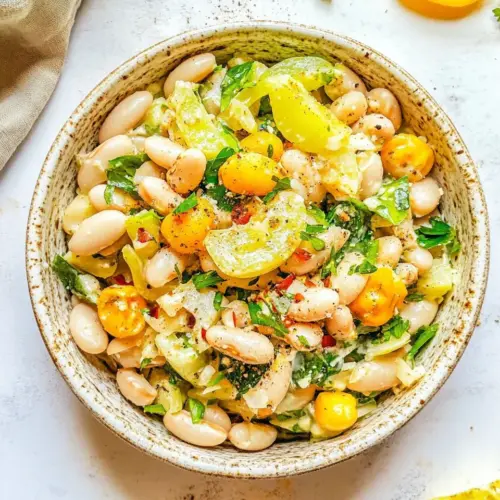
Mediterranean White Bean Salad
Mediterranean White Bean Salad is a bright, creamy, and crunchy bowl of flavors featuring lemony dressing, briny capers, and toasted hazelnuts. This easy weeknight salad blends pantry beans with fresh asparagus and herbs for a satisfying, healthy option that’s perfect for lunches, potlucks, or quick dinners. Make it ahead to let flavors meld for an even deeper taste.
Equipment
- Mixing Bowl
- Fork
- Whisk
- Microwave safe bowl or pot
- Ice Bath Bowl
- Dry skillet
Ingredients
- 1 tablespoon capers Adds a briny, tangy pop that brightens the salad and balances richer flavors; capers also introduce a pleasant textural contrast when mixed into beans and vegetables.
- 1 garlic clove, finely minced or grated Provides pungent aromatics and depth, releasing savory oils when minced or grated; garlic helps tie together acidic and oily components in the dressing.
- 2 pitted Medjool dates, diced small (use 3 dates if they're small or you want a bit more sweetness) Imparts concentrated natural sweetness and a chewy texture that contrasts with beans and vegetables; dates also contribute caramel-like notes that enhance overall flavor complexity.
- 1 tablespoon fresh parsley, finely minced Contributes fresh, herbaceous brightness and a mild peppery note; finely minced parsley disperses evenly to lift the salad’s flavors and add color.
- 2 teaspoons ground sumac, (paprika or smoked paprika is the closest substitute) Lends a lemony, tangy, and slightly tart aroma that complements citrus and vinegar; ground sumac adds a distinctive Mediterranean flavor profile to the dressing.
- 1/2 teaspoon kosher salt Balances and enhances other flavors while controlling overall saltiness; kosher salt also helps draw out moisture from vegetables and melds components together.
- 1/2 teaspoon freshly ground black pepper Provides a sharp, warm finish and highlights savory aspects of the dish; freshly ground black pepper adds aromatic heat that complements herbs and citrus.
- zest and juice of 1 lemon Delivers bright acidity and fresh citrus aroma from both zest and juice; lemon coordinates the dressing, cutting through oil and enhancing herb flavors.
- 3 tablespoons olive oil Emulsifies and adds rich mouthfeel while carrying flavors across the salad; olive oil also contributes fruity Mediterranean character and a silky texture.
- 15 -ounce can butter beans, drained and rinsed (butter beans are lima beans; other white beans like Great Northern, cannellini, or garbanzo beans may be substituted) Supplies creamy, starchy body and mild, buttery flavor as the salad’s main protein-rich base; drained and rinsed beans absorb dressing and seasonings well.
- 1/2 cup pitted green olives, roughly chopped if desired Introduces salty, slightly bitter and briny notes with firm texture; chopped green olives provide additional savory depth and Mediterranean authenticity.
- 1/4 cup thinly sliced shallot Adds sharp, delicate oniony flavor and a crisp bite when thinly sliced; shallot brings subtle sweetness and balances acidic elements in the dressing.
- 1 cup asparagus, chopped into 1-inch segments; blanched and chilled in an ice bath (green beans are a good sub) Offers tender-crisp vegetal sweetness and vibrant color when blanched and chilled; chopped asparagus contributes fresh green flavor and pleasant bite.
- 1/4 cup mint leaves, freshly torn or minced Brings cool, sweet, and herbal lift with a bright, slightly menthol finish; torn or minced mint complements citrus and adds aromatic contrast.
- 1/4 cup hazelnuts, roughly chopped; toasted if desired in a dry skillet (sliced almonds are a great substitution) Provides crunchy texture and rich, toasty nutty flavor when roughly chopped; hazelnuts add a satisfying contrast and can be toasted for deeper aroma.
Instructions
- To a large mixing bowl, add the capers, and mash them with a fork. Add the garlic, dates, parsley, sumac, salt, pepper, lemon zest, lemon juice, olive oil, and whisk to combine.: The aroma at this stage is bright and immediate, with the citrus oils from the zest lifting the pungency of the capers and the sharpness of the minced garlic . Whisking emulsifies the olive oil into the lemon juice so it clings to the butter beans later, creating an even coating rather than a puddle of dressing. You should be able to smell citrus, a faint sweetness from the diced dates , and the herbaceous note of finely minced parsley . Tip to avoid a common mistake, make sure the garlic is very finely minced or grated so you do not get bursts of raw garlic; if you do, let the dressing sit for a few minutes to mellow before proceeding.
- Add the butter beans, olives, shallot and toss with the dressing. Let sit at room temperature for about 10-15 minutes to meld flavors. If you have more time, you can let stand longer. Make-Ahead Tip– You can stop now, cover, and refrigerate for up to 24 hours; then carry on with the rest of the recipe.: Right after tossing, the salad will smell briny and lemony, and you will notice the beans take on a glossy sheen from the dressing. Allowing it to rest at room temperature helps the flavors marry, letting the capers and dates infuse the butter beans so each bite becomes more cohesive. If you refrigerate, the flavors continue to meld overnight, but be aware the shallot can become more pronounced, so taste and adjust salt or lemon before serving. A frequent slip is over mixing which can break the beans, so toss gently to keep the texture intact.
- While the beans are marinating, blanch the asparagus. I find it easiest to add the asparagus to a microwave safe bowl, cover with plastic wrap, and let it come up to just boiling in my microwave, about 3 minutes on high; all microwaves differ as do preferences for doneness so cook as long as desired noting that in general asparagus cooks very quickly. If you prefer to do this on the stove with a pot of water, go for it. Drain immediately when done, and have an ice bath waiting, and plop the asparagus into it to stop the cooking process. Tip– For a fancier presentation, use only asparagus tips. If using just the tips, they cook quicker than the stalks so be careful you don't overcook them.: Blanching creates a vivid green color and a crisp tender texture, and the ice bath locks that in so the asparagus does not continue to cook and go limp. When you remove the asparagus, it should still offer a slight bite, with a faint vegetal sweetness and a fresh green scent. On the stove, the water should be at a rolling simmer so the asparagus cooks evenly; if you skip the ice bath you risk overcooking which results in a mushy texture and dull color, so do not skip chilling if you want the best presentation.
- Add the cooled and drained asparagus to the mixing bowl along with the mint, nuts (if you're toasting them in a dry skillet, do so over medium-high heat for just a couple minutes while shaking the skillet nearly constantly so they don't burn), stir to combine, and taste to check for seasoning balance. Flavor Tips– If it tastes at all flat, boring, or dull, it likely needs more salt so don't be afraid to add it. If you want it to have a tiny pop of heat, red pepper flakes are great. If you want it to have some smokiness, a sprinkle of smoked paprika is nice. If you're a fan of lemon, add more lemon juice. If you want more mint, parsley, extra nuts, etc. feel free to add them. If you want to add crumbled feta or your favorite grated or shredded cheese, go for it.: Once the asparagus, torn mint , and chopped hazelnuts are folded in, you will notice a fresh herb aroma and a toasty nuttiness that contrasts the creamy beans. The salad should be balanced between acid, salt, and fat; if it reads flat, a pinch more salt will often fix it. Toasted nuts release fragrant oils and add a satisfying crunch; however, avoid leaving them in the hot skillet too long because they will quickly transition from fragrant to bitter. One common error is adding the mint too early, which causes it to wilt; add it at the end to keep that bright flavor.
- Serve immediately; or if desired, cover, and chill in the fridge for about 1 hour before serving. Optionally serve with: Whipped Ricotta: If you'd like to serve it with whipped ricotta (as shown), simply add 2 cups of whole milk ricotta to a small food processor with 1 tablespoon each of olive oil and lemon juice, and 1/4 teaspoon sea salt. Puree for 1–2 minutes until creamy and smooth. Whipped Feta: See my Whipped Feta recipe if you prefer feta to ricotta.: Whipped Ricotta: If you'd like to serve it with whipped ricotta (as shown), simply add 2 cups of whole milk ricotta to a small food processor with 1 tablespoon each of olive oil and lemon juice, and 1/4 teaspoon sea salt. Puree for 1 to 2 minutes until creamy and smooth. Whipped Feta: See my Whipped Feta recipe if you prefer feta to ricotta. : Serving right away yields a lively contrast between chilled and room temperature components, whereas chilling for an hour integrates the flavors further and softens some of the sharper notes. When plating alongside whipped ricotta the creamy cheese adds a luxurious element, offering a cool counterpoint to the bright salad. If you plan to chill, taste again before serving because cold temperatures can mute flavors; a final squeeze of lemon or a sprinkle of salt can wake it up. A typical mistake is over chilling which dulls the aroma, so give it a brief rest at room temperature if it has been in the fridge too long.
Notes
- Storage: Store airtight in the fridge for up to 3 to 4 days, stirring before serving. The flavors continue to meld, though the texture of the shallot and herbs will soften over time.
- Make ahead: You can prepare the dressed beans up to 24 hours ahead, then fold in blanched asparagus, mint, and toasted nuts just before serving for best freshness.
- Nut substitution: If you do not have hazelnuts, sliced almonds or walnuts work well; toast them gently to develop their aroma without burning.
- Acid adjustments: If the salad tastes flat after chilling, add more lemon juice in small increments to brighten the profile rather than over salting.
- Serving suggestion: Serve at room temperature or slightly chilled. For a composed presentation, spoon onto a bed of greens or alongside whipped ricotta for creaminess contrast.