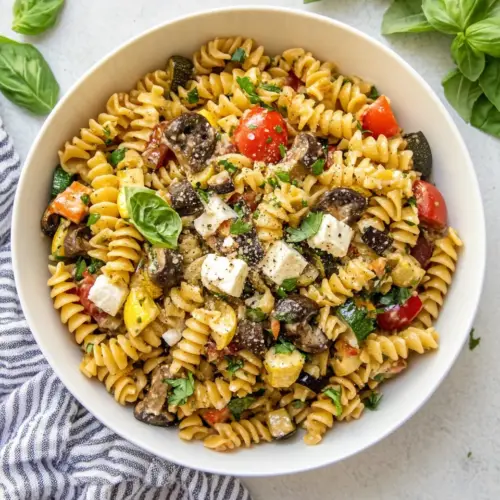
Mediterranean Roasted Veggie Pasta Salad
Mediterranean Roasted Veggie Pasta Salad delivers roasted, caramelized vegetables tossed with tender pasta and creamy mini mozzarella for a bright, easy weeknight dinner. The lemony olive oil dressing and fresh herbs add vibrant flavor while the roasted garlic brings mellow sweetness, making it perfect for potlucks and meal prep. Make it for summer gatherings and enjoy leftovers chilled or room temperature.
Equipment
- Large sheet pan
- Large Mixing Bowl
- Pot for Pasta
- Fork
- Whisk or jar with lid
Ingredients
- 12 oz pasta of choice Cook to al dente following package directions and serve as the hearty base that holds the roasted vegetables and dressing; cool slightly before tossing to prevent wilting of fresh herbs and cheese. Choose a sturdy shape like penne or rotini to catch bits of vegetables and vinaigrette for balanced bites throughout the salad.
- 1 zucchini quartered and sliced Slice into bite-sized rounds after quartering lengthwise to provide tender, slightly sweet pieces when roasted; zucchini adds moisture and a mild vegetal flavor that complements the other Mediterranean vegetables. Roast until edges caramelize to concentrate its savory notes without becoming mushy in the salad.
- 1 yellow squash quartered and sliced Cut into similar-sized slices as the zucchini after quartering to ensure even roasting; yellow squash contributes a bright color and delicate texture that contrasts with firmer vegetables. Allow some browning to develop for added sweetness and a pleasing mouthfeel in each forkful.
- 1 eggplant quartered and sliced Slice into rounds after quartering lengthwise to offer meaty, savory chunks that soak up olive oil and seasoning; eggplant becomes creamy when roasted and adds depth to the salad. Salt lightly before roasting if desired to draw out bitterness, then pat dry to promote browning.
- 1/2 bunch asparagus trimmed and cut into 1-inch pieces Trim and cut into uniform 1-inch pieces to bring a tender-crisp snap and fresh green color to the roast medley; asparagus provides a slightly grassy, spring-like flavor that pairs well with lemon and herbs. Roast briefly to maintain structure so it mixes well with pasta without becoming limp.
- 1 red onion cut into chunks Cut into large chunks so pieces caramelize and add a sweet, aromatic backbone to the dish; red onion softens with roasting, imparting mellowed sweetness and a touch of savory tang. Use larger pieces to prevent complete disintegration and to provide texture contrast in the salad.
- 1 red bell pepper cut into chunks Chop into chunks that roast to a smoky-sweet tenderness and contribute vibrant red color and juicy flavor; red bell pepper adds a pleasant sweetness and Mediterranean character. Remove seeds and membranes for cleaner bites and even roasting results.
- 4 oz cherry tomatoes Keep whole or halved depending on size so bursts of juice occur when bitten, adding bursts of acidity and freshness; cherry tomatoes roast to concentrate sweetness and complement the salty cheese and herbs. Add them toward the end of roasting if you prefer they remain plump rather than disintegrated.
- 6 cloves garlic unpeeled Leave unpeeled and roast whole to mellow sharpness into a soft, fragrant garlic that can be squeezed out and mixed into dressing or tossed with pasta for a rich, savory boost. Roasted cloves provide deep, caramelized garlic flavor without the harsh bite of raw garlic.
- Olive oil for roasting Use to coat the vegetables before roasting and to emulsify the dressing; high-quality olive oil enhances flavor and mouthfeel while helping vegetables brown evenly. Measure for both roasting and dressing to control richness and ensure a balanced final salad.
- Salt and pepper to taste Season vegetables and dressing to taste, bringing out natural flavors and balancing acidity and richness; salt and pepper are essential for bright, well-rounded seasoning. Taste at the end to adjust so all components harmonize without over-salting.
- 1/4 cup fresh parsley finely chopped Finely chop to distribute bright, slightly peppery herbaceousness throughout the salad; parsley adds freshness and a clean finish that lifts roasted vegetables and creamy cheese. Stir into the dressing or scatter over the finished salad for vibrant color and aroma.
- 1/4 cup fresh basil finely chopped Finely chop to introduce sweet, aromatic herb notes that pair with tomatoes and mozzarella; basil delivers classic Mediterranean flavor and a fragrant finish. Add near the end to preserve its fragrance and avoid browning from excessive mixing.
- 1 shallot finely diced Finely dice to infuse a gentle oniony sharpness and aromatic depth into the dressing or salad; shallot blends smoothly without overpowering other flavors. Sauté briefly for a milder profile or use raw in the vinaigrette for a piquant bite.
- 1 container mini mozzarella balls about 8 oz Drain and add whole or halved to provide creamy, mild dairy richness that contrasts with roasted vegetables and bright herbs; mini mozzarella balls offer a soft texture and milky flavor. Incorporate gently to prevent breaking and to preserve little pockets of creaminess throughout.
- cup olive oil Measure as the oil component of the dressing to emulsify and add silkiness; use neutral or extra-virgin olive oil depending on desired intensity to bind lemon and mustard into a cohesive vinaigrette. Add gradually while whisking to create a stable, glossy dressing that coats the pasta and vegetables.
- Juice of 1/2 lemon Squeeze fresh and add brightness and acidity to the dressing to cut through oil and cheese; juice of half a lemon provides a lively citrus tang that lifts the entire salad. Adjust amount to taste to achieve the right balance between acidity and richness.
- 1 tsp Dijon mustard Whisk in to help emulsify the dressing and contribute a mild sharpness that enhances overall flavor complexity; Dijon mustard stabilizes the vinaigrette and adds subtle savory depth. Use sparingly to avoid overpowering delicate herbs and roasted notes.
- 1 tsp dried oregano Sprinkle into the dressing to add herbal warmth and an earthy Mediterranean aroma; dried oregano complements roasted vegetables, tomatoes, and cheese for authentic flavor. Crush lightly between fingers before adding to release oils and maximize fragrance.
- 2 tsp salt Add as a bulk seasoning in the dressing or to roast vegetables for controlled saltiness; two teaspoons provide a baseline for seasoning the full recipe but adjust carefully based on salted components like cheese. Dissolve into the vinaigrette to distribute evenly throughout the salad.
- 1 tsp black pepper Grind and include for aromatic heat and balance in both the roasted vegetables and the vinaigrette; black pepper contributes subtle pungency that enhances other flavors without dominating. Freshly cracked pepper yields the best aroma and flavor when tossed into the salad.
Instructions
- Preheat oven to 400ºF.: You will notice a steady dry heat build in the oven that encourages caramelization, which is essential for flavor. Preheating ensures the moment you place the tray inside the vegetables begin to char at the edges rather than slowly steaming, giving you those nutty browned notes. A common misstep is sliding a cold pan into an oven that is still warming, which leads to uneven roasting. If you have a thermometer, confirm the oven reads 400ºF before you begin.
- Cook pasta according to package instructions. Drain, rinse with cool water, and set aside.: After cooking the pasta you should hear a slight tender bite when you test it, with no chalky center. Rinsing with cool water stops carryover cooking and cools the noodles so they do not wilt the roasted vegetables when combined, helping maintain texture. Be careful not to overcook, which makes the bowl mushy, and drain thoroughly so excess water does not dilute the dressing.
- Arrange zucchini, squash, eggplant, asparagus, red onion, red pepper, cherry tomatoes, and garlic cloves (unpeeled) on a large sheet pan. Drizzle with olive oil and season with salt and pepper. Toss everything to coat and create a small well in the center for the garlic cloves.: As you toss, you'll feel the oil slick the surfaces, which helps the vegetables form golden edges in the oven. The visual cue is shiny, evenly oiled pieces and a concentration of garlic tucked into the well so it roasts gently instead of burning. Avoid crowding the pan, because overcrowding causes steaming rather than roasting, leaving you with pale, limp vegetables.
- Roast for 30 minutes, or until vegetables are tender and starting to brown. Let cool slightly.: During roasting you will hear a soft crackle and notice the vegetables shrivel slightly, developing browned, sweet edges. The smell will deepen into caramelized notes with a hint of toasted garlic. If pieces are unevenly sized, some will brown faster, so rotate the pan halfway through if needed. Do not over roast to the point of mushiness, aim for tender with golden spots.
- Once garlic cloves are cool enough to handle, peel them and mash into a paste with a fork. Add to a small bowl or jar along with olive oil, lemon juice, Dijon mustard, oregano, salt, and pepper. Whisk or shake to combine.: The roasted garlic will have softened into a sweet paste that perfumes the dressing; mashing it releases those mellowed sugars. When you whisk with olive oil and lemon, notice the dressing turning glossy, and the aroma becomes bright and savory. A frequent error is adding all salt at once without tasting, so season gradually and adjust balance between acid and oil.
- In a large mixing bowl, combine the cooked pasta, roasted vegetables, mozzarella balls, diced shallot, parsley, and basil. Pour dressing over the top and toss until everything is well coated.: As you fold ingredients together, you'll see ribbons of dressing cling to the pasta and vegetables, glinting under the herbs. The sound is a soft swish as forks and spoons move through the bowl, and the aroma is a layered mix of roasted sweetness and bright citrus. Toss gently to avoid breaking tender eggplant pieces; over vigorous tossing can turn creamy vegetables into a paste, so be gentle while ensuring every bite is seasoned.
- Serve and enjoy!: Serve the salad warm, at room temperature, or chilled, and notice how flavors shift with temperature; warm makes the mozzarella slightly softer, chilled tightens the herbs' freshness. A common oversight is serving it too cold straight from the fridge, which mutes flavors, so allow it to sit at room temperature for 10 to 15 minutes if time allows.
- Tastes great warm, at room temperature, or chilled.: This finishing note means you can adapt the salad to the moment; warm is comforting, room temperature is picnic friendly, and chilled is refreshing on hot days. Keep leftovers refrigerated in a sealed container to preserve texture and freshness. Avoid freezing, which damages the delicate textures of roasted vegetables and mozzarella .
Notes
- Adjust olive oil intensity Use a robust olive oil if you want peppery, grassy notes, or a milder oil if you prefer the vegetables to shine. Measure carefully and whisk with lemon and mustard to create a cohesive dressing that clings to the pasta.
- Toast the herbs lightly If you enjoy a deeper herb flavor, briefly toss chopped basil or parsley in a warm pan to release oils before adding, but add most of the herbs fresh to preserve brightness.
- Control garlic punch Roast the garlic longer for a sweeter paste, or slightly less if you want more garlic bite in the dressing; always taste the mashed garlic before combining to calibrate its intensity.
- Ingredient swap ideas If you need to adapt the mix, swap one roastable vegetable for another in equal volume while maintaining similar cut sizes to keep cooking times consistent.
- Make ahead strategy Roast vegetables and prepare the dressing a day ahead, keep them refrigerated separately, and toss with cooked pasta and mozzarella shortly before serving for the best texture.