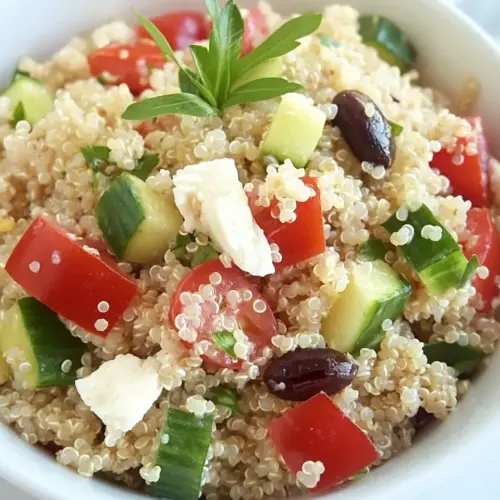
Mediterranean Quinoa Salad
Mediterranean Quinoa Salad combines fluffy quinoa with crisp cucumber, tangy feta cheese, briny kalamata olives, and a bright lemon dressing. This easy, fresh salad works as an easy weeknight dinner or portable lunch, delivering a satisfying, healthy bite. Make it for a light meal that keeps well for make ahead lunches.
Equipment
- Medium Pot
- Fine mesh sieve
- Large Mixing Bowl
- Fork
- Knife
Ingredients
- 1 cup uncooked quinoa Cook until fluffy and tender, serving as the hearty, protein-rich base that absorbs flavors throughout the salad. Rinse before cooking to remove bitterness from the outer coating and to ensure a light, separated grain texture. Cool completely to room temperature before tossing with other ingredients so the salad stays crisp and fresh.
- 1 3/4 cups water Simmer gently to properly cook the quinoa, providing the necessary liquid to hydrate and expand each grain for ideal texture. Measure accurately to maintain the correct grain-to-liquid ratio so the quinoa is neither mushy nor undercooked. Allow to come to a boil, then reduce heat and cover until all water is absorbed for a consistent result.
- 1/4 cup red onion, diced Dice finely to add mild pungency and a crisp bite that complements the softer grains and cheese. Rinse or soak briefly if a milder flavor is desired, and pat dry to avoid watering down the salad. Distribute evenly throughout the mixture so small bursts of onion appear in every forkful.
- 1/2 fresh lemon, squeezed, or more to taste Squeeze freshly to add bright, acidic citrus that balances the richness of olive oil and feta. Adjust quantity to taste, whisking with oil and salt to form a light dressing that livens the entire salad. Reserve extra for tasting and final adjustments before serving.
- 1/4 cup kalamata olives, about 10, pitted and sliced Pit and slice to contribute briny, savory depth and a firm, meaty texture that contrasts with vegetables and quinoa. Chop uniformly so each piece disperses evenly and delivers consistent salty flavor. Toss gently to release some oil from the olives into the dressing for added richness.
- 2 tbsp extra virgin olive oil Whisk smoothly to act as the primary fat in the dressing, coating grains and vegetables and carrying aromatic flavors. Use extra virgin variety for a pronounced fruity note, and combine with lemon juice and salt to create a balanced emulsion. Add gradually while tossing to ensure even distribution without pooling.
- 2 cups cucumber, peeled and diced (from 1 English) Peel and dice to provide cool, hydrating crunch and a subtly sweet, vegetal freshness to the salad. Seed or peel an English cucumber to reduce excess moisture that can dilute the dressing and make the salad soggy. Cut into uniform pieces so the texture remains consistent with each bite.
- 1 cup cherry tomatoes, quartered Quarter to offer juicy, sweet acidity that complements lemon and cuts through salty feta. Choose ripe cherry tomatoes for concentrated flavor and firm flesh that holds up in the salad without becoming mushy. Mix in gently so juice lightly coats surrounding ingredients without making the dish watery.
- 1/3 cup feta cheese, crumbled Crumble finely to bring creamy, tangy, and salty notes that add richness and Mediterranean character. Scatter evenly so small pockets of savory cheese enhance each mouthful without overpowering fresh vegetables. Consider a light hand when tossing to preserve some visible crumbles for presentation.
- kosher salt and fresh black pepper, to taste Season liberally to enhance and balance all flavors, adjusting salt and pepper to personal preference so the salad is vibrant and well-rounded. Add incrementally and taste between additions, remembering that ingredients like olives and feta already contribute saltiness. Grind fresh black pepper for aromatic heat and finish just before serving for best flavor.
Instructions
- If your quinoa is not pre-rinsed, rinse the quinoa for about 2 minutes, using your hands to make sure all the saponins are removed.: Cold water splashes, and the initial rinse often smells a touch earthy as surface saponins are washed away; this step prevents bitterness in the final bowl and helps the grains taste clean. I swirl the quinoa in my palm under running water until it runs clear, and the visual cue I look for is that the water is no longer cloudy. Doing this also helps keep the cooked texture light and separate rather than sticky. A common mistake is rinsing too briefly, which can leave faint bitterness, or rinsing in a colander with holes that are too large where you lose grains, so use a fine mesh sieve if possible.
- Fill a medium pot with water, add the quinoa and salt to taste and bring to a boil. When the water boils, reduce heat to low and cover; simmer covered 15 minutes.: As the pot heats you will hear a gentle rising of bubbles, and the aroma becomes lightly toasty when the water reaches simmer. Adding a pinch of kosher salt at the start seasons the grain from within and prevents blandness. The water should come to a robust boil before you reduce it so the heat penetrates evenly; if you start too low the texture can be uneven. Avoid stirring constantly during the boil, which can make the grains break down and become gummy.
- Remove from heat and keep covered an additional 5 minutes without lifting the lid; then fluff with a fork and set aside in a large mixing bowl to cool.: The covered simmer traps steam and allows the quinoa to cook gently; you should hear a soft, steady whisper of steam but not a rolling boil. Visually, the grains will swell and you may notice a small translucent tail appear on each grain as it cooks. This gentle method yields individual tender grains rather than a paste. A common error is removing the lid too often which releases steam and lengthens cooking time, so resist lifting the lid.
- While the quinoa cools, dice all the vegetables.: This resting period lets residual heat finish the cook while the steam redistributes, producing a fluffier texture. When you lift the lid after five minutes you should see separated, plump grains. Use a fork to fluff so you do not crush the grains; the sound is a light steam exhale and the look should be airy. A typical mistake is stirring vigorously with a spoon which compacts the quinoa ; gentle fluffing preserves lightness.
- Add the red onion, olives, cucumber, tomatoes to the cooled quinoa, and squeeze 1/2 lemon over it.: The rhythm of chopping produces a crisp sound and fresh aromas, especially from the red onion and cucumber . Uniform dice ensures consistent texture and predictable bites — small pieces integrate better into the salad. Pay attention to knife technique so your cherry tomatoes do not get crushed; quarter them gently. A problem people run into is chopping too large which results in unbalanced mouthfuls, so aim for even, bite sized pieces.
- Drizzle the olive oil over the quinoa, then add feta, salt and pepper to taste and toss well.: When the chopped vegetables meet the slightly warm quinoa , their aromas mingle and the lemon juice begins to wake the flavors. The citrus brightens and helps integrate the salty components. I use my hands to distribute the ingredients so everything is evenly mixed. If the quinoa is still very hot it can wilt the vegetables and soften textures too much, so allow it to cool before combining.
- Taste for salt and adjust as needed, add more lemon juice if needed.: The extra virgin olive oil brings a silky sheen and mouthcoating finish, while the feta cheese adds creamy, tangy pockets. Tossing ensures each grain and piece gets a light coating, and you should notice a glossy surface and a fragrant olive oil scent. Season gradually because between the kalamata olives and the feta cheese there is already salt present. Over seasoning is the common mistake here, so taste before adding more salt.
- Taste for salt and adjust as needed, add more lemon juice if needed: The final tasting is about balance; you'll want brightness from the lemon , savory notes from feta cheese and kalamata olives , and a gentle fattiness from the extra virgin olive oil . Use small adjustments to reach harmony, and remember acidity can lift the whole dish so a little extra lemon can transform it. If you overshoot salt, a squeeze more lemon or a few more cucumbers can mellow it. Tasting at this stage avoids a flat final result and ensures the salad sings.
Notes
- Rinse the quinoa: Rinsing removes saponins that can taste bitter. Use a fine mesh sieve and rub the grains gently under running water until it runs clear. This step ensures the cooked quinoa tastes clean and nutty rather than soapy, and it helps the texture stay light. If you skip this, you risk a faint off taste, especially with some brands of quinoa.
- Measure water precisely: Stick to the 1 3/4 cups of water for 1 cup of quinoa to avoid soggy or undercooked grains. Slight changes in heat or pot size can alter evaporation, so use the cover and keep the heat low during simmer. If your texture ends up too soft, reduce the water a little next time.
- Cool the quinoa before adding vegetables: Letting the quinoa cool slightly prevents wilting of the diced cucumber and red onion, preserving crunch and freshness. Spreading the grains in a wide bowl helps speed cooling without losing texture. If you add veggies while the grain is steaming hot, they will soften and release moisture.
- Adjust acidity slowly: Squeeze half a lemon first, then taste and add more if needed. Acid brightens the salad but can easily overpower delicate flavors; add incrementally and taste between additions. If the salad becomes too tart, a touch more extra virgin olive oil can balance it.
- Store properly: Keep the salad in an airtight container and refrigerate for up to three days. The flavors deepen over time, making leftovers often more interesting, but the texture of the diced cucumber may soften slightly. To maintain the best texture, add the feta cheese just before serving if you plan to store long term.