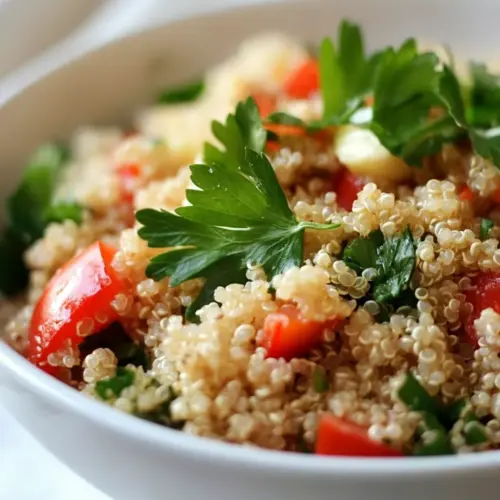
Mediterranean Quinoa Salad
Mediterranean Quinoa Salad is a bright, easy to assemble bowl with fluffy quinoa, briny olives, creamy feta, and tangy lemon. This fresh summer friendly dish offers crisp textures and lively flavors, making it perfect for an easy weeknight dinner or a make ahead picnic contribution. It s satisfying, healthy, and a persuasive reason to add more color to your meal rotation.
Equipment
- Large Pot
- Fine mesh sieve
- Mixing Bowl
- Cutting board and knife
Ingredients
- 2 cups quinoa Rinse and cook as the base grain for the salad; provides a light, fluffy texture and nutty flavor that absorbs dressings and melds other flavors. Use cooked and cooled quinoa to create a hearty, protein-rich foundation that holds the salad together. Adjust cooking time to achieve tender but slightly chewy grains for best mouthfeel.
- 4 cups chicken broth or vegetable broth Simmer and flavor as the cooking liquid to infuse the quinoa with savory depth; chicken or vegetable broth adds extra umami compared to water. Choose vegetable broth for a vegetarian version or chicken broth for richer taste, and use the specified amount to ensure properly cooked quinoa. Warm the broth before adding quinoa to speed cooking and improve texture consistency.
- 2 cups diced tomatoes Dice and add as a juicy, acidic component that brightens the salad and balances richness from cheese and olives. Opt for ripe tomatoes for maximum sweetness and color contrast, and drain slightly if very watery to prevent a soggy salad. Toss gently with quinoa to distribute moisture and fresh flavor evenly.
- 1/2 cup chopped parsley Chop finely and mix in as a fresh, herbaceous element that adds vibrant color and a slightly peppery, grassy note. Use parsley to lift heavier flavors and provide aromatic contrast, enhancing overall freshness. Add toward the end of preparation to preserve bright green color and delicate texture.
- 1/3 cup chopped kalamata olives Chop and incorporate as a briny, fruity accent that brings concentrated tang and depth; kalamata olives contribute darker, richer olive flavor. Pit and chop to distribute bursts of savory complexity throughout the salad while complementing feta and artichokes. Balance quantity to avoid overpowering the other ingredients.
- 1/2 cup chopped green olives Chop and include as a milder, salty olive variety that adds a contrasting texture and balanced olive flavor in each bite. Use green olives to provide a firmer bite and brighter salinity compared with kalamatas. Combine with other mix-ins to create layered, Mediterranean taste profiles.
- 1 roasted red pepper diced Dice and fold in as a sweet, smoky, and slightly chewy vegetable component that offers color contrast and roasted flavor. Use roasted red pepper to introduce subtle caramelized notes that pair well with olives and feta. Pat dry before adding to control moisture and maintain salad texture.
- 1 1/2 cups diced marinated artichoke hearts Dice and mix in as a tender, tangy component with artful acidic marination that contributes umami and hearty mouthfeel. Marinated artichoke hearts bring Mediterranean complexity, soaking up and releasing dressing flavors into the quinoa. Chop to bite-size pieces for uniform distribution and pleasant chew.
- 4 oz feta cheese Crumble and sprinkle as a creamy, salty, and tangy cheese that complements olives and herbs while adding richness. Feta provides a crumbly texture and pronounced flavor that ties the salad's Mediterranean profile together. Add toward the end to maintain distinct curds and prevent excessive melting.
- 1/2 lemon juiced Juice and drizzle as a bright, acidic balancing agent that enhances freshness and cuts through richness in the salad. Fresh lemon juice adds lively citrus notes and helps marry the flavors of herbs, olives, and cheese. Squeeze just before serving to preserve the most vibrant aroma and acidity.
- salt & pepper to taste Season and adjust as the basic seasoning to enhance all flavors; salt and pepper allow control over overall taste and balance. Use kosher salt or sea salt and freshly ground black pepper, seasoning in stages while tasting to avoid over-salting with briny ingredients. Final taste adjustment ensures each element is well-balanced.
- 1/2 teaspoon oregano Sprinkle and infuse as a warm, aromatic herb that complements Mediterranean flavors with subtle earthiness and floral notes. Oregano helps unite the olives, tomatoes, and feta, adding classic Mediterranean character to the dressing and salad. Use measured amounts to avoid overpowering delicate fresh herbs.
Instructions
- Cook quinoa in chicken stock: bring to boil in large pot then cover to simmer until soft, about 20 minutes.: The aroma of simmering quinoa and chicken broth should smell gently toasted and savory as the pot reaches a simmer, with small rolling bubbles forming around the edges. Use a heavy bottomed pot for even heat and bring the liquid to a full boil so the grains start absorbing evenly, then reduce to a low simmer and cover to trap steam. You want to hear a soft hissing rather than a violent boil, that indicates the temperature is right for gentle cooking. The visual cue is that the quinoa expands and the little germ ring appears, signaling doneness; the grains will look translucent with a tiny white spiral. If the pot is uncovered, evaporation can make the grains dry or unevenly cooked, so keep the lid on. A common mistake is lifting the lid too often which releases steam and extends the cooking time. When it is finished, remove from heat and let it sit covered for a few minutes to firm up before fluffing.
- While quinoa is cooking, chop your veggies.: As the mixture comes to a vigorous boil the steam will smell rich and savory from the broth , and you will see bubbles breaking across the surface; that s the moment to lower the heat so the pot simmers gently. Covering it creates a consistent environment where the quinoa steams as much as it simmers, ensuring even tenderness without sticking. The texture you re aiming for is tender grains that still retain a slight bite, not mushy. If the heat is set too high, the liquid can boil off too quickly and scorch the bottom, which gives a burnt taste. If the grains seem undercooked at the end of the time, add a tablespoon of water and recover for a few more minutes rather than increasing heat aggressively.
- Cool quinoa off and stir in chopped veggies, feta cheese, lemon juice, salt, pepper and oregano. Refrigerate until ready to serve.: The sound of your knife on the board should be rhythmic as you dice the tomatoes , chop the parsley , and slice the olives , creating a chorus of prep that makes the kitchen feel active. Uniform chopping ensures balanced bites, so aim for similar sized pieces that match the quinoa grains. Pay attention to the tomatoes moisture; if they re very juicy, you can drain a little to avoid watering down the salad. A typical mistake is cutting pieces too large which leads to one ingredient dominating a forkful, so keep pieces modest in size. Rinse herbs and pat dry so they don t add excess water as well.
- Cool quinoa off: When the pot rests and you fluff the quinoa with a fork, you should smell the toasted grain note mellowing as steam dissipates, and the texture will change from steamy to light and airy. Spreading the quinoa on a shallow tray or letting it sit at room temperature helps it cool faster and prevents the salad from becoming warm and oily when combined with the marinated ingredients. If you add hot quinoa to the mix, the feta cheese can soften too much and the marinated components may release more oil. A common oversight is not fluffing sufficiently which causes clumps; loosen the grains gently to preserve their separated texture.
- stir in chopped veggies, feta cheese, lemon juice, salt, pepper and oregano: At assembly you ll notice fresh citrus perfume from the squeezed lemon mixing with the savory notes of crumbled feta cheese and the briny olives, creating a layered scent that promises brightness. Stirring the ingredients together allows the acid to coat the grains, the oil from marinated artichokes or peppers to distribute, and the herbs to integrate. Use a gentle folding motion so you don t mash the quinoa or break up the vegetables, preserve those distinct textures. Taste as you combine and adjust seasoning gradually because the feta and olives add salt; over salting is the most common error here. If it seems dry, a splash of broth or a little extra lemon can revive the mix without diluting flavor.
- Refrigerate until ready to serve: Chilling the salad allows the flavors to marry, and you ll notice that the initial sharpness of the lemon softens and becomes rounder as it melds with the herbs and brine. Refrigerate in a covered container so the salad maintains moisture and avoids absorbing other fridge odors. For best texture, serve chilled or at cool room temperature within a day or two, as prolonged storage can make the vegetables softer and the quinoa denser. A frequent mistake is leaving it in the fridge uncovered which dries the surface, so keep it covered and give it a gentle toss before serving to redistribute any settled dressing or juices.
Notes
- Rinse the quinoa: Rinsing quinoa under cold water removes the natural coating that can taste bitter, and it results in a cleaner, more pleasant grain. Use a fine mesh sieve and swirl until the water runs clear.
- Cook in broth for depth: Cooking quinoa in chicken broth or vegetable broth infuses savory flavor into the base so the finished salad tastes more integrated. Keep an eye on salt because broth adds sodium.
- Drain marinated items well: Excess oil from marinated artichoke hearts or roasted red pepper can weigh down the salad, so drain and blot them before adding. This preserves lightness and ensures balanced dressing coverage.
- Chop uniformly: Cutting tomatoes, olives, and parsley to similar sizes ensures consistent bites, so no one ingredient dominates a forkful. Aim for small to medium dice for the best mouthfeel.
- Adjust acidity gradually: Add lemon juice in stages and taste as you go, because acidity brightens the salad but too much can overpower the other flavors. If it becomes too tart, a tiny pinch of sugar can balance it.
- Store smartly: Keep leftovers in an airtight container in the fridge for up to two days; toss before serving to refresh texture. If it seems dry, a splash of olive oil or a squeeze more lemon will liven it up.