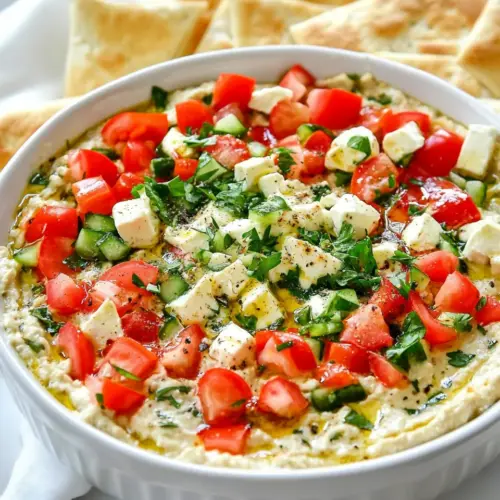
Mediterranean 7 Layer Dip
Mediterranean 7 Layer Dip is a creamy, bright party dip layered with tangy cream cheese, lemony tzatziki, and smooth hummus topped with crisp cucumber, juicy tomatoes, and salty feta. This easy, colorful appetizer is perfect for summer gatherings and weeknight entertaining, delivering rich textures and bold Mediterranean flavors that guests will love. Make it ahead to let the flavors meld and serve with sturdy pita chips.
Equipment
- Mixer
- Food Processor
- Serving dish
- Spatula
Ingredients
- 1 (8 ounce) cream cheese, softened Soften to a spreadable consistency and provide a creamy tangy base layer that helps bind and balance richer toppings in the dip. Use at room temperature for smooth spreading and to meld flavors from herbs and garlic. Can be whipped briefly to lighten texture before assembling.
- 1/2 cup English cucumber, peeled, seeded, and diced (save the other half for later) Peel, seed, and dice finely to add a crisp, refreshing crunch and mild cucumber flavor that brightens the dip. Reserve half for another use as noted, and ensure pieces are uniform so they layer neatly. Pat dry to avoid adding excess moisture to the cream cheese layer.
- 3 garlic cloves, minced Mince finely to infuse a sharp, savory aroma and pungent flavor that complements the creamy and herbaceous elements of the dip. Distribute evenly within the cream cheese or yogurt mixture to avoid concentrated pockets of garlic. Adjust quantity to taste for desired intensity.
- 2 tablespoons plain Greek yogurt Add to lighten and slightly tang the creamy layer while improving spreadability and mouthfeel. Combine well with cream cheese and herbs to create a smooth, cohesive base for the subsequent layers. Also contributes mild protein and thickness.
- 2 tablespoons lemon juice Squeeze fresh to provide bright acidity that cuts through richness and brings a lively citrus note to the creamy layer. Add gradually and taste to balance lemon with dairy and herbs. Fresh juice is recommended for best flavor impact.
- 1 tablespoon dill, chopped (more to taste) Chop finely to add a fresh, herbaceous, slightly grassy flavor that complements cucumber and lemon. Mix into the creamy base to distribute aromatic notes throughout the layer. Increase slightly to taste for a more pronounced herbal profile.
- 2 (15 ounce) cans garbanzo beans, drained with liquid reserved Drain and reserve the beans as the primary proteinaceous, earthy middle layer component that adds body and a hearty texture to the dip. Keep the liquid reserved for thinning or blending the beans into a spreadable consistency as needed. Rinse only if desired for a milder flavor.
- 1/4 cup reserved garbanzo liquid Reserve to thin or creamy the blended garbanzo layer, providing emulsifying starches that help achieve a smoother hummus-like texture. Add gradually when processing to reach desired consistency without making the mixture too loose. Also contributes subtle bean flavor.
- 1/4 cup lemon juice Add to the garbanzo blend to brighten and add citrus tang that balances the bean's earthiness and tahini's richness. Use fresh juice and taste as you go to prevent over-acidifying. Lemon also helps preserve color and freshness.
- 3 cloves garlic, minced Mince finely to contribute savory depth and aromatic warmth within the garbanzo/hummus layer, complementing tahini and lemon. Distribute evenly when blending to avoid raw garlic overpowering the other flavors. Can be reduced for milder garlic presence.
- 2 tablespoons tahini, found in condiment aisle Whisk in to add a nutty, slightly bitter richness that gives the garbanzo layer traditional hummus character and a silky mouthfeel. Combine thoroughly with beans, lemon, and olive oil for a cohesive spreadable layer. Adjust amount based on desired tahini prominence.
- 1 tablespoon olive oil Drizzle in to add fruity, smooth fat that enhances mouthfeel, helps emulsify the hummus, and carries flavors across the palate. Use extra-virgin olive oil for best flavor and finish with a light swirl if desired. Also aids in achieving a glossy texture.
- 1 teaspoon kosher salt, more to taste Season to taste to elevate and balance flavors across the hummus-like layer, enhancing both savory and bright elements. Start with the listed amount and adjust after blending, keeping in mind saltiness of feta and other components. Use kosher salt for easy dosing.
- pinch ground cumin Sprinkle sparingly to impart warm, earthy complexity and a subtle smoky note that complements the garbanzo and tahini flavors. Add a pinch when blending to avoid overpowering the delicate lemon and garlic. Cumin also reinforces Mediterranean flavor profiles.
- 1 cup English cucumber, peeled, seeded, and diced Peel, seed, and dice to provide additional crunchy, cool texture and a refreshing vegetal note as a topping layer. Use a full cup for visible cucumber presence and ensure pieces are uniform for an attractive presentation. Pat lightly to minimize excess moisture.
- 1 cup cherry tomatoes, quartered Quarter to bring bright, juicy acidity and sweet-tart tomato flavor as a colorful topping that contrasts creamy and earthy layers. Distribute evenly to provide pops of sweetness and freshness in every bite. Choose ripe cherry tomatoes for best flavor and texture.
- 1/3 cup green onions, sliced Slice to add a mild onion bite and subtle allium aroma that enhances overall flavor complexity without overpowering other layers. Scatter across the top for visual contrast and a fresh crunch. Use both green and white parts for color variation.
- 1/4 cup crumbled feta Crumble to provide salty, tangy, and creamy contrast as one of the final savory finishing touches, enhancing Mediterranean character. Sprinkle sparingly to complement rather than dominate, tasting for salt balance with other seasoned components. Choose high-quality feta for pronounced flavor.
- (optional) flat leaf parsley, chopped Chop as an optional finishing herb to contribute bright, peppery, and slightly bitter notes that lift and freshen the assembled dip. Scatter lightly over the top for color and aromatic appeal, adjusting amount to personal preference. Omit if a milder herb profile is desired.
Instructions
- Mix all ingredients together with a mixer.: As you blend, notice the hum of the mixer and how the mixture becomes glossy and uniform, with a soft, creamy aroma from the cream cheese and garlic . This step ensures the dairy components are fully integrated, preventing clumps that would make spreading uneven. If the mixture feels too firm, allow the cream cheese to warm slightly at room temperature for easier blending. A common mistake is overmixing, which can incorporate excess air and make the layer foamy rather than smooth.
- Place all ingredients in a food processor and blend until smooth. Add more garbanzo bean liquid and process if you want it thinner.: You'll see the texture change from chunky to velvety, and the scent of tahini and lemon juice will become more pronounced. The reserved garbanzo liquid helps achieve a spreadable viscosity without watering down flavor. Scrape the sides as needed to avoid pockets of unprocessed beans. Avoid running the processor so long that the hummus becomes overly warm, which can alter flavor and mouthfeel.
- To assemble: Spread tzatziki sauce in the bottom of a shallow serving dish or pie plate. Spread hummus on top. Top with cucumber, tomatoes, onions, feta, and parsley.: Gradual additions of the reserved liquid will loosen the hummus until it reaches a silky ribbon consistency, and you will notice the sound of the processor lighten as the mixture becomes smoother. The reason for controlled thinning is to keep the hummus substantial enough to layer without sinking into the cream cheese base. Adding too much liquid at once is a frequent misstep, and it can make the hummus too loose to hold layers properly.
- Refrigerate for 2 hours to let the flavors meld before serving. Serve with pita chips.: Spread tzatziki sauce in the bottom of a shallow serving dish or pie plate : The initial spread serves as a cooling base and anchors the layers visually and texturally; you will feel the tacky, creamy surface under your spatula. Smooth it evenly to create a level foundation so subsequent layers sit neatly. If the tzatziki is too watery, blot it lightly to prevent it from seeping into the hummus. A common oversight is uneven spreading, which makes the final presentation look lopsided.
- Spread hummus on top: When you spread the hummus, notice the resistance under your spatula and the sheen that indicates proper oil content. Pull the hummus outward in gentle strokes to create a uniform layer that contrasts with the tzatziki. This technique matters, because a thin or patchy hummus layer will make the dip feel imbalanced. One mistake people make is pressing too hard, which can tear through the base layer.
- Top with cucumber, tomatoes, onions, feta, and parsley: As you add each topping, observe the color and texture contrast; the cucumbers and tomatoes should glisten, the green onions should add a subtle sparkle, and the crumbled feta will dot the surface with salty brightness. Distribute ingredients in an even pattern so every scoop includes a bit of each component. If you pile one area too high, the dip becomes uneven and harder to serve. Overloading with wet ingredients can cause the layers to slide, so distribute gently.
- Refrigerate for 2 hours to let the flavors meld before serving: Chilling allows acidity and salt to marry with the creamy and legume elements, producing a harmonious profile. You will notice the flavors become more rounded and cohesive after resting, and the textures settle so slices or scoops hold better. Plan ahead, because serving immediately often results in sharper, less integrated flavors. A frequent mistake is skipping the chill time and ending up with a disjointed tasting experience.
- Serve with pita chips: The contrast of crisp pita chips against creamy layers is satisfying, and the sound of a well toasted chip breaking into the dip is part of the experience. Offer bowls of chips around the platter so guests can scoop without double dipping. One common error is using soft bread that soaks up moisture; stick with sturdy chips for the best textural play.
Notes
- Soften dairy properly: Let the cream cheese and Greek yogurt sit at room temperature for about 20 minutes before mixing to ensure a silky base that spreads evenly.
- Control cucumber moisture: After dicing, lay the cucumber on paper towels and gently pat to remove excess water, preventing the topping from making the dip watery.
- Adjust garlic intensity: If you prefer a milder garlic presence, mince the garlic very finely or use half the amount when making the tzatziki component, then taste and add more if desired.
- Customize lemon brightness: Add lemon juice gradually to both the yogurt layer and the hummus, tasting as you go to avoid over acidifying the dip.
- Make-ahead strategy: Prepare the hummus and tzatziki up to two days in advance, store them separately, and assemble the layers a few hours before serving for optimal freshness.
- Garnish last minute: Add the feta and parsley right before serving to retain their color and texture, otherwise they can wilt or bleed into the layers.