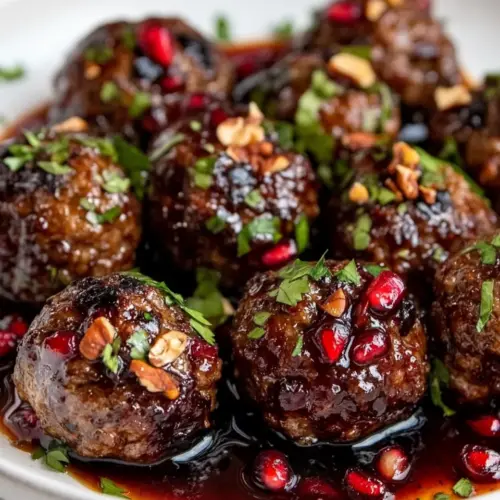
Meatballs With Walnut Pomegranate Sauce
Meatballs With Walnut Pomegranate Sauce is a glossy, tangy dish featuring tender turkey meatballs, crunchy walnuts, and a syrupy pomegranate glaze. It’s an easy weeknight dinner that feels festive, with bright lime and warm spices for balanced flavor. Perfect for serving over grains or as part of a mezze spread, this recipe delivers bold taste with minimal fuss.
Equipment
- Skillet
- Wide saucepan
- Plate lined with paper towels
Ingredients
- 1 pound ground turkey Bind together with lean protein and moisture; forms the base of the meatballs providing structure, flavor, and protein for the dish.
- 1/2 cup onion grated Add sweetness and moisture when grated finely; helps keep meatballs tender and integrates into the mixture evenly.
- 1/2 cup parsley fresh, chopped finely Brighten and freshen the mixture when chopped finely; contributes herbaceous aroma and a clean finish to balance richness.
- 1/2 teaspoon ground coriander Impart warm citrusy spice in small quantities; contributes subtle earthiness that complements the meat and other seasonings.
- 1 lime zested and juiced Provide bright citrus acidity and aromatic oils when zested and juiced; enhances overall flavor and adds brightness to the meatballs.
- 1 teaspoon salt Season the mixture to enhance overall flavor; helps bring out natural tastes and balance other seasonings in the meatballs.
- 2 tablespoons olive oil Sear or sauté in a pan to develop a caramelized surface; supplies fat for cooking and helps brown the meatballs evenly.
- 2 tablespoons olive oil Give additional cooking fat for browning or pan-frying; ensures adequate oil for even cooking and a golden crust on meatballs.
- 1/2 teaspoon onion grated Contribute mild onion flavor in a smaller amount; when grated, it melts into the mixture adding subtle sweetness and moisture.
- 2 garlic cloves minced Add pungent savory depth when minced; brings garlicky aroma and umami that lifts the meatball mixture and the sauce.
- 1/2 teaspoon ginger grated Introduce warm, slightly spicy aromatics when grated; balances flavors with a bright, peppery note that pairs well with garlic and lime.
- 3/4 cup walnuts chopped finely Provide rich nutty texture and body when chopped finely; contributes fat and crunch that enhance the sauce’s mouthfeel.
- 1/2 teaspoon cumin Add warm, earthy spice with a slightly bitter finish; complements the coriander and deepens the flavor profile of the sauce.
- 1/4 teaspoon salt Season the sauce with a small touch of salt; helps balance sweetness and acidity without overpowering delicate flavors.
- 1/4 teaspoon black pepper Introduce sharp peppery heat in a small amount; lifts flavors and adds a subtle kick without dominating the sauce.
- 1 cup pomegranate juice Contribute fruity sweet-tart depth as a liquid base; adds pomegranate flavor and acidity to create a glossy, flavorful sauce.
- 1/4 cup pomegranate molasses or balsamic vinegar, date syrup, or molasses Concentrate sweet-tart flavor and viscosity for the sauce; acts as an alternative syrupy acidic sweetener to balance the meatballs.
- 1 lime zested and juiced Provide extra citrus lift with zest and juice; enhances the sauce’s brightness and ties together the pomegranate and walnut flavors.
Instructions
- Combine turkey, onion, parsley, coriander, lime zest with juice, and salt. Knead mixture together until well blended.: On contact you will feel the mixture take shape as the grated onion and chopped parsley distribute moisture and aroma, releasing a fresh, citrusy scent from the lime zest. Kneading briefly helps proteins bind, which keeps the meatballs intact while cooking, and you should stop as soon as the mixture is cohesive to avoid packing it dense. A common pitfall is overworking; if you notice the texture becoming tight and heavy, rest the mixture for a few minutes to relax the proteins before shaping.
- Shape meat into golf-ball sized balls and set aside.: As you roll, the surface should feel smooth and slightly tacky, not wet. The size matters because it controls cook time and keeps the center juicy; golf-ball sized meatballs give an even sear without drying out inside. Lay them on a tray with some space so they do not steam each other. If you make them too large, the outside may brown before the center cooks, so keep the portion consistent.
- Line a plate with paper towels.: Prepare for draining by placing absorbent paper on a plate, which will help capture excess oil after searing and preserve the crisp exterior. The paper will take on a warm, slightly glossy sheen as the meatballs rest, indicating you achieved a good crust. Avoid piling the meatballs on top of each other on the towel, as trapped steam can soften the crust.
- Coat skillet with oil and bring to medium high heat. Cook meatballs three minutes until brown on all sides. Do not cook more than three minutes. (You’ll add them to the sauce to finish cooking) Drain meatballs on plate lined with paper towels.: When the skillet is hot, you should hear a steady sizzle as the meatballs hit the pan and smell the toasty notes of browning meat and oil. Browning creates flavor through the Maillard reaction, giving the meatballs a savory outer shell that contrasts with their tender interior. Three minutes ensures a deep color without overcooking; if the pan is overheated the exterior can burn before you get even browning, so moderate the heat if smoke appears. Once browned, transfer to the paper towel lined plate to remove excess fat and maintain a clean sauce.
- Heat oil in wide saucepan on medium high. Add onion, garlic, and ginger. Saute for three minutes, until onion is soft.: The pan should give off a fragrant steam as the aromatics soften, with the garlic and ginger releasing sharp, warming notes that meld into a mellow base as the onion becomes translucent. Stir frequently so nothing sticks or browns unevenly, because burnt bits will introduce bitterness. If the pan sizzles too violently, lower the heat to coax gentle caramelization rather than rapid scorching.
- Add walnuts and saute for another 3 minutes. Add cumin, salt, and pepper. Pour in both pomegranate juice and molasses. Add zest and juice of one lime. Taste and adjust the seasoning.: Toasting the chopped walnuts in the pan releases oils and a warm, nutty perfume, which deepens the sauce. When you add the pomegranate juice and molasses, you will hear a lighter simmer and see the liquid begin to shine; the molasses will give weight and sheen. The lime brightens the profile, and the spices knit the flavors. Taste attentively and tweak salt or acidity, because the juice and molasses can vary significantly in sweetness and tartness between brands.
- Bring sauce to a simmer. Now add the meatballs and cover them with the sauce. Cover the pan and cook for three minutes more.: As the sauce simmers, aroma layers deepen and the surface becomes glossy. Nestle the browned meatballs into the sauce so they are mostly submerged, and the gentle steam under the lid finishes them through without toughening. After three minutes, check one meatball for doneness; the juices should run clear and the center should be warm throughout. A common error is overcooking under high heat, which can dry the meat, so maintain a gentle simmer.
- Serve hot over grain of choice. Garnished with pomegranate seeds and cilantro takes the presentation up, but it’s optional.: When plating, spoon plenty of the syrupy pomegranate sauce over the meatballs so each bite is glossy and well seasoned. The grains will soak up any leftover glaze, making a satisfying base. If you add pomegranate seeds they pop with fresh acidity and provide attractive color contrast. Avoid letting the dish sit too long before serving because the sauce will thicken and the meatballs can cool, losing their juicy appeal.
Notes
- Room temperature meat: Allow the ground turkey to sit for 15 minutes before mixing, it absorbs flavors more evenly and forms tender meatballs.
- Don’t overwork: Mix ingredients until just combined, over kneading toughens the meat and yields dense meatballs.
- Pomegranate balance: If the sauce is too tart, add a small amount of sweetener incrementally and taste after each addition to avoid oversweetening.
- Nut texture: Chop the walnuts finely but not to dust, leaving small bits for pleasant crunch and mouthfeel.
- Finish gently: After searing, simmer the meatballs briefly in the sauce with the lid on to keep them moist and ensure even cooking.