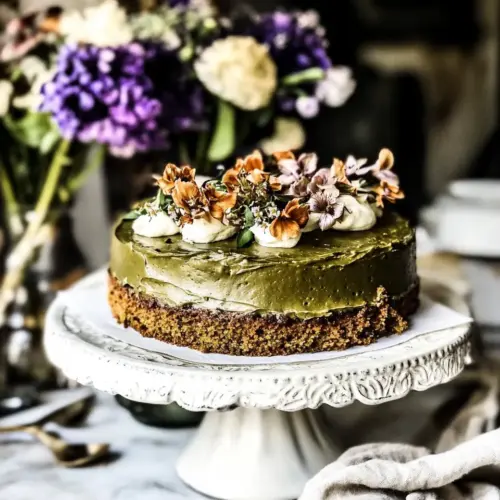
Matcha Green Tea Cake with Vanilla Honey Cream Cheese Frosting
Matcha Green Tea Cake with Vanilla Honey Cream Cheese Frosting is a tender, spring worthy layer cake that pairs the grassy depth of matcha with a creamy, honey sweet frosting. The crumb is moist and delicate, while the frosting offers a silky, tangy balance, perfect for brunches or holiday celebrations. Try it for an elegant dessert that tastes as special as it looks.
Equipment
- 8 inch round cake pans
- Parchment Paper
- Electric Mixer
- Mixing Bowls
- Offset Spatula
Ingredients
- 2 1/2 cups all-purpose flour Provide structure and bulk to the cake batter while creating a tender crumb; sift or whisk before measuring to avoid lumps and ensure even incorporation with leaveners and liquids.
- 1 1/4 cups brown sugar Add moisture and deep caramel-like sweetness while enhancing browning; cream with wet ingredients to help aerate the batter for a richer texture.
- 1 1/2 teaspoons baking powder Leaven the cake by releasing gases during baking to create rise and a light crumb; combine with baking soda for balanced lift and to react with acidic buttermilk.
- 1 1/2 teaspoons baking soda Work with baking powder to contribute additional lift and fine texture; ensure even distribution by whisking into the dry ingredients to prevent uneven rising.
- 1 teaspoons salt Enhance overall flavor balance by accentuating sweetness and controlling yeast-like metallic notes; dissolve into wet ingredients for uniform seasoning throughout the cake.
- 1 cup buttermilk Provide acidity and moisture that react with baking soda to tenderize the crumb; bring to room temperature so it blends smoothly into the batter.
- 1/2 cup canola oil Contribute fat for moistness and tenderness while aiding emulsification; whisk with sugar and eggs to create a cohesive batter and prevent greasiness.
- 2 tablespoons matcha green tea powder Deliver concentrated green tea flavor and vibrant color; sift into dry ingredients to avoid clumps and distribute the earthy matcha uniformly in the cake.
- 1 tablespoon vanilla extract Introduce warm vanilla aromatics that deepen flavor complexity; add to wet ingredients to integrate fragrance and round out sweetness.
- 1 teaspoon almond extract optional Offer a subtle nutty floral note when used and can elevate the cake’s aroma; add sparingly to avoid overpowering the matcha and vanilla flavors.
- 2 eggs Provide structure, richness, and aeration when beaten into the batter; ensure eggs are at room temperature to incorporate more evenly and support rise.
- 3/4 cup hot water Hydrate dry ingredients and help bloom matcha while loosening the batter for a delicate crumb; use hot water to intensify matcha flavor and dissolve powders.
- Toasted coconut and chocolate Easter eggs for decorating (optional) Offer a decorative topping option that adds crisp texture and festive appearance; sprinkle or place as desired to enhance presentation without altering the cake’s flavor significantly.
- 8 ounces Philadelphia Cream Cheese softened Create tangy, creamy richness in the frosting and contribute to smooth texture; soften to room temperature for easy blending with butter and sweeteners.
- 1/4 cups salted butter softened Add buttery fat to the frosting for stability and mouthfeel; soften to ensure a smooth, emulsified cream cheese frosting when creamed together.
- 1/3 cup honey Impart natural sweetness and floral depth to the frosting while reducing the need for excessive powdered sugar; mix thoroughly to dissolve and blend evenly with dairy components.
- 3 -4 cups powdered sugar Sweeten and thicken the frosting while providing a smooth, pipeable consistency; add gradually until desired sweetness and texture are achieved, adjusting between three to four cups.
- 2 teaspoons vanilla extract Enhance and brighten the frosting flavor with pure vanilla aroma; stir in at the end of mixing to preserve the delicate vanilla notes and balance the honey.
Instructions
- Preheat the oven to 350 degrees F. Grease two 8-inch round cake pans. Line with parchment paper, then butter/spray with cooking spray.: You will notice a faint warmth as the oven reaches temperature, and the dry heat helps set the batter's structure once it goes in. Preparing the pans prevents sticking and ensures the layers release cleanly. A common misstep is skipping parchment which can tear the cake when you invert it, so always line the pans for a smooth release.
- In a large bowl, mix together the flour, brown sugar, baking powder, baking soda and salt.: At this stage the dry mixture should smell subtly sweet and toasty from the brown sugar, and the leaveners will be evenly dispersed so the rise is uniform. Whisking removes lumps and aerates the mixture slightly, which aids oven spring. If you skip mixing thoroughly you may get uneven pockets of baking soda or powder, producing odd texture or flavor notes.
- Whisk together the milk and oil, and add to the dry ingredients. Beat for 2 minutes on medium speed. Add the matcha powder, vanilla extract, almond extract and eggs and beat again for 2 minutes on medium speed. Now slowly pour in the hot water and beat until smooth. Divide the batter evenly among the prepared pans.: You should feel the batter become silky, and the glossy sheen after adding hot water indicates proper hydration and dissolved sugar. The matcha will bloom and deepen the color, releasing its aroma. Avoid over mixing after adding the flour initially, or the crumb can become chewy instead of tender.
- Bake 30 to 35 minutes, until the tops are just set and no longer wiggly in the center. Remove and let cool in the pan for 15 minutes, then grab 2 large flat plates, line them with wax or parchment paper and invert the cakes onto the plates. Cover and let the cakes cool completely before frosting.: As the cakes bake the kitchen fills with a green tea scent balanced by caramel notes from brown sugar, and the tops will firm up without excessive browning. The 15 minute rest in the pans lets the crumb stabilize so the layers release cleanly. Cutting into hot cake will cause crumb tear and sinking, so be patient and cool fully before frosting.
- To make the frosting, add the cream cheese and butter to a large mixing bowl. Using an electric mixer beat until the mixture is light and fluffy, about 2 minutes. Add the honey, powdered sugar and vanilla. Beat another 2-4 minutes or until the frosting is light and fluffy.: The frosting should smell tangy and sweet, and whipping introduces air that creates a silky, spreadable texture. If the mixture looks curdled, continue beating at low speed and it will smooth; using cold ingredients will prevent proper aeration, so ensure the cream cheese and butter are softened. Overbeating can also make the frosting runny, so watch the texture carefully.
- To assemble, place 1 layer, flat side up, on a plate or cake stand. With a knife or offset spatula, spread the top with frosting. Place the second layer on top, rounded side up, and spread the frosting evenly on the top. If desired, you may also frost the sides. I prefer to either leave the sides unfrosted or lightly frosted so that pretty green color shines through! Decorate with toasted coconut and milk chocolate eggs if desired.: As you spread the frosting, you will notice its glossy, velvety feel and the honey aroma mingling with vanilla. A gentle hand ensures even coverage without compressing the crumb. A typical error is using too much pressure which can compress the layers and make the cake dense, so use light, confident strokes. Finish by adding toasted coconut or small chocolate eggs for a seasonal touch if you like.
Notes
- Measure flour correctly by spooning into the cup and leveling off so the cake stays tender rather than dense.
- Sift matcha to eliminate lumps, which ensures a smooth batter and even green color throughout the layers.
- Room temperature ingredients make for smoother mixing and a stable frosting, especially the cream cheese and butter.
- Use hot water carefully and pour slowly to allow the batter to emulsify, giving the cake a glossy, even texture.
- Cool fully before frosting to prevent the icing from melting and sliding off the cake, which keeps the presentation neat.