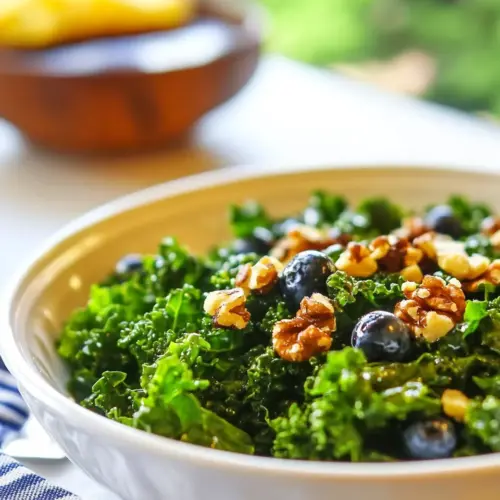
Massaged Kale Salad with Rosemary Walnuts and Blueberry Vinaigrette
Massaged Kale Salad with Rosemary Walnuts and Blueberry Vinaigrette is a bright, creamy and crunchy salad that balances tender kale with juicy blueberries, tangy goat cheese crumbles, and warm candied walnuts. Easy to make for an easy weeknight dinner or a spring get together, the blueberry vinaigrette adds a silky, fruity finish that makes this salad impossible to resist.
Equipment
- Saucepan
- Fine wire strainer
- Mixing Bowl
- Small skillet
- Whisk
Ingredients
- 1 large head kale chopped Chopped to tenderize and provide a sturdy leafy base for massaging; offers earthy, slightly bitter flavor that pairs with bright vinaigrette and creamy cheese.
- 2 tablespoons fresh lemon juice Squeezed to add bright acidity and balance the richness; helps soften the kale during massaging and enhances overall freshness of the salad.
- 1/4 red onion thinly sliced Thinly sliced to contribute sharp, pungent bite and crunchy texture; melds with other flavors without overpowering when distributed evenly through the salad.
- 1 pint blueberries Washed and scattered to introduce juicy, sweet-tart bursts throughout; provides seasonal color and fresh fruit notes that complement the vinaigrette.
- 1 cup rosemary candied walnuts recipe below Added as a crunchy, sweet topping made from walnuts coated in rosemary-scented candying; brings toasted nuttiness, caramelized sweetness, and herbal aroma to the salad.
- 1/2 cup goat cheese crumbles Sprinkled as a creamy, tangy element that contrasts textures; crumbles add richness and a subtle tartness that pairs well with fruit and nuts.
- Blueberry vinaigrette recipe below Whisked to create a cohesive, fruity dressing that ties salad components together; balances sweet, acidic, and creamy elements for harmonious flavor.
- 1/3 cup grapeseed oil Emulsified to serve as the neutral, high-heat-stable oil of the dressing; provides a clean mouthfeel and helps suspend vinaigrette ingredients for even coating.
- 3 tablespoons white vinegar Measured to add sharp acidity and brighten flavors; white vinegar sharpens the blueberry notes and helps balance sweetness in the dressing.
- 1.5 cups fresh blueberries makes about half cup of syrup Simmered or reduced to make a concentrated blueberry syrup for the vinaigrette; yields intense fruit flavor and natural sweetness to enrich the dressing.
- 2 tablespoons pure maple syrup or honey to taste Stirred in to sweeten the dressing naturally; maple syrup or honey contributes viscosity and a rounded sweetness that complements the blueberries.
- 1/3 cup whole milk plain yogurt Whisked in to add creamy tang and body to the vinaigrette; plain whole milk yogurt lightens the dressing while adding subtle dairy richness.
- 1/2 teaspoons salt Sprinkled to season and enhance overall flavor; a small amount of salt elevates sweetness and brightens all components without overwhelming them.
- 1 cup walnut halves Toasted to deepen flavor and provide crunchy texture in the candied walnut topping; walnut halves deliver earthy, buttery notes and substantial bite.
- 1 teaspoon grapeseed or olive oil Coated on walnuts to help the candying process and distribute fat; a small amount of grapeseed or olive oil aids caramelization and flavor development.
- 1 tablespoon pure maple syrup Tossed with nuts and sweetener to form the candied coating; maple syrup helps glaze the walnuts and adds complementary caramel-like sweetness.
- 1 teaspoon fresh or dried rosemary Crushed or finely chopped to infuse the candied walnuts with savory, piney aroma; rosemary contributes herbal complexity that balances the sweet coating.
- Pinch of salt Sprinkled sparingly while candying to enhance flavor contrast; a pinch of salt balances sweetness and intensifies nutty and herbal notes.
- Dash of cinnamon Added in tiny measure to contribute warm, sweet spice depth; cinnamon enhances the candied walnuts with an aromatic background note.
- Dash of ground ginger Pinched in to introduce subtle earthy heat and warmth; ground ginger pairs with cinnamon to round out the spice profile of the candied coating.
Instructions
- In a saucepan, heat the blueberries and honey over medium heat, covered until blueberry juices are seeping out and bubbly.: The aroma of warm blueberries and honey will fill your kitchen, yielding a jammy scent that signals the fruit is breaking down and releasing its juices. You should hear gentle bubbling under the lid, a comforting soft simmer rather than an aggressive boil. This step is crucial to concentrate flavor for the syrup; rushing it by using higher heat risks scorching and bitter notes. Keep the heat at medium so sugars slowly dissolve, and stir occasionally to ensure even cooking. A common mistake is leaving the pan unattended which can cause the mixture to boil too hard and splatter, so stay nearby and reduce heat if bubbling becomes vigorous.
- Mash blueberries with a fork to help get juices out and cook an additional 5 minutes but don’t allow the mixture to boil over.: Pressing the berries releases more liquid and enhances the depth of the syrup, producing a glossy, richly colored base. You will feel the texture change from whole berries to softened pulp and see the liquid thicken slightly. Keep the pan contents moving with a gentle stir, and listen for the change in sound as the bubbling evens out, indicating the sugars are melding with the fruit. Avoid letting the mixture foam up to the rim, which leads to overflow and sticky stovetop cleanup; lower the heat if foaming begins.
- Remove from heat and strain blueberry syrup using a fine wire strainer.: Pour the warm mixture through a fine strainer into a bowl or measuring cup, using a spoon to press out as much syrup as possible while leaving the pulp behind. The strained syrup should be vibrant, smooth, and free of seeds and large bits, ready to be incorporated into the vinaigrette. This clarification yields a silky dressing rather than a pulpy one, helping it cling to the kale . A pitfall is pressing too hard and forcing tiny solids through, which will cloud the syrup; be gentle and patient during straining.
- Discard the blueberry pulp and place blueberry syrup in refrigerator to cool.: Chilling the syrup quickly preserves its bright flavor and prevents the dressing from warming the salad when combined. Spread the syrup into a shallow container for faster cooling if you are short on time. You will notice the syrup thicken slightly as it cools, which helps stabilize the vinaigrette. Avoid leaving warm syrup in contact with the yogurt or kale , which can wilt the greens prematurely.
- Once cool, combine blueberry syrup with all other ingredients for the vinaigrette and mix vigorously with a whisk until smooth and creamy (or place everything in a blender and blend until smooth and creamy). Place in refrigerator until ready to use.: The moment you whisk in the grapeseed oil , white vinegar , yogurt , and salt , the dressing will emulsify into a glossy, velvety texture. Whisking by hand gives you control to stop when the consistency is perfect, while blending yields a very smooth, uniform dressing. Smell the bouquet of fruity and tangy notes, and taste to adjust sweetness with additional maple syrup if needed. A mistake here is adding oil too quickly which can prevent emulsification, so add oil in a slow stream if whisking by hand.
- Place the chopped kale leaves in a salad bowl and drizzle the lemon juice over the leaves. Massage leaves with your hands about 2 minutes and let sit about 10 minutes in order to allow leaves to soften. Add all other salad ingredients to salad bowl and set aside.: Chilling helps the flavors meld and the dressing to thicken slightly, making it cling to the kale rather than pool on the plate. Store in a sealed container and whisk again before dressing if separation occurs. Keep the dressing cold to preserve freshness, and consume within a week for peak flavor. Leaving it out at room temperature for extended periods will soften the overall salad when combined.
- Using a small skillet, heat the grapeseed oil, honey and rosemary over medium low heat.: The first tactile clue is the kale becoming visibly darker and glossy as you massage, indicating the cell walls are breaking down and yielding a tender texture. The lemon juice speeds this process and adds lift. After massaging, let the leaves rest so they relax and become silkier. Then fold in the sliced red onion and whole blueberries and reserve the goat cheese crumbles and candied walnuts for the final toss. A frequent error is under massaging, which leaves the leaves chewy and less enjoyable.
- Add the walnuts and stir to coat.: As the oil warms, the rosemary will bloom releasing a pine like aroma while the honey thins and begins to bubble gently. This fragrant start signals that the pan is ready for the walnuts . Keep the heat modest so the honey does not darken too quickly. Overheating at this stage will create burnt flavors and make the nuts bitter, so maintain medium low heat and stay attentive.
- Sprinkle a touch of cinnamon, ground ginger and salt over the walnuts and allow nuts to continue to toast another 3 to 5 minutes, stirring constantly.: Toss the walnuts constantly so each piece gets an even, glossy coating of the flavored oil and honey. You will hear the faint crackle as they warm and smell the nutty aroma intensify, which indicates they are toasting properly. Even coating ensures uniform caramelization and prevents clumping. A common misstep is leaving nuts unattended, which causes uneven burning and sticky clusters.
- Don’t allow nuts to sit without stirring because the honey will burn onto the nuts quickly when unattended. The nuts are ready when they are soft yet toasty, warm all the way through and have a nice sweet glaze on the outside.: The spices will bloom in the warm pan releasing warm, aromatic notes that balance the sweet glaze. Keep stirring so the spices distribute evenly and the nuts toast uniformly to a warm golden tone. You want them warm and fragrant, not charcoal black, so watch the color closely. If you notice smoke or a sharp burnt smell, remove the pan from heat immediately and transfer nuts to a cool surface to stop cooking.
- Sprinkle the walnuts over the salad and drizzle blueberry vinaigrette over everything to taste. Toss with your hands or salad tongs to ensure everything is evenly coated. Enjoy!: The final sensory cues are a warm, slightly tacky glaze, a gentle crunch, and a heady aroma of honey and rosemary . Spread them on parchment to cool so they do not stick together and maintain crispness. Letting them sit in a hot pan will cause over caramelization and bitter notes, so transfer promptly.
- Sprinkle the walnuts over the salad and drizzle blueberry vinaigrette over everything to taste. Toss with your hands or salad tongs to ensure everything is evenly coated. Enjoy!: When you dress the salad, the vinaigrette should cling to the leaves, creating a luminous sheen and carrying the fruity aroma into every bite. Toss gently to fold in the goat cheese crumbles and candied walnuts without pulverizing them. Listen for the slight rustle of dressed leaves and look for even distribution of berries and cheese. A common mistake is overdressing, which can weigh down the kale , so start with a small amount and add more as needed for balance.
Notes
- Make the vinaigrette ahead, prepare the Blueberry vinaigrette up to three days in advance and keep it chilled in a sealed container. This helps the flavors meld and saves time on the day you serve. When you are ready to use it, whisk or shake vigorously, as slight separation is normal. Store in the coldest part of your refrigerator and consume within one week for best freshness.
- Keep nuts crisp, after candying the walnuts, spread them on parchment and cool completely before storing. This prevents steam from softening the glaze. Once cooled, keep them in an airtight container at room temperature for up to three days, or refrigerate for longer storage, but bring them back to room temperature before serving so they regain crunch.
- Balance acidity, if your blueberry syrup is very sweet, add an extra splash of white vinegar or another teaspoon of lemon juice just before serving. A bright acid counteracts sweetness and helps the dressing coat the kale without tasting syrupy. Taste as you go and adjust in small increments.
- Use whole milk yogurt, the creaminess integrates into the dressing and gives a luscious mouthfeel without overpowering the fruit. Non dairy yogurts can work, but they may alter texture and require additional sweetening to achieve the same richness.
- Prep for guests, if serving a group, toss the dressed salad at the last minute and scatter candied walnuts and goat cheese crumbles on top so they stay visually appealing and texturally distinct. Prepare the vinaigrette and nuts in advance and assemble in front of your guests for a small flourish.