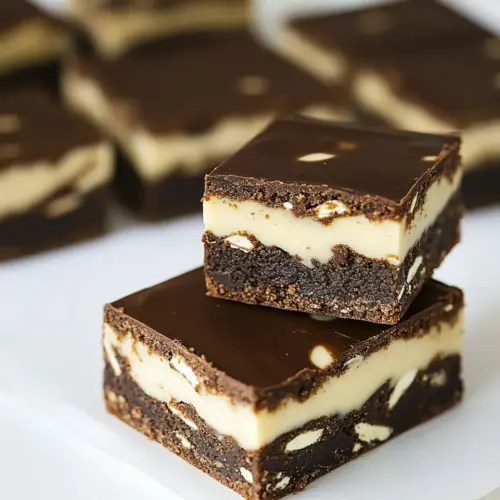
Marzipan Brownies
Marzipan Brownies are rich, fudgy chocolate bars layered with a sweet almond paste and a glossy chocolate glaze. The combination of deep cocoa, crunchy almonds, and silky marzipan creates a creamy yet textured treat, ideal for a special dessert or an easy weeknight baking win. Make them ahead for cleaner slices and richer flavor, and bring a little elegance to any gathering.
Equipment
- 8-by-8-inch pan
- Parchment Paper
- Double boiler
- Medium-large bowl
- Wire Rack
- Large sharp knife
Ingredients
- 2/3 cup flour 2 tablespoons dark or dutch processed cocoa powder 1/2 teaspoon salt 3 ounces bittersweet chocolate, chopped 3 ounces unsweetened chocolate, chopped 1/2 cup (1 stick) unsalted butter, cut into cubes 1/2 cup granulated sugar 1/2 cup light brown sugar, packed 2 large eggs, at room temperature, lightly beaten 1/2 teaspoon vanilla extract 1/2 teaspoon almond extract 1/4 cup chopped almonds Provide structure and a tender crumb, combining all-purpose flour with cocoa and salt to balance sweetness and deepen chocolate flavor; acts as the dry base that binds with fats and eggs during mixing and baking.
- For Marzipan: 5 ounces almond paste 1/3 cup powdered sugar 2 teaspoons corn syrup, plus more for brushing Form the sweet, pliable marzipan layer by blending almond paste with powdered sugar for sweetness and corn syrup for pliability and sheen; brush with additional corn syrup to prevent drying and add gloss before layering.
- For Glaze: 3 ounces dark chocolate, chopped 2 tablespoons unsalted butter, cut into cubes Create a glossy, firm finishing glaze by melting dark chocolate with butter to add shine, richness, and a smooth mouthfeel that seals flavors and gives a professional appearance.
Instructions
- Preheat oven to 350ºF. Line the bottom and sides of a 8-by-8-inch pan with parchment paper, leaving a slight overhang on two edges.: You will notice the warm oven smell start to build as the appliance reaches temperature, which primes your space for baking. Lining the pan prevents sticking and makes lifting the finished block effortless, so take time to leave an overhang for easy removal. A common oversight is not securing the paper into corners, which can let batter leak under; press the paper smoothly into the pan and, if needed, use a small dab of butter to hold it in place.
- Sift together flour, cocoa, and salt in a small bowl and set aside.: As you sift, you will see the cocoa lighten and aerate, which ensures even distribution and prevents lumps in the batter. This step matters because it creates a uniform dry mix that folds into the chocolate smoothly, giving a consistent crumb. Avoid skipping sifting, as undissolved cocoa pockets can cause uneven flavor and texture.
- Melt chocolates and butter in a double boiler or a medium-large bowl set over gently simmering water. Stir until smooth, then remove from heat. Whisk in sugars and stir until dissolved and mixture has cooled slightly.: The chocolate will become glossy and aromatic as it melts, filling the kitchen with a rich cocoa scent. Stirring continuously helps the fats and solids combine into a velvety emulsion that coats the spatula. Cooling slightly before adding sugars prevents the eggs later from curdling when incorporated, so let the mixture drop to warm but not hot. A frequent error is overheating the chocolate, which can seize; if you see graininess, remove from heat and stir gently until it calms.
- Whisk in eggs, vanilla, and almond extract until just combined (do not overmix). Sprinkle flour mixture over top and fold in to chocolate mixture using a large rubber spatula until just incorporated. Fold in chopped almonds. Pour into prepared pan.: You will hear a gentle folding rhythm as the batter comes together, and you should notice a glossy, thick chocolate mass after the eggs are worked in. Folding preserves air and prevents a cakey texture, so stop as soon as streaks disappear. The batter should be dense and shiny, with chopped almonds dispersed throughout. Overmixing introduces too much air, which can make the brownies dry, so fold carefully and avoid vigorous stirring.
- Bake for 25 to 30 minutes or until toothpick inserted into the middle comes out clean. Transfer pan to a wire rack and allow to cool completely.: During baking, the surface will set and aroma will intensify, with tiny cracks potentially forming on top, which is a good sign of a fudgy interior. The toothpick test checks doneness; a few moist crumbs are perfect for fudgy brownies. Cooling fully is essential so the marzipan layer will sit flat and adhere properly, so resist slicing while warm. Opening the oven door too frequently can cause uneven baking, so avoid peeking more than necessary.
- For marzipan, liberally dust a smooth surface with powdered sugar. Knead together almond paste with corn syrup, adding more sugar as necessary to keep mixture from sticking. Continue kneading until paste is smooth and all sugar has been incorporated. Roll into an 8 by 8-inch square. Lightly brush the top of brownies with more corn syrup, then place marzipan layer on top, pressing to adhere. Refrigerate while you prepare the glaze.: As you knead, you will feel the almond paste soften and become pliable, releasing a fragrant almond aroma. Rolling into a uniform sheet ensures even coverage and a neat final appearance. Brushing the brownie with corn syrup creates a tacky surface for better adhesion. If the marzipan is too sticky, add more powdered sugar a little at a time; if it cracks while rolling, it needs a touch more syrup to become flexible.
- Gently melt chocolate and butter together in a double boiler or a small saucepan set over low heat. Stir until smooth. Pour over marzipan, carefully spreading into a thin, even layer. Return to refrigerator and chill until set, at least 30 minutes, or preferably overnight (brownies are best when left to chill in the refrigerator overnight).: The glaze should become glossy and pourable, emitting a deep chocolate scent as it warms. Pouring slowly and spreading with an offset spatula helps form an even coating that visually unites the layers. Chilling firms the glaze and allows flavors to meld, improving texture and sliceability. If the glaze is too cool and thick, it will clump rather than spread; warm gently until smooth before pouring.
- Remove brownies from pan using the edges of the parchment paper to lift the entire block out of the pan. Using a large sharp knife, cut into 2-inch squares. Brownies will keep, refrigerated in an airtight container, for up to 5 days.: Lifting the whole block preserves straight edges, and chilling beforehand helps the glaze cut cleanly without smudging. A sharp knife warmed briefly under hot water and wiped dry makes neat cuts, and you will hear a satisfying clean slice. Storing in the fridge keeps the marzipan stable, but let squares sit at room temperature for a few minutes before serving for slightly softer texture. Using a dull knife will tear the layers and create ragged edges, so sharpen your blade for presentation.
Notes
- Use quality chocolate: Choose good bittersweet and unsweetened chocolate for depth, because the chocolate flavor anchors the whole bar and low quality chocolate will taste flat.
- Room temperature eggs: Letting eggs come to room temperature helps them emulsify into the warm chocolate, producing a smoother, more cohesive batter without overmixing.
- Adjust sweetness mindfully: The marzipan is sweet, so balancing darker chocolate with unsweetened pieces helps keep the finished bars from being cloying; taste as you assemble mentally rather than changing sugar quantities mid-recipe.
- Keep a dusting station: When rolling marzipan, dust your board with powdered sugar to prevent sticking, and re-dust as needed to maintain workable dough without adding too much sugar comfortingly.
- Chilling time matters: Refrigerating overnight improves sliceability and flavor melding, so if you can make these a day ahead, you will be rewarded with cleaner cuts and deeper taste.
- Warm the knife between cuts: Briefly dip a sharp knife in hot water and dry it before slicing to achieve smooth, professional looking squares with minimal drag.