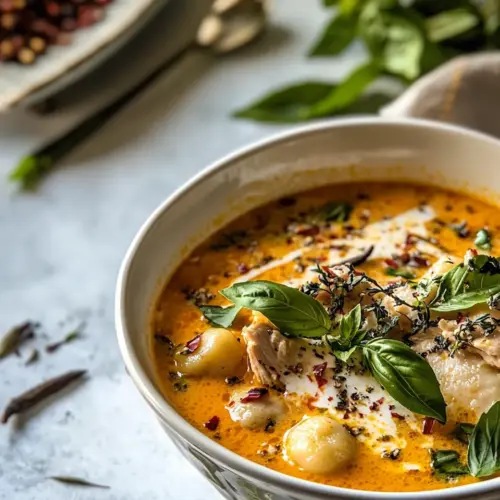
Marry Me Chicken Gnocchi Soup
Marry Me Chicken Gnocchi Soup is a creamy, comforting bowl with pillowy gnocchi, tender shredded chicken, and tangy sun dried tomatoes. Rich yet surprisingly easy, it makes a perfect easy weeknight dinner or special date night meal, with layers of garlic, tomato paste, and parmesan that keep each spoonful interesting.
Equipment
- Dutch Oven
- Two forks
- Whisk
- Knife
Ingredients
- 1/2 cup oil-packed sun-dried tomatoes, oil drained Packed in oil and drained, provides concentrated sweet-tart tomato flavor and tender texture to build the soup's savory base; chop or slice before adding to release infused oils and deepen the broth's complexity; also contributes a rich, slightly caramelized note that complements cream and cheese.
- 1 shallot, chopped Finely chopped to add a delicate, sweet oniony backbone that softens quickly when sautéed; sweats down to create aromatic depth without overpowering other flavors; pairs well with garlic and sun-dried tomatoes to form the flavor foundation.
- 4 cloves garlic, chopped Chopped and gently sautéed to release pungent, aromatic oils that brighten the overall profile; use early in cooking to mellow raw sharpness and infuse the oil with garlic essence; also enhances savory and herbal components in the soup.
- 2 tablespoons Italian seasoning Used as a dry herb blend to introduce Mediterranean herbaceousness, lending oregano, basil, thyme and rosemary notes; sprinkle in during sautéing to bloom the herbs and tie together tomato, chicken and cream components; helps create a cohesive Italian-inspired flavor.
- 1 teaspoon smoked paprika Smoked paprika adds warm, smoky sweetness and subtle color when stirred into the base; balances acidity from tomatoes and the richness of cream, enhancing savory depth; use sparingly to avoid overwhelming the dish with smokiness.
- chili flakes Added to taste to introduce heat and a lingering kick that lifts the creamy and tomato elements; sprinkle gradually and taste as you go to reach desired warmth; enhances overall flavor complexity without changing texture.
- 3 tablespoons tomato paste Tomato paste concentratedly deepens tomato richness and adds umami; caramelize briefly in the pan to remove rawness and to intensify sweetness, integrating with the sun-dried tomatoes and broth; acts as a thickening agent for the base.
- 1 pound chicken breasts or thighs Cooked and shredded or chopped to provide the primary protein and savory substance of the soup; choose breasts for leaner texture or thighs for more flavor and tenderness; poach or sauté in the broth so meat absorbs soup seasonings.
- salt and black pepper Used to season and balance flavors, enhancing savory elements and controlling taste intensity; salt brings out sweetness and umami, while black pepper adds mild bite and aromatic heat; adjust carefully after adding cream and cheese.
- 4 -6 cups broth Added as the cooking liquid and flavor carrier to create the soup's body and consistency; use between 4 to 6 cups depending on desired thickness, reserving more for a brothy soup or less for a creamier finish; also poaches the chicken and infuses flavor.
- 4 ounces cream cheese, at room temperature Softened to room temperature and stirred into the hot broth to create a velvety, tangy creaminess that stabilizes the soup; melts smoothly to thicken and add slight richness and acidity, marrying with cream and cheese for a silky texture.
- 1 cup heavy cream or whole milk Poured in to increase richness and create a lush, creamy mouthfeel; whole milk yields a lighter soup while heavy cream produces a decadent, silky texture; add gradually and heat gently to prevent curdling.
- 2 cups chopped spinach Chopped and stirred in to contribute bright color, vegetal freshness, and tender leafy texture; wilts quickly into the hot soup, adding nutrients and balancing richness with a green, slightly earthy element; complements cheese and tomato flavors.
- 1/2 cup grated parmesan Grated to introduce nutty, salty, umami-rich finish and to help thicken and bind the creamy soup; sprinkle in near the end so it melts smoothly into the broth, enhancing savory depth and providing a classic Italian cheese note.
- 1 pound fresh potato gnocchi Cooked according to package and added to provide pillowy, tender dumplings that make the soup hearty and comforting; fresh potato gnocchi absorb flavors and add substantial texture, making each spoonful satisfying and filling.
- fresh basil or parsley, for serving Chopped and used as a fresh herb garnish to brighten the finished soup and add fragrant, green notes; sprinkle just before serving to provide visual contrast and a lively, aromatic lift to the creamy, savory bowl.
Instructions
- Drain 3 tablespoons of oil from the sun-dried tomato jar into a large Dutch oven. Chop the sun-dried tomatoes and set aside. Set the pot over medium heat. Add the shallots, garlic, and Italian seasoning. Mix in the tomato paste. Season with chili flakes. Cook until the tomato paste thickens, about 5 minutes. Add the chicken and toss with the spices. Add 4 cups of broth. Season with salt and pepper. Simmer over medium heat for 20 minutes, until the chicken is cooked through. Shred using 2 forks. Whip the cream cheese up in a bowl, then add it to the soup with the milk. Stir in the spinach, sun-dried tomatoes, parmesan, and gnocchi. Cook until warmed throughout, about 5 minutes. If the soup is too thick, add additional broth. Serve the soup topped with parmesan and basil. Enjoy warm, preferably with a crusty piece of bread.: The aroma of that concentrated tomato oil is instantly inviting, rich and slightly roasted, and it creates an ideal fat base for sautéing. As the oil warms you may notice a fragrant, almost nutty scent coming off it—that signals a good flavor foundation. The oil carries flavor compounds from the sun dried tomatoes, so measuring out a little retains that essence without making the broth greasy. A common mistake is adding too much oil which leads to an overly slick mouthfeel; if that happens, skim a small amount off with a spoon. Using a Dutch oven ensures even heat distribution so the next aromatics don't scorch.
- Chop the sun dried tomatoes and set aside: When you chop the sun dried tomatoes finely, their texture changes from chewy chunks to small ribbons that disperse more evenly, releasing bursts of tang as you eat. The scent will lift and become more tomato forward once cut, and you can taste a concentrated sweetness along with an acidic twang. If pieces are left too large they can dominate a bite, so aim for uniform small pieces. A sharp knife makes cleaner cuts, and if the pieces are stubborn, trim edges and slice slowly to avoid tearing.
- Set the pot over medium heat: Bringing the pot to a steady medium heat prepares an even surface for sautéing the aromatics. You'll want the surface warm enough to sizzle but not so hot that the garlic scorches. At the right temperature you will hear a gentle sizzle when you add ingredients, which signals the Maillard reactions that build complexity. A typical error is heating too high, causing rapid browning and bitter notes; if you see smoke, reduce the heat and let the pan cool slightly before continuing.
- Add the shallots, garlic, and Italian seasoning: As the shallot and garlic hit the warm oil they will soften and release a sweet, savory fragrance that begins to fill your kitchen. The dried herb blend releases its volatile oils when warmed, adding an herbal lift. Stirring frequently helps the pieces soften evenly and prevents tiny bits from burning. If you notice any browning too quickly, lower the heat and stir; overcooked garlic produces a bitter taste that can be hard to mask later.
- Mix in the tomato paste: Cooking the tomato paste with the aromatics transforms it, deepening its color and giving it a sweet, slightly caramelized flavor. This step intensifies umami and removes any metallic or raw tomato edge. Stir constantly for a few minutes until the paste darkens, and you may sense a toasted tomato aroma. Avoid adding liquid too soon, as that prevents the paste from concentrating and caramelizing properly.
- Season with chili flakes: Adding chili flakes at this point allows their heat to bloom in the warm oil, distributing gently through the base. The flakes add a subtle peppery sting that balances the cream, and you can smell a faint warmth rising as they toast. Be cautious when adding them; too much can overshadow the other flavors. If the heat becomes too pronounced, a spoonful of dairy later will calm it down.
- Cook until the tomato paste thickens, about 5 minutes: As the paste cooks it will visibly pull away from the pan and darken, releasing a richer, more concentrated tomato scent. This thickening is a visual cue that the base is ready to accept liquids. The texture should be pasty and fragrant, not watery. Rushing this step leaves the paste underdeveloped and the final broth lacking depth, so be patient and keep stirring to avoid sticking.
- Add the chicken and toss with the spices: When you add the raw chicken , it should sizzle softly as it meets the flavored oil, sealing in juices and picking up the aromatic coating. Tossing the pieces makes sure each one is kissed with the tomato and herb mixture, which contributes to even flavor once they are shredded. Avoid overcrowding the pot which can trap steam and prevent proper browning; if necessary, sear in batches to maintain texture.
- Add 4 cups of broth: Pouring in the broth lifts all the browned bits from the bottom of the pot and turns them into savory liquid gold. The smell changes from toasted aromatics to a stew like richness as the broth simmers. If you prefer a looser soup, start with 6 cups instead. A common slip is adding cold broth straight from the fridge which can shock the pot, so try to use room temperature or warm broth for an even simmer.
- Season with salt and pepper: Adding salt and black pepper now helps the flavors integrate as the soup cooks. Salt amplifies the aromatic compounds and brings out the natural sweetness in the chicken and tomatoes, while pepper adds a sharp finish. Season lightly at first and adjust after simmering, since reduction concentrates saltiness. Over salting early on is hard to correct, so taste as you go and keep a cautious hand.
- Simmer over medium heat for 20 minutes, until the chicken is cooked through: As the pot simmers, the broth will develop a fuller body and the chicken will become tender enough to shred. You may notice gentle bubbling and an intensified aroma as the flavors meld. Check that the meat reaches a safe internal temperature and that juices run clear. A typical mistake is simmering too vigorously which can break down textures; keep a gentle simmer to retain the best mouthfeel.
- Shred using 2 forks: Shredding the cooked chicken with two forks produces irregular strands that soak up the broth and distribute evenly through the soup. The texture should be tender and moist, adding bite without being stringy. If the meat is tough, it may have been slightly overcooked; for future batches lower the simmer and check earlier. Reserve any larger pieces to shred finely so every spoonful has balanced amounts of meat.
- Whip the cream cheese up in a bowl, then add it to the soup with the milk: Whipping the cream cheese smooth before adding prevents lumps and creates a velvety emulsion when combined with the warm broth and milk . You should sense an immediate silkiness as the dairy incorporates, softening the tomato acid. If you add cold cream cheese in chunks it can clump, so always bring it to room temperature and blend with a whisk or fork until smooth.
- Stir in the spinach, sun dried tomatoes, parmesan, and gnocchi: As you stir these ingredients in, the soup evolves visually and texturally. The spinach will wilt and brighten the bowl, chopped sun dried tomatoes will rediscover their tang, grated parmesan will melt into savory pockets, and the gnocchi will plump up, adding pillow like bites. Add them gently and watch the gnocchi so they cook through without falling apart. Over stirring or letting them simmer too long can make them mushy.
- Cook until warmed throughout, about 5 minutes: In this short finishing stage, the aromas settle into a harmonious whole and the textures reach their ideal states. You want the gnocchi to be tender but intact, the greens vibrant, and the parmesan well incorporated. Listen for a low, steady simmer and smell the creamy tomato and herb notes come forward. A common error is overcooking which will soften the gnocchi too much and dull the bright greens, so time this closely.
- If the soup is too thick, add additional broth: Adjusting the consistency is about personal preference, and adding warm broth thins without diluting flavor as ice cold liquid would. Stir in a little at a time until the mouthfeel feels right on the spoon, aiming for a balance that coats and comforts. Too much added liquid can weaken the taste profile, so taste as you go and correct seasoning if needed after thinning.
- Serve the soup topped with parmesan and basil: A final scatter of grated parmesan and torn basil adds aromatic lift and textural contrast, sharpening the flavors and making the bowl look finished. The cheese melts slightly into the warm surface while the herbs release bright citrusy notes. Serve immediately for the best contrast between warm broth and fresh herbs. If left too long the herbs will wilt and lose their brightness, so plate and garnish just before bringing it to the table.
- Enjoy warm, preferably with a crusty piece of bread: Eating it warm lets the creamy texture and layered flavors sing, and that crusty bread is perfect for soaking up any remaining broth. The bread adds a crunchy counterpoint that I find essential for a fully satisfying meal. If you serve it too cold the fats can congeal and reduce the luxurious mouthfeel, so aim for warm bowls and hot bread right from the oven.
Notes
- Warm your dairy Before adding the cream cheese and milk, bring them to room temperature so they incorporate without clumping, producing a smooth, silky broth.
- Choose the right gnocchi Fresh potato gnocchi cook quickly and have a tender, pillow like texture; avoid pre cooked or dried varieties if you want the authentic mouthfeel.
- Control the heat Keep the pot at a gentle simmer when cooking the chicken and finishing the soup to preserve texture and prevent the dairy from separating.
- Adjust thickness with broth Start with 4 cups for a creamy finish, then add up to 6 cups gradually if you prefer a soupier consistency, tasting as you go for salt balance.
- Use quality broth A flavorful broth is the backbone of the soup; homemade or a good store bought option will noticeably improve the final result.
- Garnish last Add torn basil and grated parmesan right before serving to preserve their aroma and texture, giving each bowl a fresh finish.