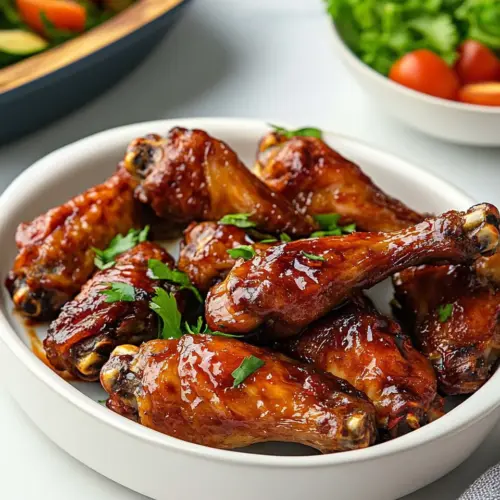
Marinated Chicken Wings
Marinated Chicken Wings are sticky, savory, and slightly sweet with a tender inside and glossy, caramelized exterior. This easy weeknight dinner uses simple pantry ingredients to create bold flavor, making it perfect for casual gatherings or family meals. The marinade melds into the wings when left overnight, delivering juicy meat and irresistible browning, so you will want to make it again and again.
Equipment
- Mixing Bowl
- Whisk
- Resealable bag or container
- Baking Sheet
- Aluminum Foil
- Probe thermometer
Ingredients
- 1 cup water Provide moisture and dilute the marinade so flavors penetrate evenly; helps distribute salt and sweet components and keeps chicken wings tender during marination. Also assists in creating sufficient liquid volume to submerge wings for consistent flavor absorption.
- 1 cup low-sodium soy sauce Add savory umami depth and salty balance to the marinade; low-sodium soy sauce seasons without overpowering, allowing other sweet and acidic flavors to shine. Also contributes color and a subtle fermented complexity that enhances cooked wings.
- 1/2 cup raw honey Contribute natural sweetness and a sticky glaze when cooked; raw honey helps caramelize the wing surface and balances salty and acidic elements in the marinade. Additionally supplies a slight floral note and viscosity that helps herbs and spices adhere.
- 1/2 cup unsweetened pineapple juice Provide a mild fruity acidity and tropical brightness to tenderize the meat; unsweetened pineapple juice contains enzymes that help break down proteins for a more tender texture. Also adds a fresh flavor note that complements sweet and savory components.
- 1/4 cup olive oil Supply healthy fat to carry flavor and promote browning during cooking; olive oil helps coat wings for even heat transfer and improves mouthfeel. It also helps emulsify the marinade so spices and liquids cling properly to the chicken.
- 1 teaspoon garlic powder Deliver concentrated savory garlic flavor in dry form for convenience and shelf stability; garlic powder disperses evenly through the marinade and imparts aromatic depth. It enhances overall umami and pairs well with sweet and acidic ingredients.
- 1 teaspoon ground ginger Offer warm, slightly peppery aromatic notes to the marinade; ground ginger adds zing and pairs with garlic and pineapple for a balanced Asian-inspired profile. It also contributes mild tenderizing properties and a bright finish when cooked.
- 3 -4 pounds chicken wings cleaned and drained Act as the primary protein to receive the marinade and provide the main body of the dish; cleaned and drained wings absorb the combined flavors and develop crisp, caramelized skin when cooked. Weight range ensures proper portioning and cooking time for consistent results.
Instructions
- In a large mixing bowl, whisk together water, low-sodium soy sauce, raw honey, unsweetened pineapple juice, olive oil, garlic powder, and ground ginger until well combined.: You will notice a glossy, slightly syrupy marinade forming, with sweet floral notes from the raw honey and a warm, spicy aroma from the ground ginger . Whisking incorporates air and ensures the oil temporarily emulsifies into the soy and juice, so every chicken piece gets an even coat. The fizz of air is subtle, and the liquid should glide smoothly off a whisk when lifted. Why this matters, the even mix prevents pockets of overly salty or overly sweet marinade clinging to one area, producing uniform caramelization during baking. Common mistake to avoid, rushing this step can leave the oil separated which makes coating uneven, so take an extra 20 to 30 seconds to whisk until homogeneous.
- Place the chicken wings in a large resealable bag or container and pour the marinade over them, ensuring they are fully coated. Seal and refrigerate at least 6 hours or overnight to marinate.: You will feel the cool slickness of the marinade as you toss the wings, and you should hear a soft slosh as the liquid moves around the pieces. The visual cue is that every surface of the chicken turns glossy and slightly darker as the soy absorbs. This matters because full contact ensures the flavors penetrate into the skin and meat, especially if you can move the wings around a couple of times during the first hour of marinating. Troubleshooting tip, overcrowding the bag can trap air and prevent full coating, so use a bag that allows wings to lie flat and rotate freely.
- Preheat the oven to 350 degrees Fahrenheit. Line a baking sheet with aluminum foil and arrange the marinated wings in a single layer.: As the wings rest, you should start to notice a gentle sweet and savory aroma from the fridge, a sign the marinade is soaking in. Time allows the unsweetened pineapple juice to tenderize fibers while the soy infiltrates with salt and umami. This slow exchange is what transforms texture and depth of flavor, giving you moist interior meat. A common pitfall is marinating too briefly, which leaves the flavor only on the surface. For best results, aim for overnight, but six hours is a minimum to get meaningful penetration.
- Bake the wings in the preheated oven for 60-90 minutes, or until they are golden brown and the internal temperature reaches 165 degrees Fahrenheit.: When the oven reaches temperature you might notice the faint warm hum and a reliably steady heat that will coax the sugars into caramelizing slowly. Preheating ensures the wings begin cooking immediately and evenly, preventing a long warm up that can dry outer edges before the inside cooks through. Why this matters, consistent oven heat promotes even rendering of fat under the skin, helping the surface become glossy rather than greasy. Mistake to avoid, placing wings into a not fully preheated oven can lead to uneven browning and longer total bake time.
- Line a baking sheet with aluminum foil and arrange the marinated wings in a single layer: Lining simplifies cleanup and promotes a reflective surface that distributes heat. Arrange each chicken wing with space around it so air circulates and moisture can evaporate rather than steam. The visual cue is that the wings sit apart and are not touching; you should hear a faint clack as they move into position. This spacing helps the skin dehydrate slightly and develop that desirable caramelized finish. Common mistake to avoid, crowding will steam the wings and prevent proper browning.
- Bake the wings in the preheated oven for 60 to 90 minutes or until they are golden brown and the internal temperature reaches 165 degrees Fahrenheit: As they bake, you will hear a gentle sizzle and smell a developing sweet and savory aroma as the honey and pineapple sugars concentrate and the soy sauce darkens the surface. Visually, the skin will move from pale to a glossy amber, then deeper golden brown, and tiny bubbles of rendered fat might appear around joints. Why this technique matters, the longer, lower bake time allows connective tissue to break down slowly, yielding tender meat that pulls away from the bone, while the sugars caramelize without burning. Watch the internal temperature, and use a probe to check the thickest part near a joint for 165 degrees Fahrenheit to ensure safety. Troubleshooting, if the wings brown too quickly on top before the inside reaches temperature, tent loosely with foil to prevent overbrowning and finish cooking through.
Notes
- Use light soy if low sodium is not available — If you cannot find low sodium soy sauce, use regular light soy sauce but reduce added salt in any other part of the menu to keep the dish balanced.
- Swap olive oil for neutral oil — If you prefer a less pronounced oil flavor, avocado oil or vegetable oil will carry the marinade without altering the sweet and savory interplay.
- Shorter marination in a pinch — While overnight is best, marinating for at least six hours will still infuse noticeable flavor and tenderize the chicken.
- Control sweetness easily — If you want less sweetness, reduce the raw honey by a quarter cup and taste the marinade before adding the chicken.
- Make ahead the night before — Marinate and arrange wings on the sheet, then cover and refrigerate; bring to room temperature briefly before baking for more even cooking.
- Tent if overbrowning occurs — If the exterior darkens too fast, loosely tent with foil to allow the inside to reach the correct temperature without burning the glaze.