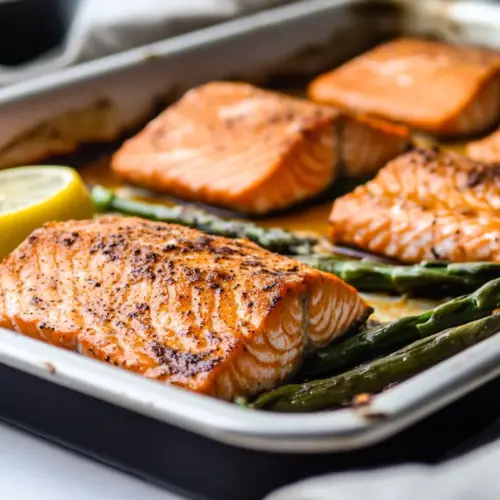
Maple Salmon Sheet Pan Dinner
Maple Salmon Sheet Pan Dinner blends sweet, savory, and roasted textures into an easy weeknight dinner. Flaky salmon glazed with maple syrup pairs with caramelized sweet potato and bright asparagus for a balanced, flavorful plate. This simple oven method keeps cleanup minimal and delivers a restaurant worthy meal that is quick enough for busy evenings, and satisfying enough to make on purpose.
Equipment
- Baking Sheet
- Aluminum Foil
- Mandoline or sharp knife
Ingredients
- 1 large sweet potato sliced thin Provide a sweet, earthy base when roasted that becomes tender and caramelized; slices cook through quickly and add body and color to the sheet pan dinner. Pair well with salmon for contrast in texture and naturally absorb savory and sweet glazes during roasting.
- 1 bunch asparagus Add bright, crisp green notes and a tender-crisp texture when roasted quickly; stalks finish in minutes and complement both sweet potato and salmon. Trim and arrange around protein to create even cooking and a visually appealing plate.
- 2 pieces fresh salmon Deliver rich, flaky protein with a buttery texture that anchors the meal; fillets absorb marinades and roast evenly on a sheet pan. Season lightly before baking to let natural flavor shine and pair well with maple glaze.
- Garlic powder to taste Provide an aromatic, savory boost with concentrated umami-like notes when sprinkled sparingly; powder blends into oil and helps highlight roasted flavors. Use to season sweet potato and salmon for consistent mild garlic presence without overpowering.
- Salt & pepper to taste Enhance overall flavor balance and seasoning control by adding necessary salinity and a touch of heat contrast; pinch and grind to taste for both vegetables and fish. Apply salt and pepper before roasting to help draw out moisture and concentrate flavors.
- 2 tablespoons olive oil Bind seasonings and help promote even browning by coating vegetables and salmon lightly; oil prevents sticking and encourages caramelization. Choose extra virgin or light olive oil depending on desired flavor intensity.
- 1 -2 tablespoons maple syrup Introduce sweet, glossy glaze characteristics that caramelize gently on salmon and sweet potato; drizzle within the instructed range to avoid overpowering. Combine with oil and seasonings to create a balanced finishing sauce during roasting.
- Lemon wedges for serving (optional) Provide bright, acidic finishing touches that cut through richness when squeezed over serving plates; wedges allow diners to customize brightness. Offer optional lemon for a fresh lift that complements maple and salmon flavors.
Instructions
- Preheat oven to 425 F, and move the rack to the top third of the oven. Line a baking sheet with foil for easy clean-up.: The kitchen will quickly warm and you may smell the residual oils if the oven was recently used, which is normal. Heating to 425 F gives the sweet potato a chance to brown on the edges while the salmon roasts through in the second stage. Make sure the rack is in the top third so the heat reaches the top of the pan and produces crisping rather than steaming. A common mistake is putting the rack too low, which can lead to uneven browning, so double check placement before you slide the sheet in.
- Using a mandoline, slice the sweet potato into even slices (I used the 4 mm setting). Snap or cut the ends off the asparagus.: Foil catches drips and makes cleanup simple, and you may notice some bubbling where the glaze hits the foil as it caramelizes, that is a good sign. Lining also prevents sticking and helps reflect heat under the food for more even roasting. Press the foil so it lies flat, and avoid folding it into tall ridges that could tip food. If you skip lining, be prepared for more scrubbing and potential stuck sugary bits from the maple syrup .
- Place the sweet potato slices, asparagus, and salmon on the baking sheet. Coat everything with the garlic powder, salt & pepper, and olive oil. Add the salmon and asparagus to a plate and set aside. Spread the sweet potato slices as evenly as possible (some overlap is ok) on the baking sheet. Bake for 15 minutes.: Evenly sliced sweet potato cooks through at the same rate, and with a mandoline you get uniform thickness which encourages consistent browning. You should hear a clean slicing sound as each round falls away, and the slices should feel flexible but not floppy. If slices are uneven, some may char while others stay firm, so take a moment to adjust thickness. A common pitfall is pushing too fast, which risks uneven cuts or injury, so work steadily and use the guard.
- Add the salmon and the asparagus to the baking sheet (I added the asparagus on top of the sweet potato slices and cleared some space for the salmon). Coat the salmon with a tablespoon of maple syrup. If desired, drizzle a second tablespoon of maple syrup across the sweet potatoes and/or asparagus as well. Bake for an additional 15 minutes, or until salmon is cooked. Serve immediately with some lemon juice squeezed over the fish if desired.: Removing the woody ends of the asparagus ensures every bite is tender. The snaps often break at the natural transition point, and you will see the pale, fibrous section separate from the tender green. If the stems are thick, you might see a slightly more fibrous texture even after roasting, which is why trimming helps. Avoid leaving the woody ends on the pan, they will remain tough and detract from the eating experience.
- Place the sweet potato slices, asparagus, and salmon on the baking sheet: When you arrange everything, allow a little space between pieces so hot air can circulate, you will notice the edges of the sweet potato begin to brown first. Toss the vegetables with garlic powder , salt , pepper , and olive oil so every surface gleams lightly, which promotes caramelization. Set the seasoned salmon and asparagus aside briefly; overcrowding the sheet is a frequent error that leads to steaming rather than roasting, so space things thoughtfully.
- Spread the sweet potato slices as evenly as possible on the baking sheet: Some overlap is okay, but aim for mostly single layer so slices get direct heat and crisp at the edges. You should hear a faint sizzle as the hot sheet meets the oil on the potatoes once inside the oven, and within minutes the aroma of roasting will intensify. Crowded layers trap moisture, which keeps them soft instead of developing golden edges, so rearrange if needed before baking.
- Bake for 15 minutes: During this first bake the sweet potato will begin to soften and develop brown edges, you may notice gentle bubbling where oils and sugars concentrate. This partial roast gives dense vegetables a head start so the salmon does not overcook later. Resist the urge to open the oven repeatedly, as heat loss prolongs cooking and can prevent proper browning; one quick peek is fine, but avoid lingering with the door wide open.
- Add the salmon and the asparagus to the baking sheet: Position the asparagus and salmon so they have room and the salmon sits on a cleared space to cook evenly. I often layer the asparagus across the potatoes to let it roast in the rising steam a bit, then shift it if it is steaming instead of crisping. If the salmon fillets are thicker on one end, place them with the thicker side toward the hotter part of the oven or allow extra time at the end to ensure even doneness. Avoid piling the asparagus directly on top of the salmon, which can prevent the fish from browning.
- Coat the salmon with a tablespoon of maple syrup: Brushing maple syrup onto the salmon creates a glossy glaze that caramelizes in the oven, giving a sweet crust that contrasts the fish's tender interior. You might hear a light hiss as the syrup hits the hot metal, and visually the glaze will darken as it cooks. One common mistake is using too much syrup, which can burn; use measured amounts and keep an eye on color as it roasts.
- If desired, drizzle a second tablespoon of maple syrup across the sweet potatoes and or asparagus as well: An extra drizzle deepens sweetness on the vegetables and encourages sticky, browned bits to form, adding texture. The syrup will mingle with the olive oil and seasonings, creating pockets of intensified flavor. Take care with distribution, as pooled syrup can burn; spread it lightly and consider moving pieces mid cook if you see hot spots developing.
- Bake for an additional 15 minutes, or until salmon is cooked: In this final stage the salmon will transform from translucent to opaque and flake easily with a fork, while the edges of the sweet potato will be golden and the tips of the asparagus may show char. You should hear a quiet pop as juices concentrate, and the maple may darken to a nutty hue. Overcooking is the usual error here, so check the fish at the lower end of the time window and rely on visual flake and internal texture rather than strict timing alone.
- Serve immediately with some lemon juice squeezed over the fish if desired: Fresh lemon brightens the entire plate, cutting through the richness of the salmon and balancing the maple syrup . The citrus aroma adds a lively top note, and a squeeze at the table gives you control over acidity. Avoid adding lemon too early, as the acid can change texture if left to sit, so keep wedges aside until serving for the best result.
Notes
- Use one tablespoon of maple syrup for a lighter glaze, this gives a subtle sweetness that enhances the natural flavor of the salmon without becoming the dominant note. It is great if you prefer a less sweet finish.
- Brush oil onto the sweet potato before seasoning, which helps the garlic powder, salt, and pepper cling and promotes even browning along the edges for contrast in texture.
- Arrange thicker sweet potato slices toward the outer edge of the pan, as the rim tends to get slightly hotter, helping denser pieces cook through without overcooking the salmon.
- Pat the salmon dry with a paper towel before adding syrup, this step ensures a better sear and prevents the glaze from sliding off during baking.
- Place asparagus tips away from direct heat if you prefer them tender rather than charred, moving them slightly toward the center of the sheet can shield them from the oven's hottest spot.