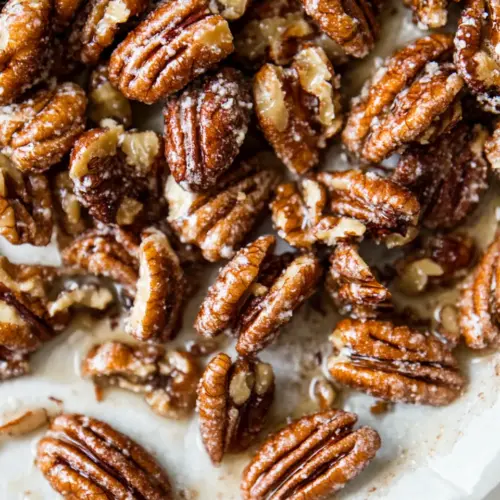
Maple Pecans
Maple Pecans are a crunchy, sweet snack with buttery depth and pure maple brightness. These easy to make glazed nuts offer a warm, caramel aroma and a satisfying snap, perfect for gifting or snacking. They come together quickly, making them ideal for an easy weeknight treat or a last minute hostess gift. Try them for a cozy fall snack that feels special.
Equipment
- Baking Sheet
- Parchment paper or Silpat
- Microwave-safe Bowl
Ingredients
- 2 cups pecan halves Toast gently to deepen flavor and bring out natural oils before coating with maple glaze; provides crunch and visual appeal in the finished snack. Helps carry and balance sweet and buttery coatings while adding textural contrast to each bite.
- 2 tablespoons butter Melt slowly to create a smooth, rich base that binds sugar and maple syrup into a glossy coating for the pecans. Contributes creamy mouthfeel and enhances overall richness without overpowering the nutty profile.
- 2 tablespoons (packed) brown sugar Dissolve into the butter and maple syrup mixture to supply caramel-like sweetness and a hint of molasses depth; helps the glaze adhere to the nut surfaces. Packed brown sugar also adds moisture which prevents the coating from becoming too dry or brittle.
- 1 teaspoon pure vanilla extract Add sparingly to brighten and round out the sweet components with warm, aromatic notes; enhances overall flavor complexity. Pure vanilla helps amplify the perception of sweetness and complements the maple and brown sugar layers.
- 3 tablespoons pure maple syrup Stir in as the primary sweetener and flavor star, providing distinct maple aroma and syrupy viscosity that helps create a shiny glaze. Pure maple syrup contributes nuanced sweetness and characteristic woody, caramelized notes that define the recipe.
- Pinch of salt Sprinkle minimally to balance sweetness and enhance other flavors through subtle contrast; helps prevent the final product from tasting cloying. A pinch of salt also intensifies the nutty and maple notes while smoothing overall flavor.
Instructions
- Preheat oven to 400 F and move the rack to the middle position. Line a baking sheet with parchment paper or aSilpat non-stick mat.: Heat will create an immediate toasting reaction and a deep, nutty aroma as the sugars caramelize, so you should notice warm, toasty notes soon after the tray goes in. The visual cue is a slowly deepening color on the nut edges, not a rapid darkening. If your oven runs hot, rotate the tray earlier because quick browning can mean burnt edges. Avoid skipping the liner because the glaze will stick and make cleanup and even cooking harder.
- Add the butter and brown sugar to a microwave-safe bowl and melt the butter. You can do this step on the stove too if you prefer. Give it a good stir.: The bowl will smell rich and caramel like as the butter and brown sugar combine, and the mixture should look glossy and free of large sugar clumps. The melt helps the sugar begin dissolving so the glaze will be smooth, and the butter prevents the sugars from drying into a grainy mess. One mistake is overheating, which can separate the fat; if that happens, let it cool slightly and whisk until cohesive.
- Add the vanilla extract, maple syrup, and salt to the bowl. Continue to stir it until the sugar has pretty much dissolved (ok if it's not perfect).: The aroma will lift instantly when you add the vanilla extract and pure maple syrup , producing a warm floral-maple scent. The mixture should thin out as the syrup blends in, creating a pourable glaze. It does not need to be perfectly smooth, because oven heat will finish dissolving the remaining granules. A common misstep is stirring too aggressively and creating froth, which can burn faster in the oven.
- Add the pecans to the bowl and mix until they're coated.: When the pecan halves meet the glaze you will see each nut become slick and glossy, and the kitchen will fill with toasted maple notes. Coating them thoroughly ensures every piece gains a crunchy shell when roasted, and it prevents clumping on the baking sheet. If you pile them too closely, they may steam instead of toast, so spread them out promptly after coating.
- Spread the pecans out in an even layer on the lined baking sheet and bake for 8 minutes. If you're concerned about them cooking evenly on both sides, stir them halfway. I don't think it's necessary and skip this step, however.: As they roast the sugars will bubble slightly and the pecans will shift from pale to a warm golden brown, releasing a toasty fragrance and a low sizzling sound as the glaze caramelizes. The 8 minute timing gives caramelization without burning, but ovens vary, so check for even color. Avoid leaving them unattended because sugars can go from golden to bitter quickly.
- Once they're done roasting, let them cool for a few minutes, then add them to a ZipLoc or sealed container to stay fresh for a few days.: Cooling lets the glaze set into a crisp shell, and during this brief rest you will hear the snap of the coating firming. Transfer to an airtight container only after they are cool, otherwise trapped steam will soften the glaze and ruin the crunch. A frequent mistake is sealing them too soon, which produces sticky, rather than crisp, nuts.
Notes
- Storage tip Store fully cooled Maple Pecans in an airtight container at room temperature for up to four days to keep them crisp.
- Sweetness control If you prefer a more subtle maple note, reduce the pure maple syrup by half a tablespoon and increase the brown sugar slightly to maintain texture.
- Even coating Toss the pecans thoroughly in the glaze so each piece has a thin, even layer which promotes consistent caramelization.
- Sheet choice Use a rimmed baking sheet so the sugary glaze cannot drip onto the oven floor and smoke, and line it for easier cleanup.
- Batch scaling This recipe scales well; when increasing amounts, spread the nuts across multiple trays so they roast evenly instead of steaming.