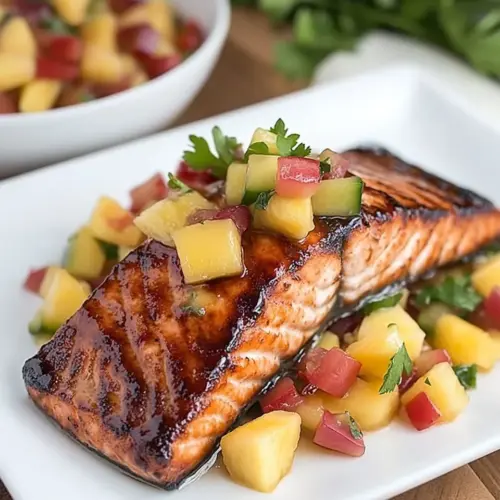
Maple Glazed Salmon with Mango Pineapple Salsa
Maple Glazed Salmon with Mango Pineapple Salsa is a vibrant, easy weeknight dinner that pairs sticky sweet glaze and umami soy with a bright tropical salsa. The dish delivers crispy skin, tender flaky salmon, and juicy fruit contrast, making it both elegant and approachable. Perfect for summer gatherings, this recipe is quick to prepare and impressive to serve.
Equipment
- Baking Dish
- Broiler or oven with broiler setting
- Spoon
Ingredients
- 4 6-ounce salmon fillets, skin on Seasoned and portioned as main protein, provides rich, flaky texture and healthy omega-3 fats; skin-on helps protect flesh during cooking and crisps under high heat for added contrast.
- 1/4 cup pure maple syrup Sweet and viscous glaze component that balances savory elements, caramelizes on the fish to create a glossy finish; adjust quantity for desired sweetness and sticky consistency.
- 2 tablespoons soy sauce Salty and umami-rich liquid that deepens savory profile, helps balance the maple sweetness and adds a subtle savory backbone; also contributes to a slightly darker glaze color when reduced.
- Large pinch of ground ginger or to taste Warm and aromatic spice that brightens the overall flavor and adds gentle heat; ground ginger complements both maple and soy while enhancing the salsa's tropical notes when used judiciously.
Instructions
- Mix maple syrup, soy, garlic, and ginger in a baking dish. Dip each side of the salmon fillets in the marinade, then let sit, skin side down, for about 20 minutes.: The air fills with a sweet, savory perfume as the syrup and soy sauce mingle, producing a glossy marinade that will cling to the salmon . I notice the syrup loosening and shining, and that visual cue tells me the coating will caramelize. Stir until the mixture looks uniform and slightly syrupy, the soy dispersed into the maple. If your marinade seems separated, a quick whisk fixes it. Common mistake to avoid is using too hot a dish early on, which can start cooking small bits of garlic and blunt the fresh aroma.
- Turn on the broiler. Spoon a bit more of the marinade over the salmon then place 4-5 inches under the broiler element.: As you submerge the fillets, the marinade slicks the surface and the flesh glows. Letting them rest skin side down allows the flavors to penetrate while protecting the delicate flesh from too much direct contact with the bowl. You should feel the fillet become tacky to the touch after marinating, signaling good adhesion for caramelization. A frequent error is marinating too long with acidic ingredients, but this short sit time keeps texture intact. If the fillets feel overly soft, reduce marinating time next round.
- Cook to your desired doneness, about 10-15 minutes, depending on the thickness of the fillets.: The broiler provides intense top heat that quickly caramelizes the glaze and crisps the skin. When the broiler element heats, it radiates a bright, immediate heat, causing sugars in the glaze to bubble and brown. Position your oven rack 4 to 5 inches from the element to get that rapid caramelization without incineration. One hazard is leaving the door open while broiling, which can alter cooking intensity and produce uneven browning, so keep the oven configured as recommended.
- Remove from oven and spoon some of the syrupy marinade from the pan over the salmon before serving.: Adding an extra spoonful creates a fresh glossy layer that will bubble and form a sticky crust. The surface should start to hiss slightly as moisture evaporates and sugars concentrate, creating a sweet, lacquered finish. Watch for the glaze to darken to a deep amber, rather than black, which indicates burning. If you see smoke early, slide the tray lower to reduce the direct heat impact.
- Cook to your desired doneness, about 10-15 minutes, depending on the thickness of the fillets: As it cooks, listen for a gentle sizzle and watch the flesh change from translucent to opaque, flaking easily with a fork at the thickest part. The glazed edges should be glossy with a few caramelly spots. Use the visual of a slightly firm center and small beads of juice on top as cues that the fillet is done. Overcooking dries the fish and makes the glaze cloying, so check early and often, especially if fillets are thin.
- Remove from oven and spoon some of the syrupy marinade from the pan over the salmon before serving: Immediately after cooking, the residual heat will keep melting the glaze into a shiny coating, and spooning the syrup over the fillets deepens color and flavor. The aroma will be warm and inviting, with maple and ginger notes prominent. Pour gently so the skin remains crisp in places. A common slip is letting the fillets sit too long before saucing, which cools and sets the glaze; sauce them right away for the best sheen and taste.
Notes
- Grill instead of broil Use a hot grill to achieve smoky char marks while maintaining the sticky glaze, watching for flare ups from the syrup.
- Make it milder Reduce the ground ginger if you prefer a gentler spice profile, or add it sparingly to the marinade.
- Double the salsa If you love freshness, double the mango pineapple salsa and serve extra on the side so guests can spoon more over the fish.
- Pan sear for crisp skin Start skin side down in a hot skillet to render skin fat and lock in texture before finishing under the broiler.
- Advance prep You can prepare the salsa up to a day ahead and keep it chilled, which makes the day of cooking relaxed and organized.