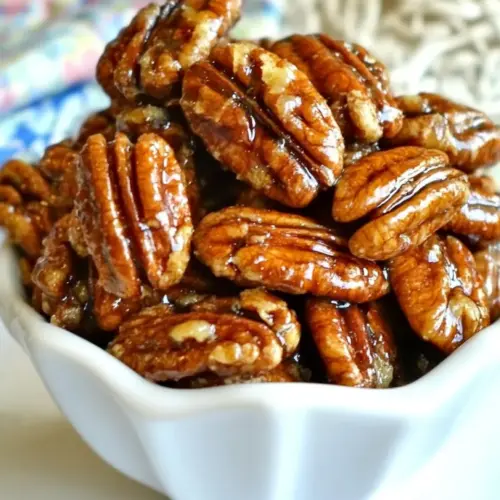
Maple Glazed Pecans
Maple Glazed Pecans are a quick, crispy treat that marries sticky pure maple syrup with toasty pecan halves for an irresistible snack. This easy small batch recipe creates glossy, caramelized nuts perfect for gifting, salad toppers, or snacking. Make them when you want a buttery, crunchy bite that tastes like fall and is simple enough for weeknight prep.
Equipment
- Skillet
- Baking Sheet
- Parchment Paper
- Spatula
Ingredients
- 1/3 cup pure maple syrup Sweeten and coat the pecans with natural maple syrup, creating a glossy glaze that caramelizes slightly when baked. Adds rich, complex sweetness and a hint of woodsy flavor that complements toasted nuts.
- 1/2 teaspoon vanilla extract Enhance and round out flavors by providing warm, floral notes that deepen the glaze profile. Helps balance sweetness while adding a subtle aromatic lift to the finished pecans.
- 1/8 teaspoon fine sea salt Season and balance the sweetness by adding a touch of fine sea salt to elevate overall flavor. Helps contrast the maple syrup and intensify the nutty richness without becoming salty.
- 2 cups pecan halves Provide crunchy texture and rich, buttery flavor as the main component of the snack. Pecans absorb the glaze and toast beautifully, becoming the star of the finished maple-coated treat.
Instructions
- Line a baking sheet with parchment paper and set aside.: The instant you spread the prepared pecans onto the lined sheet you will notice the glossy glaze beginning to harden as it cools, creating that desirable crisp exterior. The cool surface helps stop carryover cooking and prevents sticking, so the nuts separate easily once set. A common mistake is skipping the parchment and losing pieces to the pan, which can make cleanup difficult and damage the coating. If your sheet is warm, let it cool to avoid premature melting of the glaze on contact.
- In a pre-heated skillet (medium heat) stir together maple syrup, vanilla and sea salt. Fold in pecans coating all the pieces with the syrup.: As the mixture warms you will smell the sweet, woody notes of the maple syrup rising and a soft vanilla perfume joining in. Stirring encourages even heating and prevents hot spots that would burn the sugars. Using medium heat gives you time to control the caramelization process so the syrup thickens without scorching. One frequent error is using too high a flame, which causes the syrup to burn and tastes bitter. If the aroma turns acrid, remove the pan from heat immediately and start over with fresh syrup.
- Continue to cook until the syrup caramelizes (constantly stir so it doesn’t burn). This will take approximately 5 minutes.: When you add the pecans , they should be at room temperature so the glaze adheres evenly rather than shocking the syrup into uneven crystallization. Use a wooden spoon or spatula to fold gently, making sure every half is slick with the glossy mixture. You will see the nuts darken slightly as they absorb the syrup and begin to glisten. Mistakes here include crowding the pan, which prevents even coating, so work in a single layer if necessary.
- Place on prepared baking sheet and let cool. Store in an airtight container.: As the syrup reduces you will hear a faint change in the sound, a soft quieting from simmer to a lighter sizzle, and the aroma will shift from sugary to a deeper, toasty caramel. Keep the pan moving, scraping the bottom to avoid sticky burnt bits, because any burned sugar will ruin the batch. This takes approximately 5 minutes, and you can tell it is ready when the syrup clings and forms a slightly thicker coating that no longer looks glossy liquid but a tacky glaze. A common pitfall is stepping away while it cooks, which risks burning. If you catch dark flecks or bitter smell, discard and clean the pan before trying again.
- Place on prepared baking sheet and let cool.: Transfer the glazed pecans onto the parchment in a single layer so air can circulate and the glaze sets into a crisp shell. As they cool you will hear a faint snap when you test one, and the surface will matt slightly from glossy to firm. Cooling on the sheet prevents the pieces from sticking together, and spreading them apart helps them set uniformly. A mistake to avoid is piling them while hot, which traps steam and leads to soft spots. Let them cool completely before transferring to storage.
- Store in an airtight container.: Once fully cooled, the nuts will keep their crunch for days in a sealed container, and the aroma will remain vivid. Store at room temperature away from direct heat or light; refrigeration can introduce moisture and soften the glaze. A common error is sealing them while still warm, which causes condensation and loss of crispness. For gifting, choose small jars that protect the texture and showcase the glossy finish.
Notes
- Adjust sweetness: If you prefer a less sugary coating, reduce the maple syrup slightly and cook a touch longer to concentrate the flavor, tasting carefully to avoid burning.
- Boost aroma: Increase the vanilla extract by a small fraction for a more perfumed glaze, adding it early enough to infuse but not so long that the aroma dissipates.
- Increase saltiness: Add a few extra grains of sea salt if your syrup is very sweet, sprinkling them at the end so the crystals remain lively against the toasted pecans.
- Toast first for extra crunch: Lightly toast the pecans alone for a few minutes before glazing to deepen the nuttiness, but watch closely to avoid turning them bitter.
- Make ahead storage: Cool completely and store in an airtight container at room temperature to retain crunch for several days; avoid refrigeration which can introduce moisture.