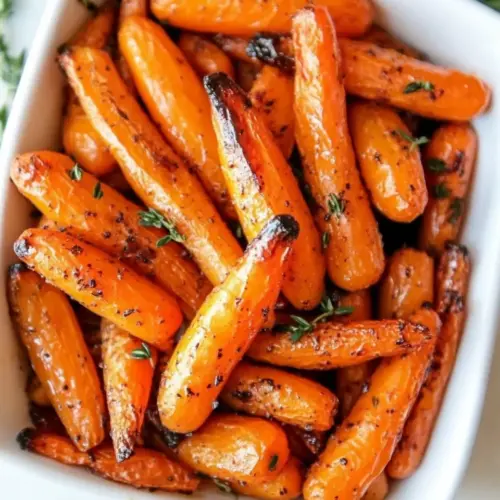
Maple Dijon Roasted Carrots
Maple Dijon Roasted Carrots are tender, slightly caramelized carrots glazed in buttery maple syrup and grainy dijon mustard. This easy side offers sweet, tangy, and savory notes and fits perfectly into an easy weeknight dinner or a special fall dinner. Try them for their sticky edges and bright finish that make every bite irresistible.
Equipment
- Oven
- Baking Sheet
- Parchment Paper
- Mixing Bowl
Ingredients
- 1 lb (500 g) baby carrots Provide small, tender carrots that roast quickly and develop sweet caramelized edges; use as the vegetable base for the dish and ensure even cooking by arranging in a single layer.
- 2 tablespoons melted butter Add rich, nutty flavor and help the carrots brown; melt before tossing to evenly coat and create a glossy finish during roasting.
- 3 tablespoons maple syrup Deliver sweetness and a hint of maple aroma that balances savory notes; drizzle over carrots to create a sticky glaze as it caramelizes in the oven.
- 1 tablespoon grainy dijon mustard Contribute tangy, savory depth with a coarse texture that helps the glaze cling; whisk with maple syrup and butter to form a balanced, flavorful coating.
- salt Season to taste and enhance the natural sweetness of the carrots; sprinkle sparingly and adjust at the end to avoid over-salting.
- ground black pepper Provide warm, pungent heat that complements the sweetness and adds subtle complexity; grind freshly for best aroma and flavor distribution.
- 2 teaspoons finely chopped parsley leaves Brighten the finished dish with fresh herbaceousness and a pop of color; sprinkle finely chopped leaves just before serving for a fresh contrast.
Instructions
- Preheat the oven to 400°F (207°C).: You will notice a warm, dry heat filling the oven and a faint metallic hum as it comes to temperature. Preheating matters because a hot oven jump starts the caramelization of the carrots , creating those golden edges we want. If you skip preheating the carrots will cook more slowly and steam instead of roasting, leading to softer, less flavorful results. A common mistake is turning the oven on too low, which prevents proper browning, so wait until the oven signals it has reached the target temperature.
- Toss the carrots with the melted butter, maple syrup, Dijon mustard, a generous pinch of salt, and ground black pepper, ensuring each carrot is well coated. Transfer the carrots to a baking sheet lined with parchment paper, spreading them out in a single, even layer.: At first, you will see a glossy sheen as the butter and maple syrup bind together; the aroma will be sweet with a buttery undertone and a hint of mustard pungency. Coating thoroughly ensures every bite gets both caramelization and seasoning. If some carrots are left dry they will roast unevenly, so use a bowl or a large baking sheet to mix well. One trap is overmixing aggressively which can bruise the carrots ; gentle tossing is the key.
- Roast for about 25-30 minutes, or until the carrots are fork-tender and completely cooked through.: When you spread the carrots in one layer, you will hear a light clink as they settle on the tray, and you'll see the glaze sitting on each surface. The single layer promotes airflow and even browning, preventing steaming. Avoid crowding because crowded carrots trap moisture and produce limp texture rather than caramelized edges. A frequent misstep is piling them up; use two trays if necessary to keep space between pieces.
- Roast for about 25 to 30 minutes, or until the carrots are fork tender and completely cooked through.: As they roast you will smell sweet maple and browned butter, and visually the carrots will turn glossy, deepen in color, and develop slightly darkened tips where sugars have caramelized. The fork tender test is tactile; a fork should slide in with slight resistance, not mushy collapse. This timing brings out natural sweetness while preserving texture. Watch closely near the end because sugars can move quickly from perfect caramel to burnt. If you see blackened spots, remove the tray immediately to avoid bitterness.
Notes
- Use room temperature butter to help the glaze emulsify quickly, so the maple syrup and grainy dijon mustard coat the carrots evenly without separating.
- Don t overcrowd the pan, because airflow is crucial for browning; if the tray is packed the carrots will steam rather than roast, resulting in a softer, less caramelized finish.
- Watch the last five minutes since the sugars can go from perfect to burnt fast; I stay nearby during this window and check every few minutes for deep golden edges.
- Reserve a little glaze before roasting if you want to brush extra on in the final minute for added shine and sticky texture without excess pooling on the tray.
- Garnish at the end with the finely chopped parsley to preserve its bright color and fresh bite, sprinkling just before serving.