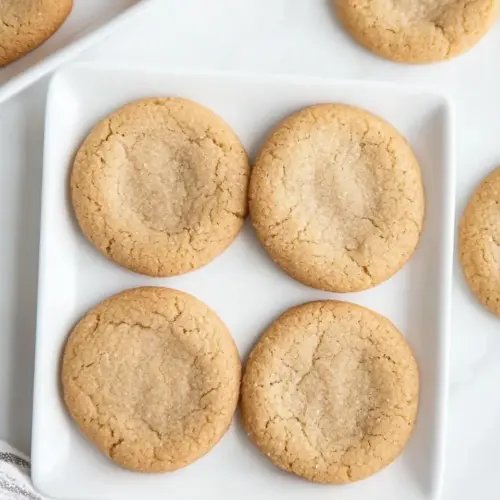
Maple Crackletop Cookies
Maple Crackletop Cookies are soft centered and lightly crisped on the outside, with warm maple and cinnamon notes. These easy to make cookies use pantry staples to deliver a chewy, aromatic bite perfect for fall gatherings or everyday treats. They are forgiving, make ahead friendly, and impressive on a cookie tray, a perfect recipe to keep in rotation.
Equipment
- Electric Mixer
- Mixing Bowls
- Baking Sheets
- Parchment Paper
- Measuring Cups and Spoons
Ingredients
- 4 cups all purpose flour Provide structure and bulk to the dough, absorbing liquids and creating the cookie's crumb; sifts easily with leaveners for even texture. Develops gluten when mixed, which should be minimized for a tender cookie by gentle handling and short mixing times.
- 2 teaspoons baking soda Leaven gently by producing carbon dioxide during baking to give cookies lift and a tender crumb; reacts with acidic components for proper rise. Measure accurately and distribute evenly to avoid uneven pockets or overly dense areas.
- 1/2 teaspoons salt Enhance overall flavor balance and strengthen dough structure while controlling yeastiness; helps moderate the chemical reactions of baking soda. Use the specified small amount to avoid a salty taste while still bringing out other flavors.
- 1 cup shortening Create tenderness and flakiness by shortening gluten strands and contributing to a soft, melt-in-mouth texture; helps incorporate air when creamed with sugar. Provide richness and stable shape during baking, particularly in high-sugar or high-liquid recipes.
- 1 cup packed brown sugar Add deep, molasses-like sweetness and moisture, contributing chewiness and complex caramel notes; helps brown the cookies and retain softness. Cream with shortening to trap air for lift and incorporate fully for even flavor distribution.
- 1 cup pure maple syrup Introduce liquid sweetness with a distinctive maple flavor, adding moisture and subtle caramelized notes that permeate the dough. Thin the batter slightly compared to granulated sugar alone, so balance with dry ingredients preserves texture.
- 1 large egg Bind ingredients together, add moisture and richness, and contribute to tenderness through fat and emulsification; eggs also help with structure as proteins set during baking. Beat lightly into wet mixture for even incorporation without toughening the dough.
- 1 teaspoon vanilla extract Provide aromatic depth and enhance sweetness perception by rounding out flavors and adding warm, familiar notes; helps highlight the maple. Add to wet ingredients to distribute flavor evenly throughout the cookie dough.
- 3/4 cup granulated white sugar Contribute crispness and straightforward sweetness while helping with spreading and surface browning during baking; balances the deeper notes of brown sugar and maple. Sprinkle into the creamed mixture to dissolve and create a uniform texture.
- 1 teaspoon ground cinnamon Add warm, spicy aromatic notes that complement maple and brown sugar, enhancing overall flavor complexity; contributes little to structure but a lot to aroma. Use sparingly to avoid overpowering the delicate maple character.
Instructions
- In a medium bowl, whisk together the flour, baking soda and salt.: The dry mixture should smell faintly of flour with a subtle saline hint, and you want it to be evenly colored with no lumps. Whisking aerates the components slightly, which aids in consistent rise and prevents pockets of baking soda that could create odd tastes. A common mistake is to skip this step and end up with uneven leavening, which causes some cookies to overexpand while others stay flat. If you notice clumps, press them through a sieve to avoid dense spots.
- In a large bowl, use an electric mixer to combine the shortening and sugar until smooth. Mix in the syrup, egg and vanilla. Add the dry ingredients and mix well. Cover and refrigerate for a couple of hours until dough is more firm.: At first you'll hear a soft hum as the shortening and brown sugar cream together, and the mixture will look glossy and slightly pale. Adding the pure maple syrup brings a viscous sheen and an aroma that becomes more pronounced as you mix. The dough will loosen when you add wet ingredients, then firm up once the dry mix is incorporated. Chilling is crucial, it lets the fats solidify so the cookies do not over spread, and it allows flavors to meld. If you skip chilling you'll likely end up with flatter cookies, so resist the urge to bake immediately. Common troubleshooting here is over mixing, which makes the dough tough, so stop as soon as the flour is incorporated.
- Preheat oven to 350°F. Line baking sheets with parchment paper or silpat mats.: When the oven comes up to temperature you should feel warmth from the door and notice the steady hum of the thermostat cycling. A well preheated oven ensures predictable spread and color development, leading to those golden edges and set centers. Lining the pans prevents sticking and promotes even browning. A typical error is placing sheets in an oven that is not fully preheated, which can result in underbaked middles or uneven textures. If your oven runs hot, consider an oven thermometer to verify accuracy.
- In a small bowl, combine the sugar and cinnamon. Shape the cookie dough into balls about 1-inch in diameter (or larger). Roll in the sugar/cinnamon mixture.: The sugar mixture should smell sweet and warm from the ground cinnamon , and when you roll the chilled dough it should be firm to the touch with a smooth surface. Rolling helps the sugar adhere and creates the crackled visual as the cookie expands. If the dough is too sticky to form smooth balls, chill it longer or lightly flour your hands. A frequent mistake is rolling balls that are inconsistent in size, which leads to uneven baking times; use a cookie scoop for uniformity.
- Place the cookie dough balls on the prepared baking sheets about 2 inches apart and bake for 10 to 12 minutes, or until not doughy-looking in the middle.: While baking you will notice the tops matte slightly and then develop tiny fissures as the sugar expands into its crackled pattern; the scent will shift from sweet to toasty. The edges should become faintly golden while centers still look slightly soft, which indicates chewiness once cooled. Avoid overbaking, which dries the cookies and blunts the maple flavor. A common pitfall is crowding the pan, which causes cookies to run together, so leave adequate space and rotate sheets halfway if your oven bakes unevenly.
Notes
- Swap rolling sugar Use maple sugar if available instead of the plain granulated sugar for rolling, it amplifies the maple aroma and gives a deeper caramelized surface.
- Adjust chewiness For chewier cookies chill the dough overnight, the extended rest deepens flavor and yields a moister interior when baked.
- Make smaller or larger Shape dough into different sized balls depending on the occasion, but adjust bake time accordingly to prevent under or over baking.
- Control spread If your cookies spread too much, chill the formed balls longer or reduce oven temperature slightly to preserve the crackled top.
- Prep ahead Dough freezes well, store portions in an airtight container and bake from frozen, adding a minute or two to the bake time for convenience.