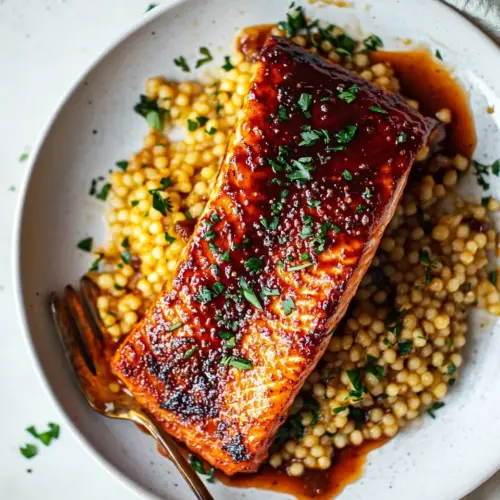
Maple BBQ Salmon with Brown Butter Couscous
Maple BBQ Salmon with Brown Butter Couscous combines a sticky, smoky glazed salmon with nutty, garlic infused brown butter pearl couscous. This easy weeknight dinner delivers glossy caramelized top notes, tender flaky fish, and chewy couscous for texture contrast, perfect when you want a quick impressive meal to serve family or guests.
Equipment
- Oven
- Baking Sheet
- Small Bowl
- Large saucepan
- Small Saucepan
Ingredients
- 2 pounds salmon filets Provide a rich, flaky protein and the main component of the dish; cut into evenly sized filets for consistent cooking and to absorb the maple BBQ glaze while baking or grilling.
- 1 tablespoon brown (or maple!) sugar Add a touch of caramelized sweetness and help create a sticky, browned crust on the salmon when combined with heat and maple syrup, balancing savory seasonings.
- 1 teaspoon garlic powder Contribute concentrated savory-umami aroma and mellow pungency; sprinkle evenly to enhance the overall flavor without adding moisture.
- 1 teaspoon smoked paprika Impart a smoky, warm depth and vibrant color to the seasoning blend; use measured amounts to avoid overpowering the delicate fish.
- 1/2 teaspoon salt Season the dish to enhance natural flavors and control overall saltiness; distribute uniformly to prevent unexpected overly salty bites.
- 1/2 teaspoon freshly ground black pepper Provide sharp, peppery heat and aromatic bite when freshly ground; apply lightly to complement the sweetness of the glaze.
- 1/4 teaspoon cumin Introduce subtle earthy warmth and complexity to the spice mix; use sparingly so it supports rather than dominates the profile.
- 2 to 3 tablespoons maple syrup Create glossy sweetness and sticky glaze for the salmon; brush on during cooking or after for layers of maple flavor and shine.
- 1 tablespoon unsalted butter Contribute rich, nutty flavor and help create a silky finish when melted; use to baste the salmon or finish the couscous.
- 1 cup uncooked pearl couscous Offer a tender, chewy base for the side dish and readily soaks up seasoned cooking liquid; toast briefly for extra nuttiness before simmering.
- 1 1/4 cups chicken or vegetable stock or water Provide the necessary cooking liquid to hydrate the couscous and infuse it with savory depth; choose stock for added flavor or water for a lighter profile.
- pinch of salt Enhance and balance the couscous during cooking with minimal salt; add gradually and taste to prevent oversalting.
- 2 tablespoons unsalted butter Add glossy richness and brown-butter flavor when melted and browned; stir into cooked couscous to coat each pearl and elevate texture.
- 1 garlic clove, minced Deliver a fresh, pungent, aromatic lift and mild heat when minced; fold into finished couscous or briefly sauté in butter to release flavor.
Instructions
- Preheat the oven to 400 degrees F. Place the salmon on a baking sheet.: Warm air in the oven helps set the glaze and cook the thick fillets evenly, you will notice the kitchen aroma shift as the oven comes up to temperature. Ensure the salmon is placed skin side down if it has skin, or on parchment if you prefer an easy cleanup. A common mistake is crowding the pan, which traps steam and prevents crisping, so leave space between fillets for air circulation.
- In a small bowl, whisk together the sugar, garlic powder, paprika, salt, pepper and cumin. Sprinkle it all over the salmon filets. Drizzle each filet with the maple syrup and use a spoon to kind of “spread” it all over the filet.: As the spice blend meets the sticky maple syrup , you should see a glossy coating that clings to the salmon , this is the foundation of the caramelized crust. Work gently so you do not press the flesh too much, which can compact the flakes. If the rub is uneven you may end up with some spots caramelized and others bland, so aim for an even layer.
- Roast for 10 to 15 minutes, until the salmon just flakes with a fork. If desired, you can brush with a little more maple syrup when it comes out of the oven. Top with chopped chives. Serve immediately with brown butter couscous!: While roasting you will hear a quiet sizzle and smell sweet, toasty notes from the sugar breaking down. Watch for the center to go from translucent to opaque and test by gently flaking with a fork, the fish should separate into moist flakes. Overcooking dries the salmon , so pull it at the first sign of flaking. Brushing extra syrup after roasting enhances gloss but add sparingly so it does not pool.
- brown butter couscous: Toasting the couscous in butter creates warm, nutty aromas as the edges take on a golden tint. You will notice tiny pops as the grains heat and release a toasted scent. This step adds complexity that boiling alone cannot achieve. Rushing the toast can leave the couscous bland, so stir gently until you see light browning.
- Heat a large saucepan over medium heat and add the butter. Stir in the couscous until coated, then cook for 2 to 3 minutes, stirring, until the couscous is slightly toasty. Add in the stock and salt and bring the mixture to a boil. Once boiling, reduce to a simmer and cover. Cook for 15 minutes, or until the liquid is absorbed.: When the stock hits the pan the steam will carry toasty butter aromas, and you should see the liquid swell the pearls. Reducing to a gentle simmer prevents the grains from breaking apart, delivering individual, tender pearls. A common error is lifting the lid too often, which releases steam and extends cooking time, so resist peeking until the liquid is absorbed.
- While the couscous is cooking, heat a small saucepan over medium heat and add the butter. Cook, whisking often, until brown bits appear on the bottom of the pan. Remove the butter from the heat and stir in the garlic cloves.: As the butter turns from pale yellow to amber you will smell a deep roasted, nutty perfume, and small brown speckles will form. Once the butter reaches that point, get it off the heat right away, because browned butter can quickly go from fragrant to burned. When you stir in the minced garlic , the steam will wake up bright aromatics, so timing matters to avoid raw garlic sharpness.
- Once the couscous is finished, drizzle with the garlic brown butter. Toss and serve.: The final toss should coat each pearl with glossy, savory fat, releasing waves of warm butter and sweet garlic scent. Use a fork to gently fluff, and you will see how the butter clings to the couscous, providing sheen and silkiness. Avoid overmixing, which can crush the pearls and make the texture mushy. Serve right away so the couscous retains its tender bite and the salmon stays hot.
Notes
- Choose the right salmon: Pick fillets of similar thickness so they finish at the same time, which prevents some pieces from drying while others are undercooked.
- Even spice distribution: Mix the dry spices well before applying so every bite of salmon has balanced seasoning avoiding hot spots.
- Finish with restraint: If brushing extra maple syrup after cooking, use a light hand to prevent the glaze from becoming overly sweet or runny.
- Brown butter timing: Watch the butter closely and remove from heat at the first sign of brown specks to retain a pleasant nutty aroma without burning.
- Fluff the couscous: Use a fork to gently separate the pearls after cooking to preserve the individual texture and avoid clumping.
- Rest the fish: Let the salmon sit for a couple of minutes after roasting so the juices settle and the flesh stays moist when you plate.