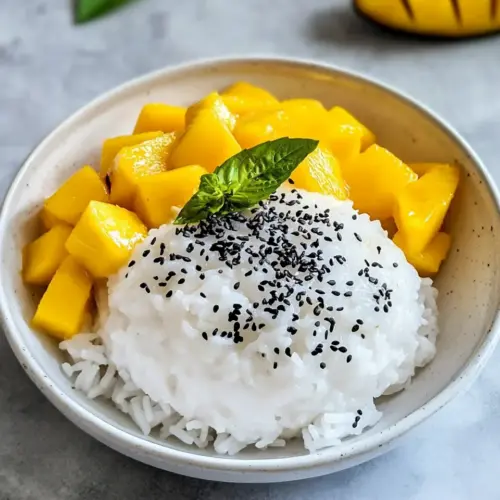
Mango Sticky Rice
Mango Sticky Rice is a creamy, slightly sweet dessert that pairs chewy steamed rice with lush coconut sauce and ripe mango. This easy to follow recipe yields glossy, fragrant grains and bright fruit notes, perfect for an easy weeknight dessert or a shareable dinner party finish. Try it to enjoy tropical flavors and satisfying textures that keep guests asking for more.
Equipment
- Medium Bowl
- Colander
- Cheesecloth
- Large Pot
- Steaming rack or basket
- Medium Pot
Ingredients
- 2 cups sushi rice, or sticky rice Rinse and soak to ensure tender, sticky texture; serves as the starchy base that absorbs sweetened coconut milk and binds the dish together. Cook using gentle steaming or absorption methods for authentic sticky rice consistency used in Southeast Asian desserts.
- 2 (13.66-ounce) can coconut milk, full fat Add for rich, creamy coconut flavor and silky mouthfeel; combines with sugar to create the sweet coconut sauce that soaks into the rice. Use full-fat cans to achieve traditional richness and adjust quantity slightly if a thinner or thicker sauce is desired.
- 2/3 cup granulated sugar, 1/2 cup for less sweetness Sweeten and balance the coconut sauce; dissolves into the coconut milk to create a glossy, sweet coating for the rice while allowing optional reduction for a less sugary finish. Measure carefully to control overall sweetness and adjust by taste as indicated.
- 1 pinch salt Enhance and contrast flavors with a small touch of salt; brings out sweetness and deepens the coconut and mango notes without making the dish savory. Use sparingly to avoid overpowering the dessert while elevating overall taste.
- 3 ripe mangoes, sliced thin Provide juicy, tropical fruitiness and fresh acidity; sliced ripe mangoes crown the sweet coconut rice and add bright color, aroma, and texture contrast. Choose fully ripe but firm mangoes for the best balance of sweetness and sliceability.
- 1 teaspoon toasted or black sesame seeds, optional, for garnish Garnish to add a toasty, nutty crunch and visual contrast; sprinkle toasted or black sesame seeds over the finished dish for subtle flavor depth and an attractive finish. Use optional garnish sparingly to complement rather than overwhelm the primary coconut-mango flavors.
Instructions
- Add 2 cups sushi rice to a medium-sized bowl and rinse 2-3 times before covering the rice with warm water. Cover and set aside to soak for at least 2 hours, or overnight.: You will feel the grains slip through your fingers as you rinse them, and the rinse water will go from cloudy to almost clear, signaling that surface starch has been removed. This step prevents gummy clumps when the rice cooks, producing distinct yet sticky grains. Soaking warms and hydrates the kernels so steaming results in an even, translucent texture. If you skip rinsing, the texture becomes clumpy, and if you skip soaking, you risk a hard center. A good troubleshooting tip is to smell the water; it should not be sour. If the rice smells off after soaking, discard and start fresh.
- After the rice has soaked, line a colander or fine mesh sieve with cheesecloth or a thin, clean kitchen towel. Pour the rice into it and wrap it with the cheesecloth, squeezing to remove the excess water.: The tactile step of wringing the cheesecloth gives you control over moisture. The rice should be damp, not dripping, so it steams rather than boils in the pot. This prevents waterlogged grains that lose their structure. If too wet, your steamed rice will be gummy; if too dry, it will be undercooked. One common mistake is leaving too much water, so spend a few more seconds gently pressing out excess liquid. The sound is subtle, just a soft squeeze and a faint drip, and visually the grains should clump lightly together.
- Place a large pot on the stove with an inch or two of water in the bottom. Bring the water to a boil and place a steaming rack or basket in the pot. Place the rice still wrapped in the cloth in the basket and cover. Let steam for 20-25 minutes, or until the rice is translucent.: Steam should be steady and rolling under the lid, creating a warm, humid environment. As the rice steams you will see the grains become glossy and slightly translucent, and they will release a faint, sweet aroma of cooked starch. This gentle heat cooks the rice evenly without making it soggy. Avoid high heat that produces violent boiling, which can splash and unevenly cook the rice . A troubleshooting sign is when the center feels firmer than the edges, indicating uneven steaming; rotate the basket or extend steaming time by five minutes if needed.
- Remove the rice from the heat, transfer to a medium bowl and cover.: When you lift the lid, expect a warm cloud of steam and a subtle coconut like sweetness even before the sauce is added. Transferring the rice to a bowl and covering traps steam for a few minutes, allowing grains to settle and finish gently. This resting step keeps the texture tender and cohesive. If you uncover too soon, the surface can form a dry film; if you leave it covered too long without the sauce, the surface may cool and tighten. Aim to move to the sauce stage while the rice is still notably warm.
- Prepare the coconut sauce by combining 2 (13.66-ounce) can coconut milk, 1 pinch salt, and 2/3 cup granulated sugar in a medium pot. Bring to a simmer over medium heat and cook for 3-4 minutes, until all the sugar is dissolved.: As the sauce heats, the aroma of warm coconut milk fills the kitchen and the surface becomes glossy. Stirring gently dissolves the sugar and disperses the salt, creating a balanced glaze. Simmering briefly concentrates the flavor without breaking the emulsion, which preserves creaminess. Avoid boiling hard, which can separate the coconut fat; a gentle simmer is best. If your sauce appears curdled, reduce heat and whisk; separation often results from excessive heat.
- Slowly stir the warm sauce over the warmed rice until all of the sauce has been absorbed into the rice. Scoop out portions onto plates or bowls and sprinkle with 1 teaspoon toasted or black sesame seeds, and serve with fresh 3 ripe mangoes on the side.: When you pour the warm sauce over the hot rice , you should hear a soft hiss and see the liquid gleam as it soaks in. Stir gently to distribute so each grain is coated and glossy, then allow the rice to rest so it can fully absorb the coconut flavor. The final texture should be sticky but not mushy, with individual grains holding together. Place thin slices of ripe mango on the side or over the top, and finish with toasted sesame seeds for aroma and a hint of crunch. A common mistake is adding cold sauce to warm rice ; always warm the sauce so absorption is efficient. Serve slightly warm or at room temperature for the best flavor experience.
Notes
- Adjust sweetness: Reduce the granulated sugar to 1/2 cup if your mango are very ripe, taste the warm coconut milk sauce as you heat it and stop when it feels balanced to you.
- Serve temperature: I like the contrast of warm rice and cool mango, so serve the rice slightly warm and the mango chilled for a delightful temperature play.
- Coconut concentration: For extra coconut flavor, use one can of full fat coconut milk to steam and one to make the sauce, or reduce the sauce slightly to intensify the flavor.
- Mango presentation: Slice the mango thin for easy scooping, or cube and fan for an elegant look; always cut just before serving to preserve brightness.
- Sesame finish: Toasted black or white sesame seeds add aroma and contrast, sprinkle them at the last moment to keep their nutty crunch.
- Storage tips: Store leftover rice and sauce separately in airtight containers, reheat the rice gently with a splash of water to refresh texture, and keep sliced mango chilled.