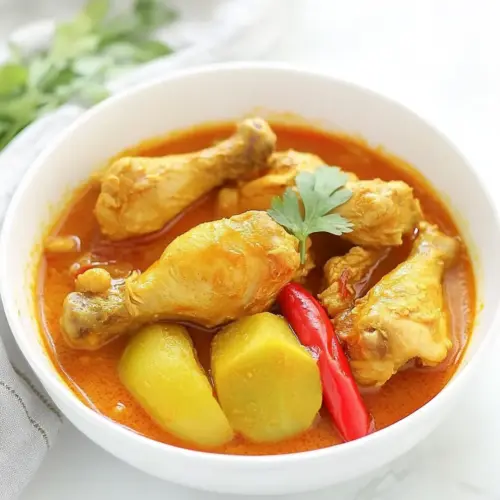
Malaysian Chicken Curry
Malaysian Chicken Curry delivers warm, aromatic spice and creamy coconut richness in an easy weeknight dinner. Tender chicken and soft potatoes simmer in a fragrant spiced sauce that is both comforting and bold. This approachable curry is perfect for family meals, reheats beautifully, and is a reliable crowd pleaser, making it worth cooking again and again.
Equipment
- Pot or pan
- Stove
Ingredients
- 2 tablespoons oil Heat and lubricate the pan to prevent sticking and help fry aromatics; contributes to mouthfeel and carries fat-soluble flavors through the curry. Use neutral oil with a high smoke point to avoid burning spices and to provide a glossy finish to the sauce.
- 1/2 onion, diced Sauté until translucent to build the curry's aromatic base and add sweetness; provides texture and depth when browned lightly. Dice uniformly to ensure even cooking and to release natural sugars that balance the spice and acidity.
- 1 oz (30 g) curry powder, for meat Season and coat the meat early to infuse deep, layered spice flavors; acts as the primary spice blend that defines the curry's character. Bloom in oil briefly to release volatile aromatics, enhancing color and complexity throughout the cooking process.
- 1 1/2 lb s (750 g) chicken thighs, or legs or whole chicken Provide the primary protein and body for the dish; choice of thighs, legs, or whole chicken affects fat content and richness. Cut or portion appropriately for even cooking and to allow spices and liquid to penetrate the meat.
- 2 cups water Simmer and deglaze the pan while creating the curry sauce base; controls consistency and helps dissolve powdered spices and extract flavors. Adjust volume to control final sauce thickness and to ensure chicken cooks through evenly.
- 2 small potatoes, Yukon Gold preferred, peeled and cut into wedges Add hearty texture and starch to thicken the sauce naturally while offering a comforting bite; Yukon Gold holds shape and has a creamy texture when cooked. Peel and cut into wedges for even cooking and to absorb curry flavors without disintegrating.
- 1 big tomato, cut into wedges, optional Contribute bright acidity and fresh savory notes to balance richness; works as an optional fresh element that breaks up heavy flavors. Cut into wedges so tomatoes release juices into the sauce, adding color and slight tang during simmering.
- 4 hard-boiled eggs, optional Provide extra richness, protein, and traditional presentation when added; hard-boiled eggs soak up curry flavors and add visual contrast. Peel and add toward the end of cooking or briefly simmer to allow flavors to meld without overcooking.
- 1/2 cup coconut cream or coconut milk, coconut cream preferred Enrich the sauce with creamy tropical fat for a silky mouthfeel and mellowing of spices; coconut cream gives a thicker, richer texture than coconut milk. Stir in near the end of cooking to preserve creaminess and avoid curdling, adjusting quantity for desired richness.
- 1 teaspoon salt, or more to taste Enhance and balance overall flavor, bringing out savory notes and harmonizing spices; salt is used to taste and can be adjusted throughout cooking. Add gradually and taste as the curry reduces to prevent over-salting and to achieve proper seasoning.
Instructions
- Add the oil to a pot or pan and heat until hot. Add the diced onions and stir-fry until softened and aromatic.: You will smell the faint warmth of the oil as it becomes shimmering hot, and when you tilt the pan a bead of oil will move quickly across the surface, signaling readiness. Heating the oil properly ensures the next ingredients hit a medium that extracts and carries flavors, creating a flavorful foundation. If the oil smokes, lower the heat immediately to avoid burning, which creates a bitter note that can ruin the curry. A common mistake is using oil that is not hot enough, which prevents proper sizzle and delays the release of aromatics. Keep the flame at medium high so the oil warms quickly but does not smoke.
- Add the curry powder to the onions and stir quickly until the aroma of the curry powder is released.: As the diced onion hits the hot oil you will hear a gentle sizzle, and after a few minutes the edges will take on a translucent gloss. The smell will shift from sharp to sweetly savory, indicating the Maillard process is developing flavor. This step matters because properly softened onion creates a mellow base that balances the spice, and undercooked onion can leave a raw, harsh bite. Stir frequently to prevent sticking and uneven browning, and watch for any pieces turning dark brown too quickly, which means the heat is too high.
- Add the chicken and stir well to combine it with the curry powder and onions, cooking for about 1 minute.: When you sprinkle the curry powder into the warm onions, the scent will lift immediately, releasing essential oils that perfume the pan. You should notice an immediate aromatic burst, a sign the spices are blooming and integrating into the fat. This quick stir helps the spice coat the onion pieces and infuse the base with color and complexity. Avoid leaving the powder in dry contact with the pan too long or at too high heat, because it can burn and turn bitter. Work fast and stir constantly to evenly distribute the spice.
- Add the water to the pot or pan and bring the curry to a boil. Reduce the heat to low and add the potatoes. (Add the tomatoes and hard-boiled eggs, if using.) Cover the pot and let it simmer for about 30 minutes, or until the chicken is tender. If you find the curry too watery, simply simmer it longer until it reaches your desired thickness. Stir in the coconut cream/coconut milk and salt to taste, and combine well. Serve hot with steamed rice.: When the chicken goes in, it will hiss as contact with the hot pan draws moisture out and seals the surface, trapping juices and flavor. Stir just enough to coat each piece with the spiced onion mixture, creating a roasty layer that will deepen as it simmers. Doing this briefly helps jump start browning and flavor bonding without starting the long cook, which happens in the simmering stage. A frequent error is overcrowding the pan, which steams the meat instead of allowing that initial sear; if your pan is full, work in batches or use a larger pot.
- Add the water to the pot or pan and bring the curry to a boil: As you pour in the 2 cups of water you will see steam rise and the mixture will come to a lively boil, carrying the fragrance of the spices. The boiling moment extracts flavor from the browned bits and the chicken , creating a savory cooking liquid. Bring it to a boil, then lower to a gentle simmer to cook evenly. If you keep it at a vigorous boil, the meat can tighten and become tough, so reduce heat once boiling to maintain tenderness.
- Reduce the heat to low and add the potatoes: The soft thud of the potato wedges meeting the simmering sauce signals the start of the gentle cook that will make them tender and flavorful. As the potatoes cook they will release starch, which helps thicken the sauce naturally, creating a cohesive mouthfeel. Distribute them evenly so they simmer at the same rate, and cover the pot to trap heat and encourage even cooking. A common mistake is cutting potatoes unevenly, which results in some pieces being undercooked while others fall apart.
- (Add the tomatoes and hard-boiled eggs, if using): If you choose to include the optional tomato and hard boiled eggs , nestle the wedges and eggs into the simmering curry now so they warm through and meld with the sauce. The tomato will soften and lend a bright acidity, while the eggs will soak up surrounding flavors at the surface. Place them gently to avoid breaking the eggs, and time their addition according to how soft you want the tomato to become. Avoid adding them too early if you want the tomato to retain some texture, because prolonged simmering will cause it to disintegrate.
- Cover the pot and let it simmer for about 30 minutes, or until the chicken is tender: With the lid in place you will hear a low, steady simmer and occasional gentle bubbling, an auditory sign of even cooking. This slow simmer is where the chicken becomes tender and the spices marry into the sauce. Check once or twice to ensure a steady, gentle simmer rather than a rolling boil, and adjust heat to maintain a comfortable simmer. Overcooking beyond tenderness can make meat dry, while undercooking leaves it tough; test by piercing near the bone.
- If you find the curry too watery, simply simmer it longer until it reaches your desired thickness: As the sauce reduces you will notice the bubbles slow and the surface thicken, concentrating flavor and body. Allowing gentle evaporation intensifies the taste and yields a sauce that clings to rice and meat. Be patient and stir periodically to prevent sticking at the bottom, and resist the urge to add more liquid unless absolutely necessary. A common troubleshooting note is to avoid turning up the heat to reduce faster, because high heat can cause scorching and uneven texture.
- Stir in the coconut cream or coconut milk and salt to taste, and combine well: When you add the coconut cream the sauce will take on a silky, glossy look and a mellow sweetness will temper the spices. Stir gently to incorporate the cream without breaking the emulsification; the aroma will become rounded and the mouthfeel richer. Season with the stated amount of salt , then taste and adjust, because reduction may have concentrated seasoning. If the cream shows any sign of curdling, remove from heat and stir gently until it smooths out; avoid boiling vigorously after adding cream.
- Serve hot with steamed rice: The final presentation should be steaming, fragrant, and inviting, with plump pieces of chicken and glossy sauce pooling around the potatoes. Serve immediately over plain steamed rice so the rice soaks up the curry, providing a neutral base for the bold flavors. Keep the pot covered briefly while plating to preserve heat, and garnish as you like if you have suitable items on hand. A misstep is letting the curry sit uncovered too long, which cools and loses the initial vibrancy.
Notes
- Use different chicken cuts If you prefer less bone work, choose boneless thighs but watch cooking time carefully, because they will cook faster and can dry out if over simmered.
- Adjust spice level Increase or reduce the amount of curry powder to suit your family, tasting early and often as the sauce concentrates during simmering.
- Make it a one pot meal Keep everything in a single pot for easy cleanup, ensuring the potatoes are cut uniformly so they finish with the chicken.
- Swap water for stock Use a light chicken stock in place of water for a richer, more savory base, but reduce added salt accordingly to avoid over seasoning.
- Finish with citrus if desired A tiny squeeze of lime just before serving brightens the sauce, balancing the richness of the coconut cream and deep savory notes.