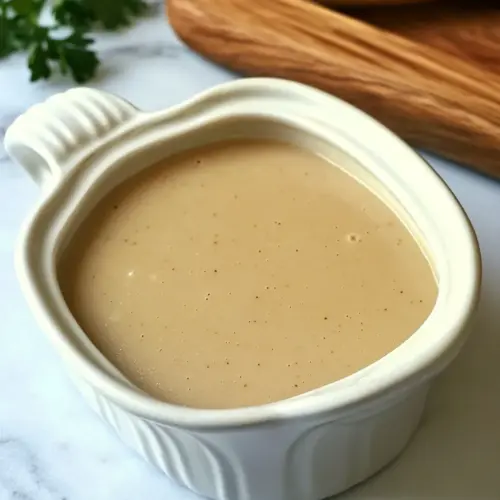
Make Ahead Turkey Gravy
Make Ahead Turkey Gravy is a creamy, silky gravy that brings deep savory turkey flavor to your holiday table. Easy to make and freezer friendly, this recipe yields a smooth, rich gravy perfect for an easy weeknight dinner or a busy Thanksgiving. Make it ahead to save time, then reheat gently for consistently satisfying results.
Equipment
- Saucepan (4-quart)
- Whisk (Balloon)
Ingredients
- 1/2 cups salted butter, cubed Melting and rubbing into the pan, provides a rich, silky foundation for the gravy while adding depth and mouthfeel; cubing helps it melt evenly and incorporate smoothly with flour for a glossy roux.
- 1/2 teaspoon kosher salt Enhancing overall seasoning, sharpens flavors and balances richness; measure carefully to avoid over-salting, especially if using salty pan drippings or stock.
- 1/2 teaspoon ground black pepper Seasoning the gravy with mild heat, contributes aromatic warmth and a subtle bite; freshly ground black pepper brightens the savory profile and complements poultry flavors.
- 1/2 cup all-purpose flour Thickening the sauce by forming a roux with melted butter, creates body and stability so the gravy coats the spoon; whisk continuously while cooking to eliminate lumps and achieve a smooth texture.
- 3 cups turkey stock, or turkey broth, chicken broth or pan drippings from cooking turkey, if you have them. Building the liquid base and delivering savory turkey flavor, dilutes the roux to the desired consistency and provides depth; choose pan drippings or stock for a more intense taste, and simmer to concentrate flavors.
Instructions
- Make a roux. Melt butter in a medium saucepan set over medium heat. Sprinkle with salt and pepper and slowly whisk in flour. Cook until the flour is fully incorporated into the butter and gravy is your preferred color (from light blonde to a nut a brown color).: The moment you start, you will notice the butter softening and then becoming glossy in the pan. The aroma shifts from milky to toasty as the flour cooks into the fat, and watching the color is the primary cue for doneness. Use a steady whisking rhythm so the mixture becomes homogeneous and you avoid any pasty clumps. This stage matters because the roux both thickens and flavors the gravy; a longer cook time produces a nuttier, darker profile while a short cook yields a lighter, creamier body. A frequent misstep here is overheating, which causes the butter to brown unevenly and the roux to take on a burnt flavor, so keep the heat steady and adjust it to maintain even sizzling without smoking.
- Add stock. Once that stage is reached, constantly whisking, slowly pour in the turkey stock and cook until the gravy is thickened.: As the warm stock hits the roux, you will hear a gentle hiss and see the mixture draw together into a sheen, then thicken into a smooth sauce. Whisking constantly breaks up any small pockets so the sauce stays silk like. The smell becomes richer and more savory as the liquid incorporates. This technique prevents lumps and gives you control over texture; adding liquid too fast often creates clumps that are hard to fix, so pour in a thin stream and whisk intentionally. If the gravy seems too thin after it thickens, simmer gently to reduce, but watch for over reduction that will concentrate salt and change the mouthfeel.
- Serve, store, or freeze. Remove from the heat and serve immediately or cool, pour into an airtight container and store or freeze. If serving from made-ahead turkey gravy, reheat in a medium saucepan until warmed throughout If the gravy is too thick, add more stock until it reaches the desired consistency.: When you take the saucepan off the heat the surface will glisten and the aroma will tell you it is ready, but stopping now also lets you cool and store. Cooling in shallow containers speeds chilling and protects quality before refrigeration or freezing. Reheating slowly restores silkiness; bring to a gentle simmer while stirring so the texture becomes even and the flavors reopen. A common oversight is reheating too vigorously, which can split the gravy or scorch the bottom of the pan, so use medium heat and stir often. If it becomes overly thick after chilling, add warm turkey stock a little at a time until the desired pourability returns.
Notes
- Use pan drippings: If you have pan drippings from roasting turkey, incorporate a portion into the turkey stock for a deeper roast flavor, adjusting salt carefully so it does not become too salty.
- Adjust thickness: To thin the gravy, warm additional turkey stock and whisk in gradually until the desired consistency is reached; to thicken, simmer gently until reduced, watching so you do not over concentrate the seasoning.
- Flavor lift: Add freshly ground black pepper toward the end of reheating to preserve its aromatics and lift the overall flavor without overpowering the gravy.
- Storage strategy: Chill in shallow airtight containers to speed cooling, then freeze in portion sized containers so you only reheat what you need for a single meal.
- Reheat gently: Warm over medium low heat while stirring frequently to prevent scorching and to restore the gravy’s silky texture without breaking it.