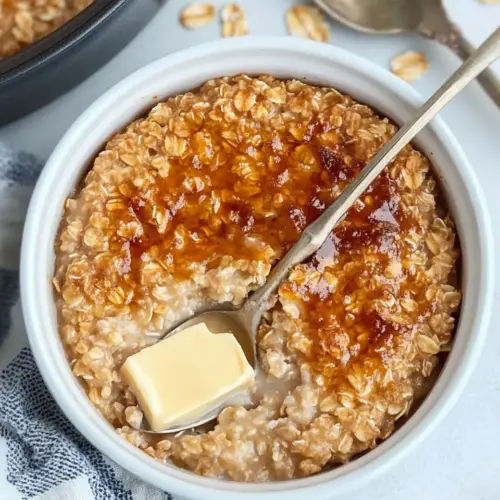
Make Ahead Buttery Baked Oatmeal
Make Ahead Buttery Baked Oatmeal is a creamy yet chewy baked oats recipe with rich brown sugar and buttery caramel notes. This easy make ahead breakfast delivers warm, toasty edges and juicy raisins in every bite, perfect for busy mornings or casual brunches and ideal when you want a comforting, easy weeknight or weekend breakfast to feed a crowd.
Equipment
- Oven
- Mixing Bowl
- Oven proof bowl
Ingredients
- 5 cups old-fashioned oats (not quick cooking oats) Provide hearty texture and structure to the baked oatmeal, absorbing liquids and giving the dish its chewy, satisfying body; use old-fashioned oats for best texture rather than quick oats to avoid becoming mushy when baked and reheated.
- 2 1/2 cups dry milk powder Add creamy, dairy-like richness and help create a cohesive batter when rehydrated; dry milk powder contributes proteins and a subtle milky flavor that enhances browning and overall mouthfeel.
- 2 1/2 cups packed brown sugar, plus a bit more for sprinkling over the top Contribute deep, caramelized sweetness and help with moisture retention; packed brown sugar also promotes a tender crumb and can be sprinkled on top before baking for a glossy, slightly crunchy finish.
- 2 1/2 cups raisins Introduce concentrated sweetness and chewy bursts throughout the bake while adding natural fruit flavor; raisins also help balance the richness and complement the cinnamon and brown sugar notes.
- 1 tablespoon cinnamon Provide warm, aromatic spice that brightens the overall flavor profile and pairs well with brown sugar and raisins; cinnamon also complements the baked aroma and enhances perceived sweetness without extra sugar.
- 2 teaspoons Morton kosher salt Season and enhance all the flavors while balancing sweetness; Morton kosher salt in this quantity ensures the dish is properly seasoned and rounds out the sweetness from sugars and fruit.
- 1/2 tablespoon unsalted butter + 1 teaspoon for topping Add rich, buttery flavor and tenderizing fat to the mixture; the butter melts into the oats to contribute moistness and a slightly glossy mouthfeel, while the extra teaspoon on top creates a golden finish.
- 1/2 cup boiling water Hydrate dry ingredients quickly and help dissolve sugars and milk powder; boiling water also speeds mixing and slightly cooks the oats for a softer baked texture and improved cohesion.
- 1 teaspoon brown sugar Provide a small finishing touch of sweetness for sprinkling on top, creating tiny caramelized spots and enhancing the visual appeal and surface flavor contrast when baked.
Instructions
- In a large bowl, combine oats, dry milk, brown sugar, raisins, cinnamon, and salt. Transfer to an airtight container to store.: The moment you stir these ingredients together you will notice the aroma of cinnamon and brown sugar melding with the grainy scent of old fashioned oats , which is an early sign of the comforting profile to come. Use a wide bowl so you can fold everything evenly, ensuring the dry milk powder and salt distribute through the mix; uneven distribution leads to pockets of salt or clumps of milk powder when baked. As you mix, sift your fingers through the oats to break up clumps and watch for even color from the cinnamon. A common misstep is packing the measuring cups too tightly, which changes ratios; spoon and level each dry ingredient. Once combined, transfer the mix into an airtight container and press the surface flat to store compactly. The why of this step is simple, creating a uniform dry mix lets you portion quickly later, and it prevents surprises in flavor when you bake. If you notice the mix is lumpy from the brown sugar, break it apart with the back of a spoon. Troubleshooting tip, if your saved mix seems dry when later rehydrated, add a tablespoon of additional boiling water per serving to reach your preferred creaminess.
- Preheat oven to 350°F.: When the oven warms, you will begin to smell a faint, neutral warmth from the heating elements, which indicates the air is reaching temperature. Preheating is crucial so the bake begins cooking immediately and the edges can develop that desirable lightly toasted color; starting in a cold oven can make the oats dry out unevenly. Place the oven rack in the center position for even heat distribution, and if you have an oven thermometer use it to confirm accuracy, as many ovens run hotter than their dial indicates. A frequent error is skipping preheat and ending with a gummy center; give the oven those full minutes to stabilize. When the oven reaches 350°F, the environment is ready for consistent bubbling and browning within the bake, which influences final texture and depth of flavor. If you are unsure whether your oven has reached the right temperature, wait an extra five minutes to be safe.
- In a small oven-proof bowl, combine a generous 1/2 cup Dry Oatmeal Mix, 1/2 tablespoon butter, and 1/2 cup boiling water. Stir to combine. (Adjust the proportions if you'd like a larger serving. To double the serving size, use 1 cup Dry Oatmeal Mix, 1 tablespoon butter, and 1 cup boiling water.): Right away you will notice steam rising and the dry particles absorbing liquid, softening into a creamy slurry; this is the hydration step that transforms the dry mix into a cohesive batter. The aroma shifts from dusty oats to warm, milky sweetness as the dry milk powder dissolves, and the melted butter coats the oats lending sheen and a silky mouthfeel. Stir until there are no large pockets of dry mix visible, scraping the bowl sides to integrate any lingering clumps. This proportion creates a nicely set but still moist texture after baking; altering ratios changes firmness, so follow them closely unless you are intentionally adjusting for larger portions. The instruction mentions doubling for more servings, which is helpful, but when scaling be mindful to keep the same hydration ratio to avoid a too loose or too dry bake. Troubleshooting, if the mix separates or appears grainy after stirring, add a splash more boiling water and stir vigorously until smooth.
- Bake for about 20 minutes, or until the oatmeal is a bit browned and bubbly at the edges. Remove bowl from oven and place 1 teaspoon butter on the top center of the oatmeal. Sprinkle 1 teaspoon brown sugar over the butter.: As the bake progresses you will hear gentle bubbling and see steam escaping at the edges, the surface will shift from pale to a warm, golden hue, which signals the sugars are caramelizing and the oats are setting. The edges should be slightly darker and the center set but still moist, a balance that keeps the interior tender while offering toasted notes around the perimeter. When you remove the bowl, the butter you place on top will melt into a buttery pool and the sprinkled brown sugar will start to dissolve, preparing for that final caramel crown. The purpose of this addition is to concentrate sweetness and create a crunchy, glossy finish after broiling. A common mistake is leaving the bake too long, which leads to dryness; watch for those visual cues. If the center seems underdone while the edges are overbrowning, reduce oven temperature by 10 to 15 degrees in future bakes for calmer, more uniform cooking.
- Return bowl to oven and broil the oatmeal until the butter and brown sugar on top caramelizes and bubbles, about 1-2 minutes.: The broiler delivers intense, direct heat that quickly melts and caramelizes the sugar, producing bubbling, amber spots that deliver contrast in texture and a glossy sheen that makes the dish feel finished. You will want to watch closely from the window because broiling is rapid and can go from caramelized to burnt in seconds; seeing small pockets of bubbled sugar and a light golden tint is the signal to stop. The why here is that the broiler creates that tiny textural drama, a delicate crisp top versus a soft interior. A typical pitfall is leaving the oven door open during broiling which can interrupt the broiler cycle on some ovens, so keep the door closed and observe through the glass. If you find spots burning too fast, move the rack down a notch or briefly remove the dish and finish at a lower temperature for a minute.
- Remove from oven and serve hot. I like to drizzle warmed half & half over the top!: Serving while hot ensures the contrast between the crisped top and the warm, creamy interior is at its best, and drizzling warmed half and half adds a silky finish that melts into the bake for extra richness. You will hear a gentle sigh as the steam meets the cooler room air, and the aroma intensifies, drawing attention to the nutty and caramel notes. The reason for serving immediately is to capture that textural interplay and the freshly caramelized sugar, which loses crispness as it cools. A common error is letting it sit too long before serving, which can make the top soften and the interior feel denser. If you need to hold it, reheat briefly under a low oven to revive the top, watching carefully so you don't dry out the oats.
Notes
- Scale servings accurately: When doubling the recipe, keep the exact hydration ratio by using 1 cup Dry Oatmeal Mix, 1 tablespoon butter, and 1 cup boiling water for a larger single serving; this prevents a too wet or too dry bake.
- Watch the broiler carefully: The final caramelization happens fast, so stand by the oven window and stop when you see bubbling amber spots to avoid any burnt sugar flavor.
- Store the dry mix properly: Use an airtight container and press the mix flat to save space and reduce air exposure, which preserves texture and flavor for weeks.
- Plump raisins if needed: If your raisins look shriveled, soak them five to ten minutes in warm water and drain before mixing to ensure they rehydrate during baking and provide juicy bites.
- Use quality brown sugar: Darker brown sugar gives more molasses depth; it intensifies the caramel notes when broiled and complements the oats and milk powder.
- Check oven temperature: If your oven runs hot, lower the temperature by ten degrees to avoid overbrowning before the center sets, which helps achieve even texture.