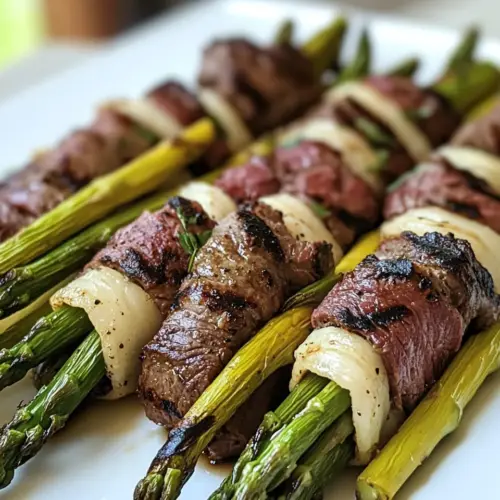
Macro Friendly Grilled Beef Asparagus Roll Ups
Macro Friendly Grilled Beef Asparagus Roll Ups are a high protein, low fuss option that pairs tenderized thin beef with crisp asparagus for a flavorful, easy weeknight dinner. The savory marinade creates deep umami while quick grilling keeps textures vibrant, making this an ideal option for meal prep or a simple healthy meal.
Equipment
- Grill
- Ziploc bag
- Toothpicks
- Tongs
Ingredients
- 2 tablespoons soy sauce Add soy sauce to provide a savory, umami-rich base that seasons the meat and ties the marinade together; it also helps tenderize the beef slightly due to its salty profile. Use a low-sodium variety if preferred to control overall saltiness and balance with other seasonings. Combine thoroughly so the sauce penetrates thinly sliced steak for consistent flavor.
- 1 tablespoon Worcestershire sauce Include Worcestershire sauce to contribute tangy, slightly sweet and fermented notes that deepen the marinade’s complexity. Its subtle acidity and anchovy-based umami enhance the beef’s savory profile without overpowering the other flavors. Use sparingly to avoid overwhelming the delicate asparagus when rolled with the steak.
- 2 tablespoons Cold Water Stir in cold water to dilute and distribute concentrated seasonings evenly throughout the marinade so they coat the meat without concentrating too strongly. Use chilled water to keep the meat cool during marinating and to help dissolve dry components like baking soda. Adjust amount slightly if a thinner marinade is preferred for easier tossing.
- 1 clove garlic Crush or mince garlic to introduce bright, pungent aromatics that complement beef and asparagus while elevating the overall savory character. Allow minced garlic to mingle in the marinade so its flavor infuses the thinly sliced steak quickly. Add toward the start of marinating to soften its raw bite and release more fragrant oils.
- 1/4 teaspoon baking soda Sprinkle baking soda to act as a tenderizer when used in small amounts, helping to slightly break down proteins on the surface of thinly sliced bottom round steak. Dissolve it in the marinade so it disperses evenly and avoid overuse to prevent an off taste or overly soft texture. Rinse briefly or marinate for only a short period if concerned about residual alkali.
- ground black pepper Season with ground black pepper to provide warm, piquant heat and aromatic depth that complements the beef’s savory profile. Grind fresh for the most robust flavor and sprinkle to taste so it enhances without dominating the other seasonings. Distribute evenly across the meat before rolling to ensure every bite has a subtle peppery kick.
- 1 pound bottom round steak thinly sliced, from Super Walmart (I had 8 pieces) Slice bottom round steak thinly to create tender, quick-cooking rolls that sear evenly on a grill; thin slices allow flavors from the marinade to penetrate thoroughly. Keep pieces uniform in thickness for consistent cooking time and easier rolling around asparagus. Pat dry before grilling to promote a good sear and prevent steaming.
- 1 pound fresh asparagus Trim fresh asparagus to add a crisp, slightly sweet vegetable center that offers texture contrast and bright green flavor to the beef roll ups. Choose spears of similar thickness so they cook evenly when wrapped inside the steak and grilled. Blanch briefly if desired to ensure tender stalks while preserving a firm bite.
- balsamic glaze optional (I used Private Selection brand) Drizzle balsamic glaze optional to introduce a glossy, sweet-tart finish that contrasts with savory beef and bright asparagus; use sparingly to avoid overpowering. Select a favorite brand for consistent flavor and a syrupy texture that adheres well to grilled roll ups. Add after grilling for attractive presentation and a flavor lift.
Instructions
- In a shallow dish, stir soy sauce, Worcestershire sauce, cold water, garlic and baking soda. Dip each piece of meat into the marinade to ensure both sides are covered and then place into large ziploc bag. Once all the meat is in the bag, pour remaining marinade overtop. (It's really important to make sure the meat gets covered completely because the marinade also works as a meat tenderizer.) Leave meat marinating on the counter for 1 hour at room temperature.: The aroma will be salty and fragrant, with the sharpness of garlic rising first, then the rich umami from the soy sauce . Stirring ensures the tiny amount of baking soda disperses evenly so it tenderizes uniformly. A common mistake here is not dissolving the baking soda, which can leave gritty pockets, so mix until smooth. This step matters because a well distributed marinade gives consistent flavor and tenderness across every slice.
- Prepare asparagus by washing and snapping off woody ends. Divide into small, equal piles that would correspond with how many slices of beef you have. 1 pound (technically 0.9 lbs) was 8 slices for me. Depending how thick or thin your asparagus is will determine how many you'll wrap. (I used 3 per pile.): You will feel the slick, seasoned surface as each slice soaks up the liquid, and the smell will become more savory as the beef absorbs the marinade. Ensuring both sides are covered prevents uneven tenderizing and flavor. Avoid overcrowding the bag, which can trap air and prevent even contact; instead lay slices flat so every piece touches the marinade.
- Preheat outdoor grill to 550-600 degrees F.: Pouring the extra marinade fills pockets and ensures any missed spots on the slices are coated, releasing a stronger savory scent. This helps the baking soda and sauces reach every surface. A typical error is to discard leftover marinade prematurely, which wastes flavor. Keep it over the meat so the marinade can do its work as a tenderizer.
- Wrap each pile of asparagus with one slice of meat. Secure with toothpick. Spray meat and asparagus lightly with nonstick cooking spray. Grill about 2 minutes per side or until beef is cooked to how you like it. Because it's so thin, it should cook pretty quickly.: As the minutes pass, you will notice the raw meat becoming slightly softer to the touch and the aroma deepening, indicating the enzymes and baking soda are tenderizing. Room temperature marinating shortens the time needed for the tenderizing action compared with refrigeration. Do not leave it far longer than recommended, or the texture may turn mushy; aim for the hour stated to achieve tenderness without breakdown.
- Remove bundles from grill and cover with foil 5 minutes to rest before drizzling with balsamic glaze (optional) and enjoy.: Rinsing the asparagus releases earthy scents and the tactile snap when you break off the woody end is a reliable cue that it is fresh. Group the stalks into small equal piles so each roll up gets a balanced number of spears. One mistake is leaving woody ends, which give a fibrous chew, so always snap or trim to the tender section.
- Divide into small, equal piles that would correspond with how many slices of beef you have: Lining up piles beside each thin slice of beef ensures consistent portioning and even cooking. You should be able to see each bundle’s shape and size, which helps when rolling so nothing bulges. Avoid making piles uneven, because thicker bundles take longer to cook and will mismatch the thin beef slices.
- Preheat outdoor grill to 550 to 600 degrees F: When the grill hits very high heat you will get instant sizzling and caramelization, producing browned edges and an appetizing sear on the thin beef . High heat matters because it cooks quickly without drying out the meat. A common error is underheating the grill, which leads to longer cook time and a chewier texture, so wait until it’s properly hot before you place the roll ups down.
- Wrap each pile of asparagus with one slice of meat: The sensation of wrapping is tactile, as the thin beef conforms around the green spears, and you should see the edges overlap slightly. Secure with a toothpick so the bundle holds its shape on the grill. If the wrap is too loose, it can unravel while cooking, so take a moment to tuck the edge under and stabilize with the toothpick.
- Secure with toothpick: The toothpick gives a quiet, practical satisfaction when you press it through, locking the layers. It keeps the roll ups intact as they sizzle and turn on the grill. One thing to watch for is using too many toothpicks which can make serving cumbersome, so one per bundle is usually enough. This step is essential so you can flip without losing the neat shape.
- Spray meat and asparagus lightly with nonstick cooking spray: A light mist will shimmer on the surface and encourage even browning while preventing sticking, enhancing the moment the roll up hits the grill with a sharp sizzle. Over applying spray can cause flare ups, so use sparingly. This step helps achieve a seared exterior while keeping the inside tender.
- Grill about 2 minutes per side or until beef is cooked to how you like it: At this intense heat the meat should brown quickly, giving a slight char and a caramelized aroma, while the asparagus softens but retains a bright green color. Because the slices are thin, they cook rapidly; watch for edges to brown and juices to tighten. A common mistake is leaving them too long which dries the meat, so flip once and monitor closely for that golden sear.
- Remove bundles from grill and cover with foil 5 minutes to rest before drizzling with balsamic glaze optional (I used Private Selection brand) and enjoy: Resting allows the juices to redistribute and the meat to relax, so when you bite in the texture is juicy not tight. The aroma during resting mellows, and if you add the optional balsamic glaze it will add a glossy, sweet tang. Avoid skipping the rest period, because cutting immediately can cause juices to run out and produce a drier bite.
Notes
- Grill pan swap If you do not have access to an outdoor grill, a cast iron grill pan will mimic direct heat well, producing those attractive sear lines and a similar caramelized aroma on the beef.
- Thicker asparagus approach For very thick asparagus stalks, blanch briefly in boiling water for 30 to 60 seconds then shock in ice water before wrapping, this keeps the interior tender without overcooking the beef.
- Toothpick alternatives Use metal skewers for a reusable option that also handles higher heat without charring, making flipping easier and reducing waste.
- Marinade timing If you are short on time, a 30 minute marinate at room temperature still imparts flavor, though the tenderizing effect from the baking soda will be slightly reduced compared with the full hour.
- Balsamic finish The optional balsamic glaze adds a sweet acidic foil to the savory roll ups, drizzle lightly just before serving so it remains glossy and vibrant rather than running off into the plate.