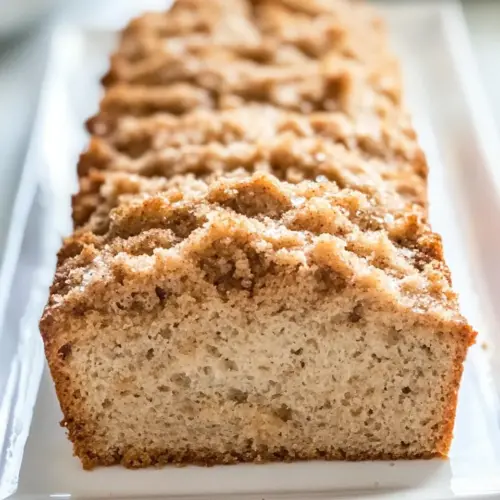
Macro Friendly Applesauce Streusel Bread
Macro Friendly Applesauce Streusel Bread is a moist, lightly spiced loaf that balances tender crumb with a crunchy streusel top. Creamy applesauce, warm cinnamon, and a hint of nutmeg create cozy flavors while added protein elements make it macro friendly for breakfasts or snacks. It is easy to make and delivers bakery style results with sensible nutrition, perfect for making ahead.
Equipment
- Loaf Pan
- Mixing Bowls
- Spatula
- Measuring Cups and Spoons
Ingredients
- 6 tablespoons truvia Provide sweetness using a zero-calorie sweetener alternative; dissolves easily in batters and helps reduce overall sugar content while maintaining moistness.
- 1/4 cup granulated sugar Add granular sweetness and contribute to browning; helps create structure and caramelized flavor in the loaf when combined with heat.
- 5 tablespoons vegetable oil or canola oil Supply fat for tenderness and moisture; aids in distributing flavor and improving crumb texture while keeping calories moderate when using vegetable or canola oil.
- 3/4 cup unsweetened apple sauce Contribute moisture and natural fruit flavor while partially sweetening; helps bind ingredients and keeps the bread soft and tender without added fat.
- 2 large egg whites or 6 tablespoons liquid egg whites Bind and add protein while reducing fat compared to whole eggs; help set the crumb and provide lift when whipped into the batter.
- 1 teaspoon vanilla Enhance and round out flavors with a warm, aromatic note; helps amplify the perception of sweetness and complements apple and cinnamon.
- 1/4 cup plain, nonfat greek yogurt Add creaminess and slight tang for depth of flavor; contributes protein and moisture while improving overall texture and tenderness.
- 1 1/2 cups all purpose flour Provide bulk and structure as the primary dry component; develops gluten when mixed with liquid and gives the loaf its basic framework.
- 1/4 cup nonfat milk powder Increase protein content and improve mouthfeel; contribute to structure and slight creaminess while absorbing moisture from the batter.
- 1/4 cup collagen peptides 2 scoops if using vital proteins Boost protein and aid texture without changing flavor significantly; support structure and may improve browning depending on type used.
- 1 1/2 teaspoons cinnamon Introduce warm spice and aromatic complexity; pairs with apple to create classic flavor and enhances perceived sweetness without sugar.
- 1/4 teaspoon nutmeg Add warm, slightly sweet aromatic notes in small amounts; balances and complements cinnamon for a nuanced spice profile.
- 1/2 teaspoon salt Enhance overall flavor by amplifying other tastes; helps balance sweetness and can strengthen gluten network slightly.
- 1 teaspoon baking powder Leaven and provide lift by producing carbon dioxide when heated; help create a lighter crumb and improve rise in the loaf.
- 1/2 teaspoon baking soda React with acidic ingredients to create additional leavening and tenderness; helps fine-tune rise and prevents dense texture.
- 1/4 teaspoon salt Season and balance flavors subtly; used in a small quantity to ensure the bread's sweetness and spices are well-rounded.
- 1 tablespoon salted butter melted Add richness and a silky mouthfeel when melted; contributes buttery flavor to the streusel topping and helps bind dry topping ingredients.
- 2 tablespoons brown sugar packed Provide a deep, molasses-like sweetness and moisture to the streusel; helps create a caramelized, slightly crunchy topping.
- 2 tablespoons rolled oats Contribute texture and a toasty bite to the streusel; add whole-grain flavor and contrast to the soft crumb beneath.
- 2 tablespoons all purpose flour Act as a binder for the streusel while adding light structure; helps absorb melted butter and create clumps that crisp during baking.
- 1/8 teaspoon cinnamon Introduce a warm, subtle spice to the streusel; enhances complexity and ties the topping flavors to the spiced loaf below.
Instructions
- Preheat oven to 350 degrees. Spray a loaf pan with nonstick cooking spray and line with parchment paper. Set aside. (I used a 8.5 x 4.5 x 2.75 inch loaf pan, but any pan you have is fine! If it's larger, the baking time will be less, if it's smaller, the baking time will be more.): When you start here, you should notice the oven warming and a faint metallic tang from initial heating, which signals a steady heat environment. Preheating ensures the chemical leaveners react properly right away, creating lift rather than slow expansion that yields a dense center. Lining with parchment gives you clean edges and easy removal, while nonstick spray prevents the paper from sliding. One common mistake is skipping preheat, which can make the loaf underbaked in the middle while the outside darkens too quickly. Another thing to watch is pan size, because visual cues like the top taking on a golden hue are tied to oven temperature and pan dimensions.
- In a large bowl, stir truvia, sugar, oil, applesauce, egg whites, vanilla and yogurt together. Add in remaining dry ingredients and stir until just incorporated. Scrape the sides of the bowl to ensure batter is well mixed. Pour into prepared loaf pan and smooth the top.: At this stage the bowl will smell sweet and warmly spiced once the vanilla and cinnamon mingle with the applesauce . Mixing the wet ingredients first produces a glossy, cohesive batter base that traps moisture. Folding in the dry ingredients briefly keeps the gluten from overdeveloping, maintaining tenderness. Use a spatula to scrape the sides so you don't leave pockets of flour at the bottom, which can create dry streaks. Avoid overmixing, which causes a gummy texture and dense crumb. The correct visual cue is a batter that is smooth with small pockets of air, not a completely deflated paste.
- In a small bowl, stir melted butter together with brown sugar, oats, flour and cinnamon to create a crumbly topping. Sprinkle evenly over the batter and bake 45-55 minutes. (Mine was done right at 50 minutes.): When combining the streusel, the aromas of toasted butter and brown sugar should be noticeable, even before baking. The mixture should clump slightly when pressed between fingers but still fall apart easily, indicating the right balance of fat and dry ingredients. Even sprinkling ensures each slice has streusel coverage that toasts uniformly. As the loaf bakes, listen for faint settling sounds and watch for the top to turn a deep golden brown with edges pulling slightly away from the pan. A common issue is applying a streusel that is too wet, which can sink into the batter instead of toasting on top. If you see the top browning too quickly, tent the loaf with foil to prevent overbrowning while the center finishes baking.
- Remove from oven, cool at least 15 minutes before removing from pan and cooling completely (or mostly cool). Slice into 12 even slices and enjoy. Store remaining applesauce streusel bread in an airtight container for up to 3 days. Makes great french toast!: As the loaf comes out of the oven you should notice a rich, spiced aroma and a gently domed top that feels set when lightly pressed. Cooling for at least 15 minutes lets steam redistribute so the loaf firms up and slices cleanly. If you try to unmold while piping hot, the crumb can tear and be gummy. Visual cues for doneness include a deep golden top and a toothpick inserted near the center coming out with a few moist crumbs but not wet batter. Allowing it to cool completely improves slicing and texture, while storing in an airtight container maintains freshness. A common mistake is storing while still warm, which creates condensation and a soggy crust. For best results, cool fully and then slice evenly into 12 portions as intended.
Notes
- Adjust Sweetness Change the ratio of truvia to granulated sugar depending on how sweet you like your loaf, keeping the overall dry volume similar to maintain crumb.
- Protein Boost Increase the amount of collagen peptides slightly if you want extra protein, but keep an eye on batter thickness and add a splash of nonfat milk powder mixed water if it becomes too dry.
- Streusel Texture Swap rolled oats for quick oats for a finer streusel, or add a tablespoon more melted butter if you prefer a crumb that holds together in larger chunks.
- Pan Size Flexibility If you only have a larger pan, expect a shorter bake time; check doneness early using a toothpick and visual cues like deep golden color.
- Spice Play Increase the cinnamon slightly for a bolder profile, or add a pinch more nutmeg for warmth, but increase spices cautiously to avoid overpowering the apple notes.