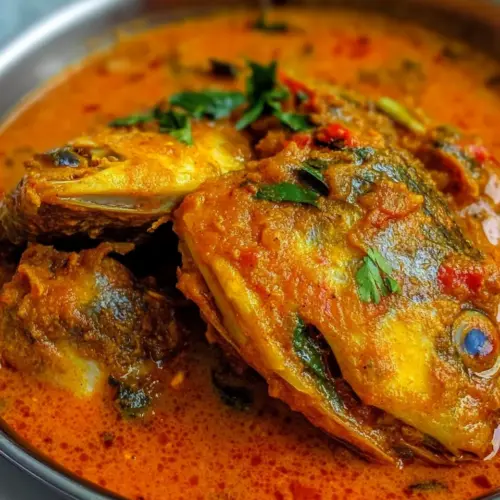
Macher Jhol Fish Curry
Macher Jhol Fish Curry is a bright, aromatic Bengali fish stew with a tangy tomato base, warm spices like panch phoron, and tender fried rohu fish. This easy weeknight dinner offers layered textures from potatoes and eggplant and a fragrant finish with fresh coriander leaves. Try it for a comforting, flavorful meal that comes together without fuss.
Equipment
- Pan
- Spatula
- Knife
Ingredients
- 4 pieces rohu fish Pan-fry or gently simmer to preserve texture and allow the fish to absorb the curry flavors; rohu provides a firm, mildly sweet flesh that holds together well in stews. Marinate briefly if desired to enhance seasoning penetration and reduce fishy aroma before cooking.
- 1/2 tsp cumin Toast lightly to release a warm, earthy aroma and grind if needed; cumin adds depth and a subtle nutty background to balance the curry's brighter notes. Sprinkle early in the tempering stage so the oil carries its fragrance throughout the dish.
- 1/2 tsp red chilli Crush or sprinkle to introduce heat and a vibrant red color; red chilli brings sharp spiciness that can be adjusted to taste. Add gradually while cooking to control the curry's overall heat level without overpowering delicate fish flavors.
- 1 tsp ginger paste Sauté or mix into a marinade to contribute pungent, zesty warmth and help tenderize the fish slightly; ginger paste brightens the curry with its refreshing bite. Incorporate early to meld with other spices and cut through any oiliness.
- 1/2 cup tomato puree Simmer into the sauce to provide acidity, body, and a concentrated tomato tang that balances richness; tomato puree thickens the gravy and binds spices. Add during simmering so the tomato flavor integrates smoothly with the fish and potatoes.
- 2 medium potatoes chopped Cook until tender to absorb curry flavors and add starchy substance that makes the dish hearty; potatoes help thicken the gravy while soaking up spices. Choose even-sized pieces and par-cook if necessary to ensure uniform doneness with the fish.
- 1 1/2 cup water Pour in to create the curry base and regulate consistency; water controls sauce thickness and degree of simmer needed for ingredients to cook through. Adjust quantity during cooking to reach desired gravy level while allowing flavors to concentrate.
- 1 tsp turmeric Sprinkle for warm color and mild earthy bitterness; turmeric also offers subtle, healthy antioxidant properties and helps unify the spice profile. Add early so it cooks into the oil and loses rawness while providing its characteristic hue.
- 1 tsp panch phoron Temper whole or slightly cracked to release a complex, layered aroma of fennel, mustard, cumin, nigella, and fenugreek; panch phoron lends a distinctive Bengali signature to the curry. Heat in oil at the start to allow seeds to pop and infuse the base with flavor.
- 1/2 tsp garam masala powder Dust near the end of cooking to add a warm, aromatic finish that rounds out the spice mix; garam masala enhances overall aroma without adding heat. Use sparingly and stir in at the last minute to preserve its fragrant notes.
- 1 medium pureed onion Sauté until golden to create a sweet, caramelized foundation that thickens and flavors the sauce; pureed onion adds body and umami. Cook thoroughly to develop depth and eliminate raw onion sharpness before adding tomatoes and spices.
- 1 eggplant / brinjal Cube and sauté or simmer to contribute tender, slightly spongy texture and mild bitterness that complements the fish; eggplant soaks up the curry, enriching the gravy. Salt and cook until soft to ensure it melds into the sauce rather than remaining underdone.
- 4 tbsp mustard oil Heat until smoking point for authentic flavor and aroma, then use for frying and tempering; mustard oil imparts a pungent, nutty character central to many Bengali fish dishes. Use with care due to its strong flavor and high smoking temperature.
- salt as required Season to taste throughout cooking to enhance and balance all flavors; salt brings out natural tastes and controls overall seasoning level. Add gradually and taste as you go to avoid over-salting delicate fish and vegetables.
- 4 green chilli sliced Slice and add for fresh green heat and aromatic lift that complements mustard and ginger; green chilli provides bright spiciness and visual contrast. Adjust quantity or remove seeds to control the spice intensity according to preference.
- 2 coriander leaves Garnish chopped to add fresh, herbal brightness and a subtle citrus-like finish that lightens the dish; coriander leaves brighten both aroma and presentation. Scatter just before serving to preserve their fresh flavor and color.
Instructions
- Marinate the fish in half the turmeric and salt. Use only half of the turmeric and salt.: The fish should be gently seasoned so the flesh absorbs subtle seasoning, creating a base layer of flavor. You will notice a light dusting of golden color where the turmeric settles, which helps reduce the raw fish smell when frying. A common misstep is over-salting during marination which can draw out moisture and make the pieces dry when cooked; use only the specified half portion and let the fish rest briefly so the spices adhere.
- Heat the oil in a pan and fry the marinated fish. Drain the excess oil and put aside.: As the mustard oil heats, it should shimmer and give off a faint pungent aroma, signalling it is ready. Frying causes the exterior of the rohu fish to form a light crust that helps it keep shape in the gravy. Listen for a gentle sizzle which indicates the oil temperature is correct; a loud aggressive splatter means it is too hot. After frying, place fish on paper to draw off oil, otherwise the curry can become overly greasy.
- In the same pan, fry the potato and eggplant. Put aside.: The pan still held the fish fond and a bit of oil, which will brown the diced potatoes and slices of eggplant beautifully, adding caramelized notes. Fry until potato edges show light golden spots and eggplant becomes soft and slightly collapsed, which provides a creamy contrast in the final dish. A frequent mistake is crowding the pan, which steams vegetables instead of browning them; fry in batches if needed to get that roasted whisper of caramel.
- Add the panch phoran masala and onions and fry till the onion becomes translucent.: When you add whole panch phoron to hot oil, it will pop and release a complex fragrance of fennel, nigella, and fenugreek; that crackling is the aroma blooming. Stir in the pureed onion and cook until translucent and slightly glossy, which mellows sharpness and forms a savory base. If the onions brown too fast, lower the heat; burnt onion will impart bitterness.
- Add the tomato purée and ginger paste. Keep stirring.: At this stage, pour in the tomato puree and blend in the ginger paste , stirring to combine. You should hear a soft bubbling and see the sauce thicken as it cooks down; the tomato acidity begins to cook away and meld with the aromatics. A common issue is adding tomatoes to oil that is not hot enough, which can lead to a raw tomato taste; ensure gentle simmering to integrate flavors.
- Add the cumin powder, red chili, turmeric powder, and a little water.: These powdered spices deepen the sauce, giving color and layered heat. Add the small amount of water to loosen the mixture into a saucy consistency. Stir until fragrant, and look for the oil starting to separate from the sauce edge which signals proper cooking. The mistake here is adding too much water early, preventing the flavors from concentrating, so add sparingly and adjust later.
- Cook and mix all the ingredients well till the oil separates.: Simmering allows the spices to bloom and the sauce to become glossy; when you see oil sheen at the edges, the flavors have married. This visual cue also means the rawness of tomato and onion has cooked off. Rushing this step will leave a flat tasting curry; patience yields a deeper, layered gravy.
- Add salt and cook for another 2 mins.: After seasoning to taste with salt , a brief two minute simmer helps the seasoning integrate evenly. You will sense the whole pot unify in aroma at this point, and the sauce will taste balanced. Over-salting at this stage is easy if you did not check earlier additions; always season incrementally and taste before the final simmer.
- Add the fried fish and cook for 5 mins then add water.: Gently nestle the fried fish pieces into the simmering sauce so they warm through and begin to soak up flavor. You will hear a soft simmer as the fish heats, and the edges may loosen slightly, showing absorption. After five minutes, add the remaining water to achieve your desired gravy depth; stirring carefully prevents the fish from breaking. Handle the fish gently, as over stirring will cause it to flake apart.
- Reduce the heat and let the gravy simmer.: Lowering the flame to a gentle simmer lets the sauce thicken slowly and allows the potatoes and eggplant to finish tenderizing while the fish melds with the gravy. The aroma will deepen into a warm, rounded bouquet, and the surface will show small, lazy bubbles. A too vigorous boil can disintegrate the fish, so maintain a quiet simmer.
- When cooked, turn off the heat and add the garam masala powder, cilantro leaves, and green chilis to garnish. Serve hot.: Off the heat, sprinkle the garam masala powder so its delicate aromatics do not burn, then scatter fresh coriander leaves and sliced green chilli for brightness. The final garnish lifts the curry visually and aromatically, providing fresh contrast. Adding garam masala while still boiling will make the fragrance fade, so always finish with it off heat before serving hot.
Notes
- Use firm river fish: Choosing a firm textured fish such as rohu fish helps pieces stay intact during frying and simmering; if you prefer, slightly thicker cuts resist flaking and create a nicer mouthfeel.
- Adjust heat with green chilies: Add more sliced green chilli at the end for bright, fresh heat, or reduce the quantity when serving to children or spice sensitive diners.
- Control gravy thickness: If you like a saucier curry, increase the water gradually and simmer briefly; for a concentrated gravy, keep the lid off to reduce and intensify flavors.
- Layer the frying: Fry potatoes and eggplant separately so each gets ideal color; combining them in the pan can lead to uneven browning.
- Mild version for gentle palates: Reduce red chilli powder and remove seeds from the green chilli to keep the dish approachable while preserving aromatic depth.
- Finish with fresh herbs: Scatter chopped coriander leaves just before serving to add a herbaceous lift and vibrant color contrast to the warm, spiced gravy.