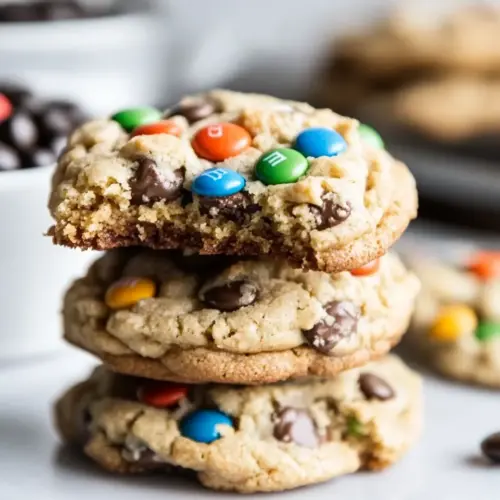
M M Cookies
M M Cookies are a colorful, buttery cookie studded with chocolate and candy, offering a crispy edge and soft center that is both nostalgic and crowd pleasing. This easy to follow recipe yields large, bakery style cookies perfect for gifting, parties, or easy weeknight baking, delivering satisfyingly chewy texture and pockets of melty chocolate every bite. Make them for any occasion and enjoy their dependable, comforting charm.
Equipment
- Stand mixer
- Paddle attachment
- Mixing Bowls
- Rubber spatula
- Cookie Scoop
- Baking Sheet
- Cooling rack
- Oven
Ingredients
- 2 sticks softened unsalted butter Soften and cream to provide a rich, tender base and incorporate air for lightness; contributes fat that yields moist, chewy cookies and helps carry flavors throughout the dough.
- 3/4 cups sugar Sweeten and balance texture by dissolving into the butter to create structure and moderate spread; adds crispness to edges when caramelized during baking.
- 3/4 cup packed light brown sugar Add deep, caramel-like sweetness and moisture while enhancing chewiness; packs into the batter to help maintain a soft interior and complex flavor.
- 2 large eggs Bind and leaven while adding moisture and richness; whisk into the batter to emulsify fats and dry ingredients, contributing to a stable yet tender crumb.
- 1 tablespoons vanilla Flavour and aroma enhancer that rounds out the overall taste profile; stir in to lift sweetness and complement the chocolate and nut elements in the cookies.
- 2 1/2 cups All Purpose Flour Structure and bulk provider that forms the dough matrix; combine with liquids and leaveners to develop just enough gluten for chew without toughness.
- 1 1/2 teaspoons baking powder Lighten and tenderize by producing fine gas bubbles that lift the cookies; measure carefully to ensure proper rise and avoid off flavors.
- 1 teaspoon baking soda React with acidic components to create additional lift and a finer crumb; use sparingly to control spread and texture in the finished cookies.
- 1 teaspoons ea salt Enhance and balance flavors while controlling yeast-like reactions; distribute evenly to heighten sweetness and suppress bitterness from chocolate.
- 1 cups semi-sweet chocolate chips or chunks Provide concentrated chocolate flavor and pockets of melted richness; fold into dough to create gooey bites and textural contrast throughout the cookies.
- 1 cup white chocolate chips or chunks Contribute creamy sweetness and occasional melting pockets that brighten the cookie; mix with other chips for varied texture and visual contrast.
- 1 cup candy covered chocolates Add vibrant color, texture, and crunchy candy bursts that create playful bites; scatter into dough to introduce sweetness and chew distinct from chips.
- 1 cup peanut butter chips Introduce nutty, savory-sweet flavor and creamy pockets that complement chocolate; fold in to add soft, peanut-rich morsels and extra richness.
- 1 cup chopped walnuts Offer crunchy texture and earthy, toasty flavor that balances sweetness; chop and incorporate for bite variation and a pleasant nutty finish.
Instructions
- Preheat the oven to 350°.: As you heat the oven, notice the subtle change in the kitchen air as warmth builds, and listen for that tiny, steady hum that tells you the elements are engaged. A properly preheated oven ensures even spread and predictable browning, so wait until it reaches temperature before baking. If the oven is underheated the cookies will spread differently and remain pale, and if it is too hot they will brown too fast and stay doughy inside. Avoid opening the oven door repeatedly, as this will drop the temperature and affect how the cookies set.
- Add the butter and sugars to a stand mixer with the paddle attachment and mix on medium to high speed for 5-7 minutes or until light and fluffy.: You will hear the mixer gain a lighter, airy rhythm as the butter and sugar transform from a dull mass into a pale, ribbon like mixture, and visually you should see volume increase and the mixture become smoother. This aeration is crucial because it traps tiny air pockets that help create a tender crumb and controlled spread. A common mistake is not creaming long enough which leads to dense cookies, or creaming too long which can over soften the butter and cause excessive spread during baking.
- Add 1 egg at a time until combined, and then add in the vanilla.: After introducing the eggs , the batter will turn glossy and slightly loose, with a richer aroma from the vanilla . Adding eggs one at a time helps maintain an emulsion and prevents the mixture from separating. If the mixture looks curdled, don’t panic; continue mixing gently and the texture will come back together as the flour is added. Avoid adding cold eggs directly from the fridge as they can tighten the butter and cause lumps.
- In a separate bowl mix together the flour, baking powder, baking soda, and salt. Then add it to the mixer on low speed in 3 batches until mixed in. Stop the mixer in between, adding the flour to scrape the sides.: Combining the dry flour and leaveners first ensures even distribution of lift agents, and adding them in three portions prevents overworking the dough. The sound will change to a deeper, quieter hum as the dry ingredients incorporate, and the dough will thicken noticeably. Scraping the bowl is important to avoid pockets of unmixed flour, and overmixing once the flour is added can develop too much gluten, making the cookies tough. If you see streaks of flour, stop and fold lightly instead of continuing high speed mixing.
- Remove the bowl and fold the chocolate chips, candy, peanut butter chips, and walnuts with a rubber spatula until completely mixed in.: When you fold in the semi sweet chocolate chips , white chocolate chips , candy covered chocolates , peanut butter chips , and chopped walnuts , you will feel a change from silky dough to one dotted with texture. Folding preserves the air you incorporated earlier and prevents the mix ins from breaking apart, which keeps the candies colorful and the chips intact. A common issue is using a mixer at this stage, which will pulverize the mix ins and change the visual and textural result, so always fold by hand.
- Using a 1/4 cup scooper (#16 scoop), scoop out the dough onto cookie sheet trays 4 to 5 inches apart from one another to allow them to spread out. It will take 3 sheet trays to get to 18 cookies.: As you portion the dough, you can feel the weight of each scoop and see the dough mound neatly. Leaving space between scoops is essential because the cookies will spread and create layered edges. If they are placed too closely they will merge into one large cookie, and if you underspace them you will lose the crisp rims that contrast with the soft center. If your dough seems overly warm and sticky, chill the scoops briefly to retain shape during the initial bake.
- Bake in the oven for 16-18 minutes or until there is a light brown edge around the outside.: During baking, watch for the telltale signs: the edges will deepen to a golden brown and the center will look set but still slightly soft, and the kitchen will fill with a toasty, chocolate forward aroma. This visual cue ensures a tender center with crisp edges, and pulling them at the right moment prevents overbaked dryness. A frequent error is leaving them in too long; they will continue to set as they cool, so err on the side of slightly underbaked if you prefer a chewy interior.
- Cool to room temperature on a rack and serve.: Moving the cookies to a rack lets air circulate so the bottoms do not become soggy, and you will feel the contrast between warm centers and crisped edges as they set. Cooling also helps flavors meld and the mix ins to firm slightly, which improves texture when you bite in. If you stack them while hot they can steam and lose their crispness, so allow adequate cooling time. A tip to avoid is storing them while still warm in a sealed container, which traps moisture and softens the cookies prematurely.
Notes
- Make Ahead Freedom Prepare the dough up to two days in advance and keep it chilled so you can bake fresh batches whenever you want, which is especially handy for parties.
- Freezing Options Both scooped raw dough and fully baked cookies freeze well for up to three months when wrapped tightly, allowing you to enjoy freshly baked cookies on demand.
- Sugar Balance Combining granulated and light brown sugar creates the ideal texture and flavor, but you can use all light brown sugar if you prefer a chewier, more caramel forward result.
- Gentle Mixing Fold in chips and candies by hand to prevent them from breaking and to preserve the colorful look and varied texture in each cookie.
- Tray Strategy Bake six large cookies per tray for even spacing, and if you want smaller cookies simply scoop less dough and adjust baking time downward slightly.
- Don’t Flatten Resist the urge to press the dough before baking, they will flatten naturally in the oven and create layered, moist interiors.