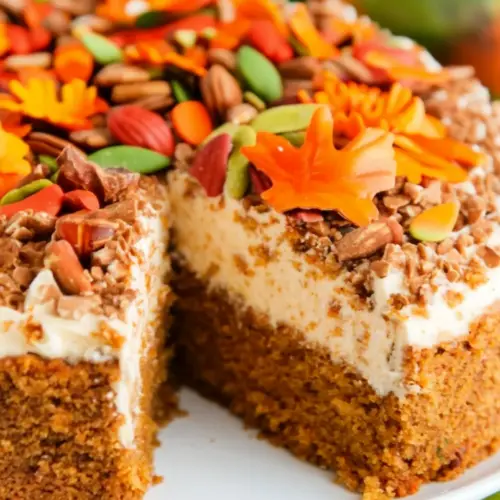
Low Sugar Harvest Cake
Low Sugar Harvest Cake is a tender, lightly spiced loaf with grated apple, carrot, and zucchini, offering a moist crumb and nutty crunch. This easy, lower sugar bake is perfect for breakfast or a light dessert, and it pairs well with coffee or tea. Make it for an easy weeknight treat or a holiday brunch when you want something cozy but not overly sweet.
Equipment
- Loaf Pan
- Mixing Bowls
- Whisk
- Large spoon
- Wire Rack
Ingredients
- 1 cup white whole wheat flour (see notes) Provide structure and bulk to the cake batter, contributing a tender crumb when mixed properly and not overworked; white whole wheat flour offers a slightly nuttier flavor than regular white flour while still producing a light texture.
- 3/4 cup Golden Monkfruit Sweetener (see notes) Sweeten the cake with a low-glycemic alternative, dissolving into the wet ingredients to balance the tart and earthy flavors; Golden Monkfruit Sweetener keeps overall sugars lower while maintaining moisture and caramelized notes.
- 2 tsp . ground cinnamon Add warm aromatic depth and enhance perceived sweetness without extra sugar, blending evenly through the dry mixture to complement apple, carrot, and pecan flavors.
- 1 tsp . baking soda Leaven the batter by reacting with acidic components to produce rise and lightness; baking soda aids in creating a tender crumb and helps neutralize some acidity from buttermilk and apple.
- 1/4 tsp . salt (I used fine grind sea salt) Enhance overall flavor by balancing sweetness and highlighting other ingredients, while fine sea salt also strengthens gluten development slightly and rounds out taste profiles.
- 1/2 cup peeled and grated Granny Smith apple (1 medium-sized apple) Contribute natural sweetness, moisture, and a crisp-tart brightness when grated, dispersing small pieces throughout the loaf to add textural contrast and fruit flavor.
- 1/2 cup grated carrot (1 medium carrot) Provide natural sweetness, moisture, and slight earthiness while contributing bright orange color and tender texture when grated and mixed into the batter.
- 1/2 cup grated zucchini Add moisture and tender vegetable texture while keeping the loaf light; grated zucchini melts into the crumb, helping retention of moisture without strong vegetal flavor.
- 1/2 cup chopped pecans (or walnuts, original recipe used 1/4 cup) Introduce crunchy texture and toasty, buttery flavor while adding healthy fats and preventing a dry crumb; chopped pecans also contribute visual appeal and nutty aroma.
- 1/4 cup neutral-flavored oil (see notes) Supply fat to the batter for richness and moistness, aiding in tenderness and mouthfeel; a neutral-flavored oil ensures no competing tastes with the cake’s warm spices and fruit.
- 1/4 cup buttermilk Provide acidity and tang that reacts with baking soda to help leavening; buttermilk also adds tenderizing proteins and subtle flavor complexity to the loaf.
- 2 large eggs Bind ingredients together, trap air for additional lift when beaten, and contribute richness and structure to the crumb; eggs also emulsify fats and liquids for a uniform batter.
- non-stick spray or oil for coating loaf pan Prevent sticking and ensure easy release of the finished loaf from the pan, while also promoting even browning around the edges when lightly coating the baking surface.
Instructions
- Preheat oven to 350 F/175 C and spray a 8 X 4 inch loaf pan with non-stick spray or oil (Or you can use a 9 x 5 inch pan and have a flatter cake like I did!): The warm, inviting scent that rises when an oven hits 350 F is your first cue that baking is imminent, and a correctly preheated oven ensures even rise and consistent crumb. You should hear the faint click of the element cycling as it approaches temperature, and when you place the batter in, the immediate gentle lift is a good sign. If the oven is too cool, the loaf may be dense, so use an oven thermometer if yours runs hot or cold. A common mistake is not preheating long enough, which can lead to uneven baking and a gummy interior.
- In a large mixing bowl, add White Whole Wheat Flour (affiliate link), Golden Monkfruit Sweetener (affiliate link), cinnamon, baking soda, and salt.: As you combine these dry items, inhale the warm cinnamon aroma mingling with the earthy scent of whole wheat, which hints at the final loaf's flavor profile. Sifting is optional, but whisking the mixture helps distribute the baking soda and spices evenly, preventing pockets of leavening or spice. If clumps remain, they can create uneven texture, so break them up before moving on. A typical oversight is adding wet ingredients to clumpy flour, which can trap lumps in the batter.
- Mix together with large spoon until well-combined.: You will feel the mixture lighten as the sweetener and spices blend through the flour, and the color should be uniform. This tactile mixing step readies the dry base for the moisture from the produce. Avoid overmixing at this stage, which can develop gluten and lead to a tougher loaf. One mistake to avoid is overworking the batter once liquid is introduced, which reduces tenderness.
- Add grated apple, grated carrot, grated zucchini, and chopped pecans to the bowl with the flour mixture.: When you fold in the produce, you should notice flecks of green and orange dispersed through the flour, and the pecans lending a nutty aroma. Tossing them in the dry mix helps coat the pieces so they do not sink to the bottom during baking. If you skip this coating step, heavier bits may drop, creating uneven texture. A common error is adding overly wet vegetables; if your zucchini is very watery, gently press out excess moisture first.
- Use the spoon to toss ingredients together until all ingredients are well coated with flour.: The fingers or a spoon will feel the pieces take on a dusting of flour, which protects against clumping and helps maintain even distribution. The visual cue is a light coating on each grated piece, not a paste. This technique prevents pockets of moisture and promotes consistent crumb. Avoid leaving dry pockets of flour, which can bake into floury streaks.
- In a smaller bowl, add oil, buttermilk, and eggs, and beat with a whisk for about 30 seconds, until well combined.: As you whisk, the mixture should turn glossy and slightly thickened from the eggs, with the oil forming an emulsion that will yield a smooth batter. You may hear a soft whisking sound and see the liquid become homogeneous, which signals readiness. Proper emulsification matters because it contributes to even crumb and moisture. A common mistake is pouring cold eggs into oil, which can hinder incorporation, so bring cold ingredients closer to room temperature when possible.
- Pour egg mixture into the other bowl with the flour mixture and stir until just combined. (Mixture will be fairly stiff.): After adding the wet mix, you will see the batter come together, studded with grated fruit and vegetables and flecked with nuts. The mixture should be fairly stiff yet cohesive, and you will notice the aroma deepen as wet and dry elements integrate. Stir just until the components are unified, because overmixing develops gluten and will make the loaf dense. A typical pitfall is lingering to achieve absolute smoothness, which sacrifices tenderness.
- Pour cake into oiled loaf pan.: The batter should slide into the pan with a glossy sheen and small pockets of visible produce. Smooth the top gently with a spatula, noticing the batter’s weight and how it settles into corners. Proper pan coating prevents sticking and preserves the loaf's crust. One mistake to avoid is filling the pan unevenly, which can cause lopsided rise; tap the pan lightly to even things out and release trapped air bubbles.
- Bake at 350 F/175 C for about 50 minutes, or until a toothpick inserted into the center of the cake comes out completely clean. (For me, that was exactly 50 minutes.): As the loaf bakes, the kitchen will begin to smell of cinnamon and toasted nuts, and the crust will develop a warm golden tone. You may hear a faint crackling as moisture leaves the surface. The toothpick test is the best indicator of doneness because it confirms the center has set. If you take it out too early, the center can be gummy, so resist the temptation to rush. A common mistake is opening the oven repeatedly, which lowers the temperature and affects rise.
- Cool cake in the pan placed on a wire rack for 10 minutes. Then carefully remove cake from pan (I used a knife to go around the edge) and cool cake completely on rack before slicing.: After baking, you will notice steam escaping and a softer crumb settling as the loaf cools slightly. Cooling in the pan allows the structure to firm marginally, making it easier to unmold. Ten minutes is enough time to let residual heat redistribute without oversteaming the crust. Avoid leaving the loaf in the pan too long while still hot, as condensation can form and soften the crust excessively.
- The Harvest Cake lasted several days in the refrigerator, but only because I was very diligently using portion control!: Running a knife around the edge and tipping the loaf out onto a rack reveals the full aroma and a nicely set crumb. Cooling completely prevents the loaf from crumbling when sliced and lets flavors settle. If you slice too soon, the crumb may tear and appear gummy. One frequent error is slicing while the loaf is still warm, which compromises texture and presentation.
- The Harvest Cake lasted several days in the refrigerator, but only because I was very diligently using portion control: Stored properly, slices retain moisture and flavor, and refrigeration extends shelf life. You will notice that chilled slices are firmer and the flavors meld more, which some people prefer. Avoid leaving the loaf unwrapped at room temperature for too long, as it can dry out or absorb odors. A common oversight is storing it in a container without ventilation, which can trap moisture and soften the crust excessively.
Notes
- Swap nuts carefully, use walnuts instead of pecans for a slightly earthier flavor, and toast them briefly to deepen the aroma before adding them to the batter, which brings out oils and intensifies crunch.
- Adjust sweetener, if you prefer a different level of sweetness, reduce or increase the Golden Monkfruit Sweetener in small increments, tasting the batter if safe, and remember that the grated apple adds natural sugars as well.
- Make it dairy free, replace buttermilk with a plant based milk plus a teaspoon of vinegar, which recreates the tang and acid interaction with baking soda for lift, keeping texture similar.
- Change the pan size, using a 9 x 5 pan yields a flatter cake as mentioned, and will slightly reduce baking time, so begin checking doneness earlier to avoid drying out the loaf.
- Boost the spice profile, add a pinch of ground nutmeg or cardamom alongside the cinnamon for a more complex aroma, but use sparingly to avoid overpowering the delicate fruit notes.
- Freeze portions, slice and wrap individual pieces tightly before freezing to preserve freshness, and thaw in the fridge overnight for a ready to eat breakfast with minimal effort.