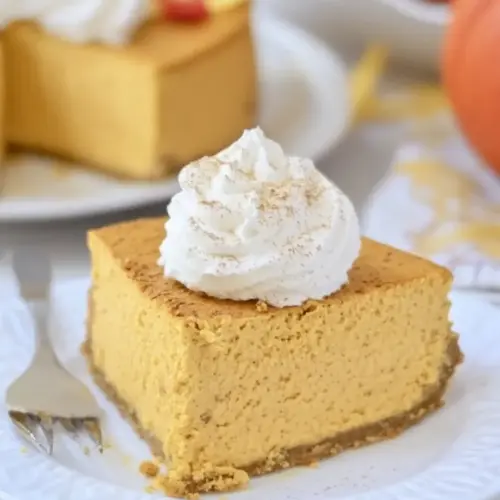
Low Carb Pumpkin Cheesecake
Low Carb Pumpkin Cheesecake is a creamy, spiced autumn dessert with a silky ricotta based filling and a light whipped cream topping. This easy to slice cheesecake delivers pumpkin pie flavors without heavy carbs, making it a great option for holiday tables and easy weeknight desserts. Serve chilled for the best texture and enjoy a satisfying treat that still feels indulgent.
Equipment
- 8 inch springform pan
- baking pan with 1 inch lip
- Mixing Bowls
- Hand Blender
Ingredients
- 32 ounces ricotta cheese full fat Provide creamy, rich texture and tangy flavor that forms the cheesecake base; full-fat ricotta adds moisture and density while lending a smooth, slightly grainy body that supports the pumpkin and spices. Use at room temperature to blend evenly with eggs and sweetener for a custard-like consistency and stable bake.
- 1 cup pumpkin puree Impart moisture, color, and classic autumn flavor while marrying with spices to create pumpkin cheesecake character; puree contributes water content so batter consistency may need gentle handling. Choose plain canned or homemade puree for consistent texture and to avoid excess liquid affecting the set.
- 2/3 cup granulated sugar alternative Swerve Sweeten without adding sucrose calories, maintaining structure and desired sweetness level for low-carb baking; Swerve granulated functions like sugar in volume and browning characteristics but may brown less. Measure carefully and ensure it is well-dissolved into the wet ingredients to prevent grittiness in the finished cheesecake.
- 3 tablespoons almond flour super fine Provide subtle nutty flavor and light structure to help stabilize the crust or batter with minimal gluten-free body; superfine almond flour blends smoothly and contributes fat for tenderness. Use precisely measured tablespoons to avoid excess dryness since almond flour absorbs less moisture than wheat flour.
- 1 tablespoon coconut flour Absorb extra moisture and add a hint of coconut flavor while improving crumb structure in the crust or filling; coconut flour is highly absorbent so small amounts strengthen texture without drying. Combine thoroughly with almond flour to ensure even distribution and avoid dense spots in the cheesecake.
- 1 1/2 teaspoon pumpkin pie spice Add warm, aromatic notes that define pumpkin pie flavor and balance sweetness; pumpkin pie spice blends cinnamon, nutmeg, ginger, and cloves to create a classic profile. Sprinkle evenly into the batter and consider adjusting to taste, remembering spices intensify slightly during baking.
- 1/8 teaspoons salt Enhance and balance sweetness while amplifying other flavors and controlling the overall palate; a small pinch of salt reduces any flatness and highlights dairy and spice notes. Dissolve salt into wet ingredients to ensure even seasoning throughout the cheesecake.
- 6 large eggs Provide structure, richness, and leavening support as eggs coagulate during baking to set the cheesecake; large eggs add protein and fat that create a smooth, sliceable custard. Beat eggs gently into the batter to prevent over-incorporation of air, which can cause cracking.
- 2 teaspoons vanilla extract Contribute aromatic depth and enhance perceived sweetness without additional sugar; vanilla extract complements dairy and pumpkin while rounding flavors. Stir into the batter near the end of mixing to preserve its volatile aromatic compounds.
- WHIPPED CREAM Serve as a light, airy topping that contrasts the dense cheesecake base and adds richness; whipped cream can be sweetened and flavored to complement the pumpkin filling. Prepare just before serving to maintain volume and a stable, attractive presentation.
- 1 cup heavy whipping cream Create a stable, silky whipped topping when whipped to soft peaks; heavy whipping cream provides fat that whips into volume and lends a luxurious mouthfeel against the cheesecake. Chill cream and equipment beforehand for best whipping performance and consistent texture.
- 2 tablespoons confectioners sugar alternative Swerve Provide powdered sweetness to the whipped cream without granulated sugar, dissolving easily to prevent grittiness; Swerve confectioners mimics powdered sugar behavior and stabilizes whipped cream slightly. Add gradually while whipping to achieve even sweetness and desired stiffness.
- 1/2 teaspoon vanilla Enhance whipped cream aroma and balance sweetness with a subtle vanilla note; a small amount of vanilla adds complexity and familiar flavor. Fold into whipped cream at the end of whipping to distribute flavor without deflating the peaks.
Instructions
- Preheat oven to 300 degrees.: The room fills with a faint warmth as the oven climbs, and starting at a low temperature ensures the custard sets slowly for a creamy interior. You should see an even rise of heat across the rack rather than a sharp blast, which helps avoid a cracked top. A common mistake is preheating too high which cooks the exterior before the center sets.
- Grease the sides and bottom of an 8 inch springform pan with butter. Cover bottom with foil half way up the pan making sure no water (adding to the pan when baking) or any part is open or exposed. Set aside.: You will notice a glossy sheen on the pan where the butter clings, which helps the cheesecake release cleanly later. Lining the bottom with foil up the sides acts as a barrier during the water bath to prevent water seeping in. If the foil is not sealed well, water can leak into the cake, so press it snugly against the sides and check for gaps.
- In a medium bowl whisk together flours, pumpkin pie spice, salt and set aside.: The dry mix should look uniform with no visible clumps, and the spices release an inviting aroma as they are whisked. This step ensures even distribution so you do not get pockets of concentrated spice or dry flour in the batter. Missing this mixing can leave uneven texture spots in the finished cheesecake.
- In a large bowl blend ricotta and pumpkin puree until well combined. Add sugar.: As you stir, the combination will transform into a velvety, homogenous base with a subtle orange hue from the pumpkin puree . The goal is smoothness, so stop when no streaks remain. If the ricotta is lumpy, take time to press through a sieve or whisk thoroughly to prevent grainy texture in the bake.
- Add eggs whisking in one at a time.: When the sweetener is incorporated you will smell a gentle sweetness lift from the bowl, and the mixture will appear slightly glossier. Let the sweetener dissolve a little before proceeding to avoid a gritty feeling in the final texture. Overlooking dissolution can result in a sandy mouthfeel.
- Mix in the remaining prepared dry ingredients, and then fold in the vanilla.: Each egg should be incorporated until the mixture is smooth and slightly thickened, creating a cohesive batter that will set into custard. The sound is silent but the visual is a steadier, more unified batter. Adding eggs too quickly can trap air, leading to puffing and cracking during baking.
- Pour batter into prepared springform pan.: Folding preserves the silky texture while distributing the dry mix evenly, and the vanilla brings a fragrant lift that ties the flavors together. Use gentle strokes to meld components without overworking, which can introduce air. Vigorous mixing here is a frequent cause of a domed or cracked surface.
- Place pan in the middle of a baking pan with a 1 inch lip. Add warm water to the pan until the water reaches about 1/2 inch up the springform pan. Bake for about 75 minutes or until the center is firm (not jiggly). Remove from the oven and cool for 30 minutes. Refrigerate.: As the batter flows in, it should settle with a glossy, smooth top and weight that spreads evenly in the pan. Tap gently to release any trapped air bubbles, which helps avoid fissures during baking. Pouring too fast or slapping the pan on the counter repeatedly can cause air pockets that leave holes in the bake.
- Serve with WHIPPED CREAM: In a deep bowl mix cream, sugar and vanilla with a hand blender for 2 minutes or until desired consistency.: The water bath creates moist heat that prevents rapid browning and promotes a custardy set, and you will see tiny steam wisps as the oven works. The center should be set like a soft pudding rather than liquid, and cooling gradually prevents sudden contraction that causes cracks. A common pitfall is adding cold water which can shock the oven and alter baking time, so use warm water to maintain temperature stability.
- Serve with WHIPPED CREAM In a deep bowl mix cream sugar and vanilla with a hand blender for 2 minutes or until desired consistency: Whipping the heavy whipping cream yields glossy peaks that contrast the dense filling, and the sugar alternative will dissolve into a silky white cloud. The sound of the beaters changes as peaks form, and you can smell the sweet cream aroma. Under whipping leaves the cream loose, while over whipping turns it grainy, so stop when it holds soft to medium peaks for the ideal topping.
Notes
- Chill equipment before whipping the cream, a cold bowl and beaters will help the heavy whipping cream whip faster and reach stable peaks.
- Drain ricotta if needed by placing it in a fine mesh over a bowl for 30 minutes, this prevents excess moisture from making the cheesecake too loose.
- Warm water for the bath preserves oven temperature, add warm water carefully to prevent thermal shock and maintain even baking.
- Use a gentle fold when combining dry ingredients into the batter, vigorous stirring will incorporate air that can cause cracks.
- Test for doneness visually by looking for a set but slightly wobbly center, it will continue to firm as it cools.
- Store chilled in the refrigerator covered for up to four days, keep it airtight to prevent flavor transfer from other foods.