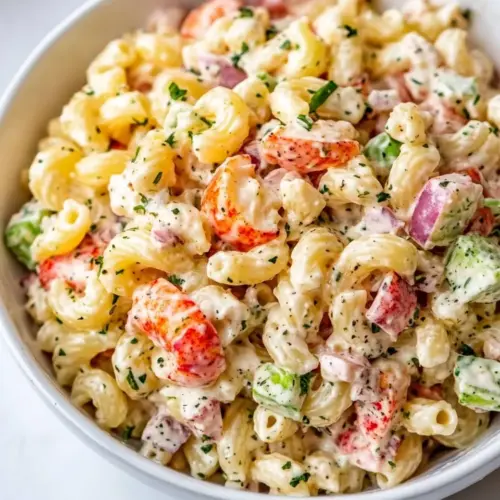
Lobster Roll Pasta Salad
Lobster Roll Pasta Salad is a creamy, bright cold pasta salad with tender lobster meat, crunchy celery, and fresh chives. This easy summer recipe is perfect for picnics and easy weeknight dinner menus, offering a satisfying mix of textures and flavors. Make it for gatherings to impress without fuss, it keeps well chilled and travels beautifully.
Equipment
- Large Pot
- Colander
- Mixing Bowl
- Knife
Ingredients
- 16 oz cooked lobster meat, from (4) 1-1/4 lb whole lobsters or (4) 4 oz tails Provide tender, sweet cooked lobster meat that forms the star protein and brings rich seafood flavor to the salad; ensure chunks are bite-sized for even distribution and pleasant texture throughout the dish.
- 1/2 cup chopped celery and leaves Add crisp, aromatic chopped celery and leaves to contribute refreshing crunch and a mild herbal note; chop uniformly to balance texture with the lobster and to keep each bite lively.
- 1/3 cup light mayonnaise Bind the salad with light mayonnaise to lend creaminess and subtle tang while keeping the dressing smooth and cohesive; choose light to reduce overall richness without sacrificing mouthfeel.
- 1/4 cup 0% Greek yogurt Incorporate 0% Greek yogurt to introduce tangy brightness and a protein-rich, lower-fat creaminess that lightens the dressing; whisk with mayonnaise to achieve a balanced, silky consistency.
- 1/4 cup fresh chives Fold in fresh chives to impart a delicate oniony, grassy aroma and a burst of green color; slice thinly so their mild flavor disperses gently through the salad.
- 1/4 cup chopped red onion Mix in chopped red onion to provide sharp, slightly sweet bite and crunchy texture that contrasts nicely with the tender lobster; dice small to avoid overpowering the other flavors.
- 1/2 teaspoon celery salt Season with celery salt to reinforce the celery flavor and add savory depth with a hint of saltiness; sprinkle gradually and taste to avoid oversalting.
- 1/4 teaspoon kosher salt, plus more for pasta Add kosher salt, plus more for pasta, to enhance all flavors and help season the pasta during cooking for fully seasoned bites; use coarse crystals for easier control when boiling.
- 8 ounces DeLallo Cavatappi pasta Use DeLallo Cavatappi pasta to offer a firm, corkscrew shape that traps dressing and small lobster pieces for ideal bite composition; cook to al dente for best texture and toss with dressing while warm.
Instructions
- Prep all the ingredients, if your lobster is raw, steam it until just cooked.: The scent as you steam lobster is immediate, a sweet, briny steam that fills the kitchen and tells you seafood is near. When steaming, listen for the gentle hiss and watch for shells to turn bright, signaling doneness without overcooking. The reason this method matters is lobster becomes tough if overcooked, so stop when the meat turns opaque and firm to the touch. A common mistake is steaming too long, which produces stringy texture; use a timer and remove the lobster promptly to cool. After steaming, let the lobster rest briefly so juices settle before you crack shells, and aim for large chunks to keep the mouthfeel balanced against the soft pasta.
- Bring a large pot of salted water to a boil. Cook the pasta according to directions, I prefer to cook it 1 to 2 minutes longer than al dente when cooking for a cold pasta salad.: The bubbling sound of a vigorous boil and the slight steam aroma help you know the water is hot enough to properly cook pasta . Enough salt in the water seasons the pasta from the inside out, which is crucial for a cold salad where the pasta carries flavor. Use coarse kosher salt so you can taste the water; it should be pleasantly seawater seasoned. A frequent error is under salting, which yields bland pasta, so be generous but not excessive, and stir once when you add the pasta to prevent sticking.
- Drain and run under cold water.: You will see the pasta swell and its surface lose that raw sheen as it softens. Cooking slightly beyond al dente is intentional for cold salads, because chilling can firm up the interior; this gives a tender, not gummy, bite when served chilled. The why here is about final texture, not speed. Watch the pasta and taste a strand frequently in the final minutes; visual cues like plumpness and a slightly chewy center are your guides. Overcooking into mush is the main mistake at this step, so time closely and test early rather than late.
- Remove cooked lobster from shell and chop into large chunks, about 1 inch. Toss with the remaining ingredients and serve chilled. Makes 10 cups: The immediate cool rush when you run cold water over the pasta stops residual cooking and removes surface starch that would otherwise gel and create clumping. As you rinse, the pasta should feel separated and cool to the touch, not sticky; that tactile check is crucial. You want the pasta slightly tacky so dressing adheres, but not glued together. A common misstep is skipping the rinse, which leaves the salad gummy, or over rinsing so the pasta becomes waterlogged; aim for a quick, efficient rinse until the water runs clear and the pasta is cool.
- Remove cooked lobster from shell and chop into large chunks, about 1 inch. Toss with the remaining ingredients and serve chilled: When handling the cooked lobster meat , you should notice a sweet, clean seafood aroma and a firm, yet tender texture under your knife. Cutting into 1 inch pieces helps the salad feel generous; if you cube too small the lobster disappears among the other elements. Tossing should be gentle, using a wide bowl so the dressing coats without breaking the lobster meat . After combining, chill the salad to allow flavors to settle; chilling melds the aromatics into the dressing and softens raw onion edges. The main pitfall here is over mixing, which can shred the lobster and make the salad mashy, so fold gently and taste to adjust seasoning before chilling. Serve cold and notice how the components come together; the chilled temperature enhances the bright notes and delivers a satisfying mouthful each time.
Notes
- Adjusting creaminess Use more or less mayonnaise and Greek yogurt to control richness. If you want a lighter salad, increase the yogurt slightly and reduce mayonnaise; for a silkier, richer mouthfeel, gently raise the mayonnaise amount while keeping the yogurt for brightness. Always stir the dressing components together before combining with the pasta so you can taste and refine. Overdoing the mayo will mask the lobster, so add gradually and taste between additions.
- Protecting lobster texture Keep the lobster meat in larger pieces and fold gently when mixing. The goal is to preserve those tender bites rather than shredding them into the salad. If your lobster is warm, let it cool slightly to avoid melting the dressing. Too vigorous stirring will break down the lobster and create an uneven texture.
- Tuning onion intensity If raw red onion is too sharp, soak chopped pieces in cold water for 5 to 10 minutes then drain. This mellows harsh edges but retains the crunch and bite. Always pat onions dry before adding so you do not introduce extra moisture to the salad.
- Serving temperature choices Serve chilled for a crisp, refreshing experience, or bring the salad to cool room temperature for a softer feel. Chilling tightens flavors and textures, while a short rest out of the fridge can allow aromatics like chives to glow more. Be mindful of food safety; do not leave seafood salads at room temperature for extended periods.
- Scaling for guests Multiply ingredient quantities proportionally when making larger batches, and consider transporting dressing separately if you expect long travel time. Combine just before service to preserve texture and avoid a soggy salad. If preparing ahead, keep the lobster meat and dressed pasta slightly apart and fold them together within an hour of serving.