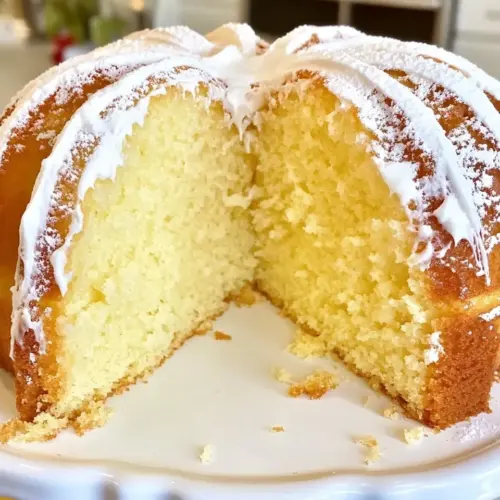
Limoncello Cake
Limoncello Cake is a bright, tender dessert with a creamy crumb and glossy limoncello glaze, offering a lively lemon aroma and delicate sweetness. This easy, elegant cake works for brunches and gatherings, delivering bakery style results with simple pantry ingredients, making it a must try for weekend baking and impressing guests.
Equipment
- Bundt Pan
- Mixing Bowls
- Whisk
- Wire Rack
Ingredients
- 2 cups all-purpose flour Provide structure and body to the cake by forming the bulk of the dry ingredients; sifts easily with the leavening agents to create a tender crumb and balances moisture from wet components.
- 2 tablespoons cornstarch Lighten the texture and help stabilize the cake by reducing gluten formation when combined with flour; works with the flour to yield a finer, softer crumb and prevents toughness.
- 2 teaspoons baking powder Leaven the batter by producing carbon dioxide when activated, contributing lift and a delicate crumb; distribute evenly through the dry mix to ensure consistent rise.
- 1/2 teaspoon baking soda React with acidic components to create additional lift and tenderness, supporting the baking powder for proper rise; measure precisely to avoid metallic off-flavors.
- 1/2 teaspoons salt Enhance overall flavor balance and strengthen gluten structure slightly, helping to bring out sweetness and aromatics; use sparingly to avoid over-salting the cake.
- 1 cup sour cream Add moisture, tang, and richness while contributing to tender crumb and slight acidity that activates baking soda; incorporate smoothly to prevent curdling in the batter.
- 1 cup sugar Provide sweetness and help with browning and moisture retention; cream with wet ingredients to dissolve granules and distribute evenly for consistent flavor.
- 2 large eggs Contribute structure and emulsification through proteins and fats, aiding in aeration and stability; whisk gently with sugar to achieve lightness without overmixing.
- 1/3 cup coconut oil, melted and slightly cooled Introduce fat for richness and tenderness while adding subtle flavor; melt and cool slightly to incorporate smoothly without cooking the eggs or curdling dairy.
- 1/3 cup limoncello Impart intense lemon-flavored alcohol that adds brightness and fragrance while contributing a slight liquid component; fold in carefully to preserve batter consistency.
- zest from one lemon Offer fresh citrus oils to heighten lemon aroma and flavor, complementing limoncello and extracts; zest just before mixing to retain volatile aromatic compounds.
- 1 teaspoon pure lemon extract Deliver concentrated lemon flavor to amplify brightness without adding extra liquid; add with other extracts for a layered citrus profile.
- 1 teaspoon pure vanilla extract Provide warm, rounded aromatics that deepen overall flavor complexity and complement citrus notes; use sparingly to avoid overpowering the lemon elements.
- For the Limoncello Glaze: Serve as the sweet, lemony finishing touch by creating a glossy topping that soaks slightly into the crumb; whisk smooth and pour over cooled cake for optimal texture.
- 1 cup powdered sugar Sweeten and thicken the glaze while creating a smooth, spreadable consistency; sift to avoid lumps and adjust to desired thickness for drizzle or pour.
- 3 tablespoons limoncello Add pronounced limoncello flavor and slight thinning to the glaze, imparting shine and boozy lemon character; mix in gradually to control glaze viscosity.
Instructions
- Preheat the oven to 350 F. In a small bowl combine the flour, cornstarch, baking powder, baking soda and salt. In a separate larger bowl add the sour cream, eggs, sugar and coconut oil and beat until combined. Add the limoncello, lemon zest, lemon extract and vanilla extract. Add the flour mixture to the wet mixture and beat just until combined. Do not over-mix.: You should notice the warm, dry air filling the oven as it comes up to temperature; this steady heat is essential for even rising and a golden exterior. If the oven is not fully preheated, the cake can rise unevenly and then collapse, so allow the oven to reach 350 F before you put the batter in. A common mistake is rushing this step, which results in dense texture. For best results, place the rack in the center so the cake bakes uniformly.
- Lightly spray your Bundt pan with oil, making sure to get the oil into any creases. Spoon the batter into your Bundt pan. Bake for 35-40 minutes or until a toothpick inserted into the center comes out clean. Let the cake sit for 10 minutes before inverting it onto a wire rack. Let it cool completely.: As you whisk these dry ingredients together, you will hear a light swishing and see a pale, uniform mixture form; this ensures even distribution of leaveners so pockets of metallic tasting baking powder do not occur. Sifting or whisking prevents lumps of cornstarch and helps the all purpose flour mix with the rest of the batter smoothly. Avoid packing the flour into the measuring cup, which can lead to a dry cake.
- While the cake is cooling make the glaze: Beat the powdered sugar and limoncello until smooth (add more powdered sugar if you prefer it thicker or a little more limoncello to make it thinner). Once the cake is fully cooled, drizzle the glaze over the cake and let sit until the glaze is set. Slice and serve. Will keep in an airtight container for up to 3 days. Can be frozen for up to 2 months.: When you beat these wet ingredients, you will feel the mixture thicken slightly and see the sugar begin to dissolve into the glossy fat of the melted coconut oil ; the batter should look cohesive but not aerated. This step creates the base emulsion that holds the cake together and ensures the sour cream is evenly distributed, which prevents pockets of acidity. Overbeating here can incorporate too much air, leading to cracks, so mix until just combined.
- Add the limoncello, lemon zest, lemon extract and vanilla extract.: As you fold in the limoncello and extracts, the batter releases an immediate citrus perfume; the tiny flecks of lemon zest will glint and you can smell the oils. These aromatics are why this cake feels lively; they infuse the batter with volatile flavors that survive baking. A frequent error is using bottled lemon or insufficient zest, which reduces brightness, so always use fresh zest when possible.
- Add the flour mixture to the wet mixture and beat just until combined.: Once the dry mix meets the wet, you will notice the batter thicken and take on a smooth, slightly glossy appearance. Mixing just until there are no streaks of flour preserves the tender crumb created by the cornstarch and sour cream . Overmixing develops gluten, creating a chewier texture, so stop when the last dry specks disappear. If you see a very elastic batter, you likely overmixed and may have a denser cake.
- Lightly spray your Bundt pan with oil, making sure to get the oil into any creases.: The pan should feel lightly coated and look satin rather than greasy; this coating helps the cake release cleanly and protects delicate edges. Pay close attention to crevices so you do not get stuck bits when inverting. One misstep is using too little oil, which causes sticking; too much can create shallow holes in the crust. I prefer a thin, even spray or a light brushing of oil for best results.
- Spoon the batter into your Bundt pan.: As you transfer the batter, it should flow slowly and mound slightly, showing a batter that is neither runny nor rock solid. Tapping the pan gently on the counter releases any trapped air bubbles, which prevents large tunnels in the crumb. Overfilling will cause overflow, so leave some space for rise. If the batter seems unusually thin, check that your measurements were precise, otherwise the bake may be uneven.
- Bake for 35 to 40 minutes or until a toothpick inserted into the center comes out clean.: During baking you will smell a toasty lemon aroma as the sugars caramelize and the crust browns. The visual cue is a golden exterior that springs back slightly when touched. Rely on a toothpick test for doneness rather than exact time, because oven temperatures vary. Opening the oven too often will drop temperature and lead to uneven rise, so avoid peeking frequently.
- Let the cake sit for 10 minutes before inverting it onto a wire rack.: As the cake rests, the crumb firms up and relaxes from the high oven heat, making unmolding safer. You should hear a faint settling sound and the cake will release more easily. If you rush to invert while piping hot, it can break or stick, so give it this brief pause. If the cake appears stubborn, run a small offset spatula around the edge to loosen gently.
- Let it cool completely.: Cooling until room temperature allows the flavors to set and the glaze to adhere without melting away; the surface will feel cool to the touch and the aroma will mellow. If glazed too soon, the liquid may run off and the glaze will not cling. Patience here results in cleaner slices and a shiny finish when glazed.
- While the cake is cooling make the glaze: Beat the powdered sugar and limoncello until smooth. : Whisk the powdered sugar with limoncello into a glossy, pourable glaze; the mixture should be silky and opaque. Adjust thickness by adding more sugar to thicken or more limoncello to thin, aiming for a ribbon that slowly dissolves into the surface. If the glaze is too thin it will run off the cake, so correct consistency before pouring. A lump in the glaze indicates under-sifted sugar, so strain if needed.
- Once the cake is fully cooled, drizzle the glaze over the cake and let sit until the glaze is set.: As you pour, watch the glaze pool and cascade into crevices, catching light and creating a glossy shell. The aroma of limoncello will become more pronounced as the alcohol evaporates, leaving a bright lemon note. Allow the glaze to set at room temperature so it firms without cracking. If the cake is warm, the glaze will slide off, so ensure complete cooling first.
- Slice and serve.: A clean, sharp knife makes neat slices, revealing the tender crumb and delicate crumb structure. The contrast between glossy glaze and soft interior is part of the sensory appeal, and serving slightly cooled showcases texture and flavor best. Cutting too soon leads to a gummy interior, so wait until the glaze and crumb have settled.
- Will keep in an airtight container for up to 3 days.: Stored properly, the cake retains moisture and aroma, and you may notice flavors meld pleasantly after a day. Keep it at room temperature away from direct sun to preserve texture. If you see condensation inside the container, it may indicate warmth and speed spoilage, so cool properly before storing.
- Can be frozen for up to 2 months.: When freezing, wrap tightly to prevent freezer burn; thaw in the fridge or at room temperature for best texture. Freezing preserves freshness for longer gatherings or make ahead plans. Avoid refreezing once thawed, as repeated cycles can dry the crumb.
Notes
- Swap the oil basis: Substitute the coconut oil with neutral vegetable oil if you prefer a milder aroma while keeping the same measure and texture.
- Adjust glaze intensity: Thicken the glaze by adding more powdered sugar for a pronounced ribbon, or thin it with extra limoncello for a shiny, runnier finish.
- Boost citrus aroma: Increase the amount of lemon zest by half a lemon for brighter top notes without changing the batter liquid balance.
- Make ahead plan: Bake the cake a day early and glaze the morning of serving, this lets flavors meld and simplifies hosting.
- Play with extracts: If you want a deeper floral note, slightly reduce vanilla extract and lean into the lemon extract, but do so sparingly to avoid overpowering the cake.